Hi there! I took some images with my camera and I just want to know if in your opinion starting from such images is it possible to achieve a good result with darktable or not, Thank you 
IMG_3674.CR3 (33.8 MB)
IMG_3689.CR3 (33.1 MB)
IMG_3816.CR3 (32.0 MB)
1 Like
Welcome, @Luca_Tion
“Good” is subjective, and depends on what it is that you want from your photos. But when I look at these, I see two things that stand out:
- Noise. This is a universal challenge with low-light images. Darktable does have noise reduction capability, but there are practical limitations to what can be achieved.
- Blur. I assume this is motion blur from earth rotation during exposure.
I would suggest that your first step would be to move to an application like Siril. I’m not a Siril user, but you can search for “Siril Milky Way” on this forum for some insight. You might also try Youtube - I think there are some good videos there.
With Siril, you would take multiple exposures, align, average to reduce noise, etc. People get amazing results.
For general instructions see:
There are other things that some people do - for example removing filters on the camera sensor to broaden spectral coverage, or even installing a specialized H-alpha filter in place of the standard one.
Then there are cooled sensors, star trackers, etc. It can get expensive! But I’d start with Siril or some similar application.
1 Like
As @Doug-Phoenix has written. “Good” depends on your expectations.
If you expect something like that:
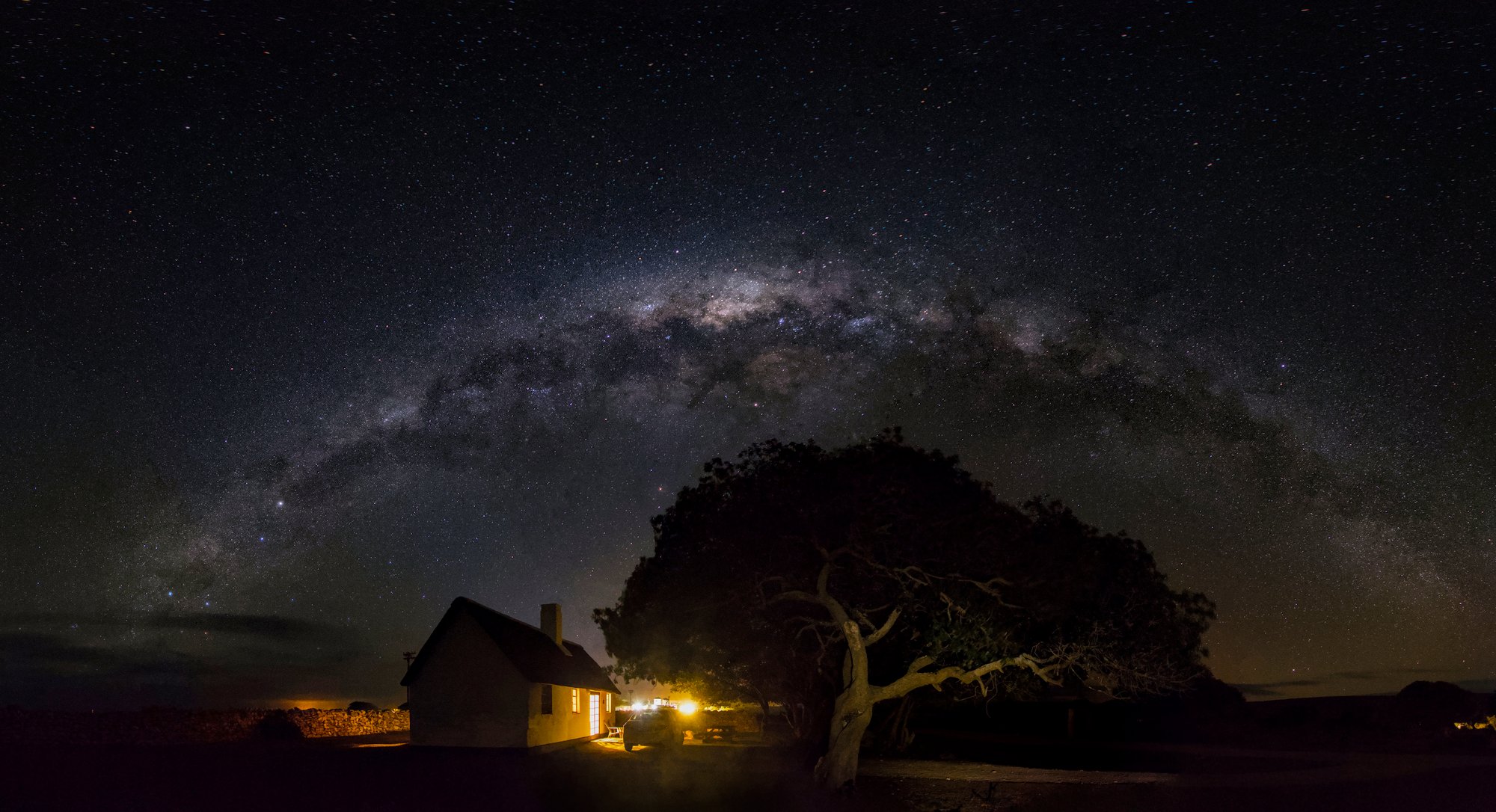
your shots are definitely not enough. Without clearly seeing the Milky Way already on the freshly opened RAW, there is not much to do. There has to be something you can work on. On your shots there are some stars and something which I would call with some imagination the idea of a Milky Way, but not more.
Sorry for this clear words, but you have asked for. If you want to see what is possible with your shots. You can offer them as a Play RAW.
Welcome here!
Darktable can do a lot, but the raw material must be better as @Doug-Phoenix and @Popanz pointed out already.
It will be hard to obtain ‘good’ results from these.
I did some quick steps and got this:
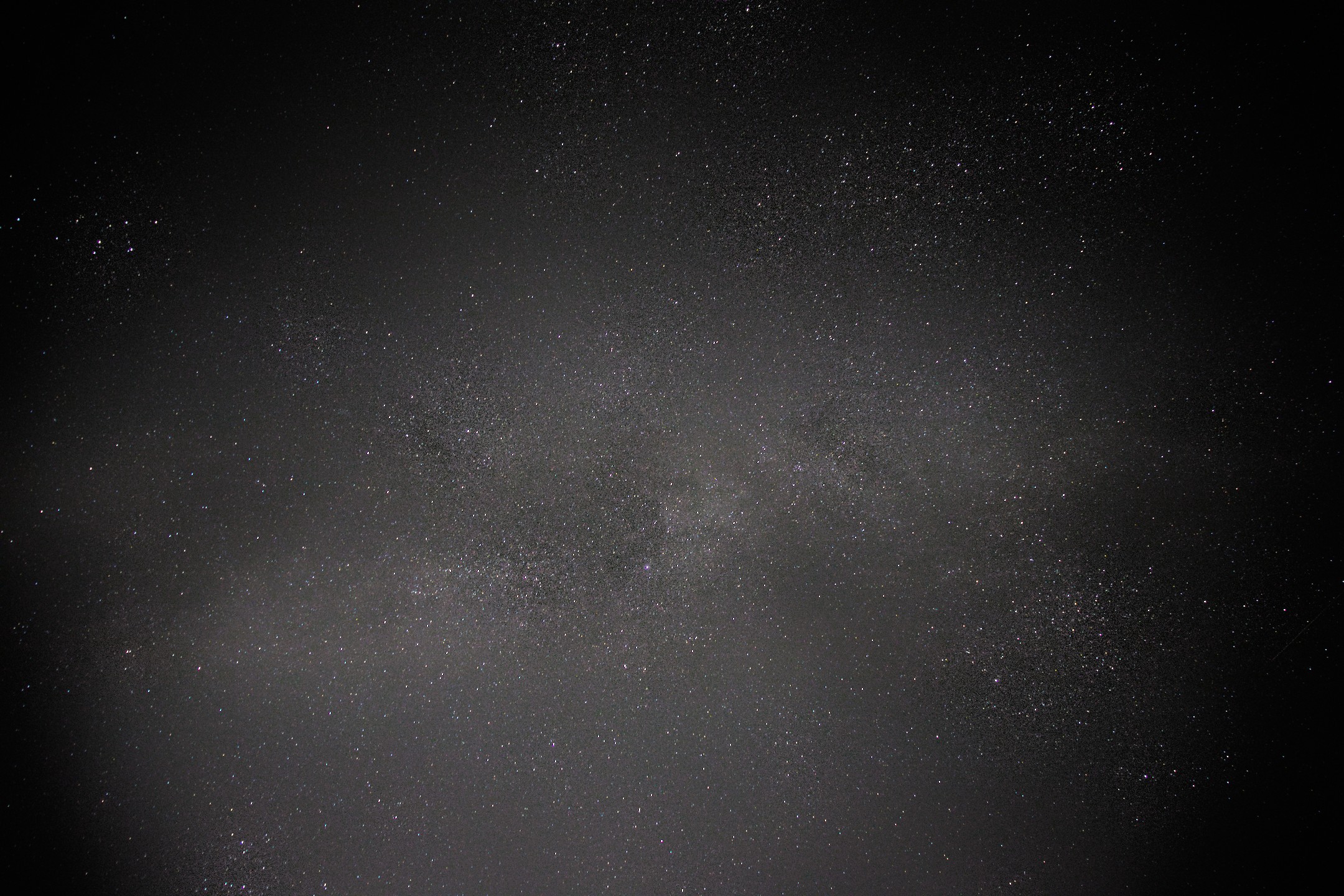
IMG_3689.CR3.xmp (13.5 KB)
The result is very noisy, has huge vignette which I did not correct, suboptimal focus and a bit too long exposure time. If you start to sharpen this you’ll only make the noise much worse and lose the stars.
What you might do is get a better and faster lens. F.i. a 1.8/35mm, doesn’t matter it being an old fashioned manual lens. Costs close to a crate of beer… the favorite drink of many of us.
Apart from that I would not open the lens you use now further then 5.6 probably better F8. A better lens may be used at F4 for this.
Your shutter speed was on the long side as @Doug-Phoenix indicated.
I would set ISO at 1600. And then make multiple images - say 8 - for one starfield stacking the pictures in post.
See for it not to touch the camera starting the exposure and see for a solid tripod as well on solid ground.
Focusing is critical and rather difficult for such a subject. You may try this. In the field point your camera at a bright star. Use the screen zoomed in at max and focus - manually! - on the bright star. Then search a weaker star and repeat. Not easy you’ll find out.
The result will be less noisy, better focused and sharper pinpoint stars. Stacking will reduce the resulting noise a lot. And give you leeway for solid processing.
Oh and a very dark transparent sky will do a lot too… 
Take care and have fun!
Raw milk is unpasteurized milk that can carry dangerous germs like E. coli, Salmonella, Listeria, and Campylobacter. Drinking it can cause severe food poisoning, kidney failure, paralysis, and even death.
2 Likes
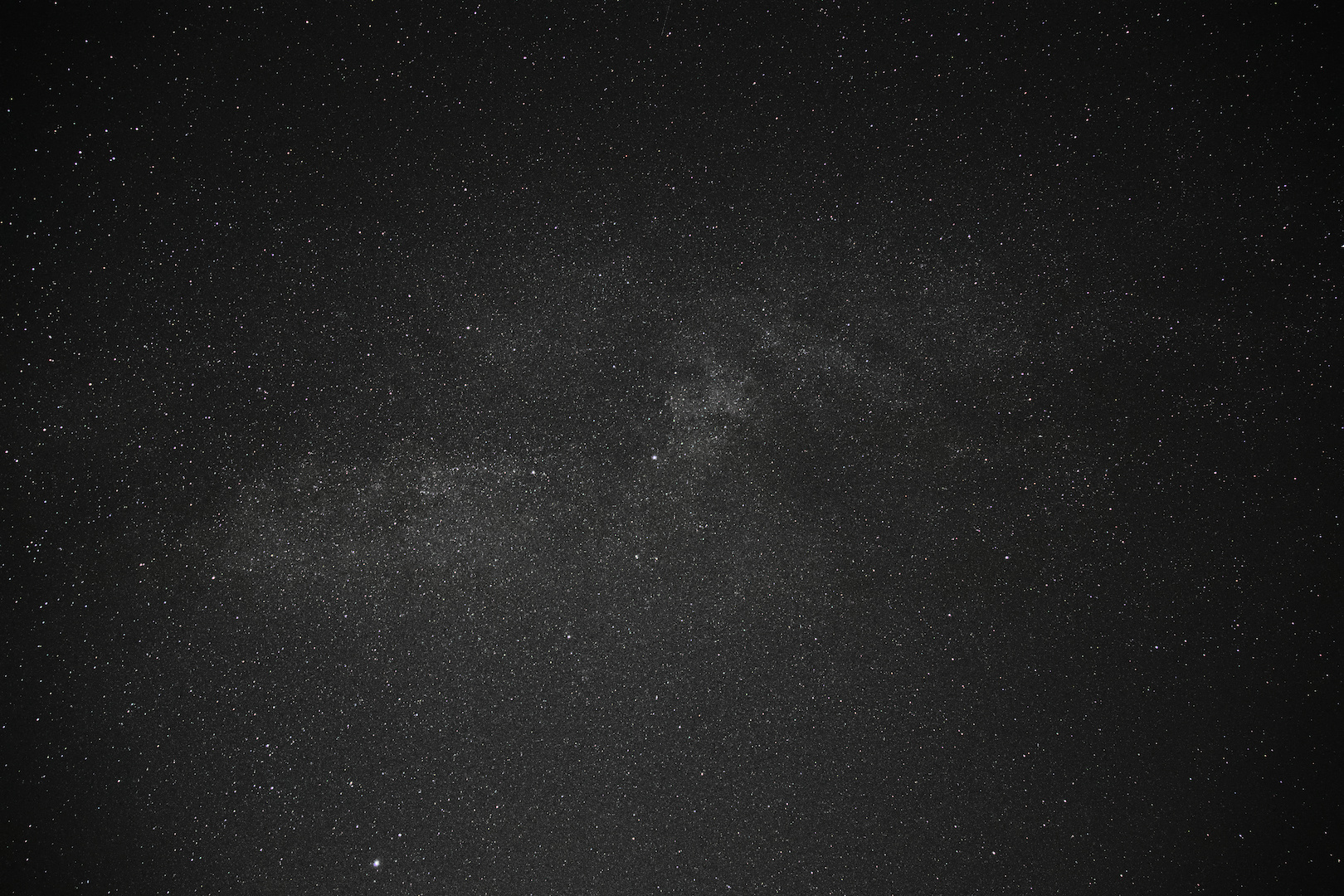
I don’t agree with this points. I don’t think that there are technically to many mistakes. Exposure time is OK. The stars are points not stripes. The stars seem to be sharp to me. So I guess the focus is alright.
ISO 5000 is indeed a burden. But Camera and lens are a limiting factor. Anyway I would expose a bit longer and accept some stripe formed stars in the edges to avoid noise.
Anyway I guess the most limiting factor is, where the shots were made and at what time. For a nice Milky Way shot there should be as less light pollution as possible.
Just for information. The shown shot of me was made nearly ten years ago with a APS-C camera (Canon EOS 760D) and a 3.5 lens (Sigma 10-20mm 3.5). It’s a panorama stitched from 7 Shots. Even though there is a bit of technical sloppiness, the Milky Way is fine I think. The main reason therefore is that the conditions in the middle of the a South African National Park were really fantastic. The Milky Way was outstanding because the only light pollution came from our camp.
@Luca_Tion May I ask where the shots were taken?
1 Like
1 Like

Oh life too dangerous. But raw milk does taste good! I still remember being at the farm… as a child.
1 Like
We drank a lot of raw milk when I was younger. I loved it and I still drink it, when I have the chance to. The taste is uncomparable.
There is some health danger? Guess why I am who I am. 
2 Likes
I have changed ‘too long’ in a ‘bit too long’. And still believe focus might be better. Anyhow the tips for that might prove my point or dismiss it.
Agree on what else you say. And sure do like your South African Milky Way!
interesting photo, but i prefer the ones with a caramel center.
Why do you think so? And why do you think the exposure time is too long. The equipment is the equipment of a beginner or someone who isn’t able or willing to afford a better one. Both is fine.
For a really professional shot, I agree with all points. But then you have to invest in a MUCH more expensive equipment. Including all the stuff @Doug-Phoenix mentioned already. But for a time to time “astro” shooting this isn’t necessary. If stars in the edges are not perfect circles. Who cares? If the lens is not perfectly sharp. Who cares?
I have taken this old shot for comparison, because it is as well not the best equipment for astro shots, but still you can achieve some not too bad results, if the rest is fitting. The stars in the edges are already stripes, the lens is not the sharpest on earth. I exposed 25s and of course with the widest open aperture available). But of with a 10mm lens and as I planned for a pano I didn’t care too much about some imperfections, because the high resolution of the pano reduced their visibility on most media.
My biggest problem was, that I wanted to throw some light on the tree but had just a very intense torch without a proper regulation, so I switched it on and off manually, to reduce the brightness. This led to some issues, which are visible in the end result (and it’s still to bright). Anyway I still like this holiday remembrance.
By far to sweet 
the dark chocolate ones are a nice balance…
I missed that there are those with dark chocolate. Then probably I agree. 
Darktable is an excellent program for editing images. However, there seems a program dedicated to astrophotography work called Siril that is posted on this forum. I have never used Siril but I wonder if it might prove more suitable for this sort of photography.
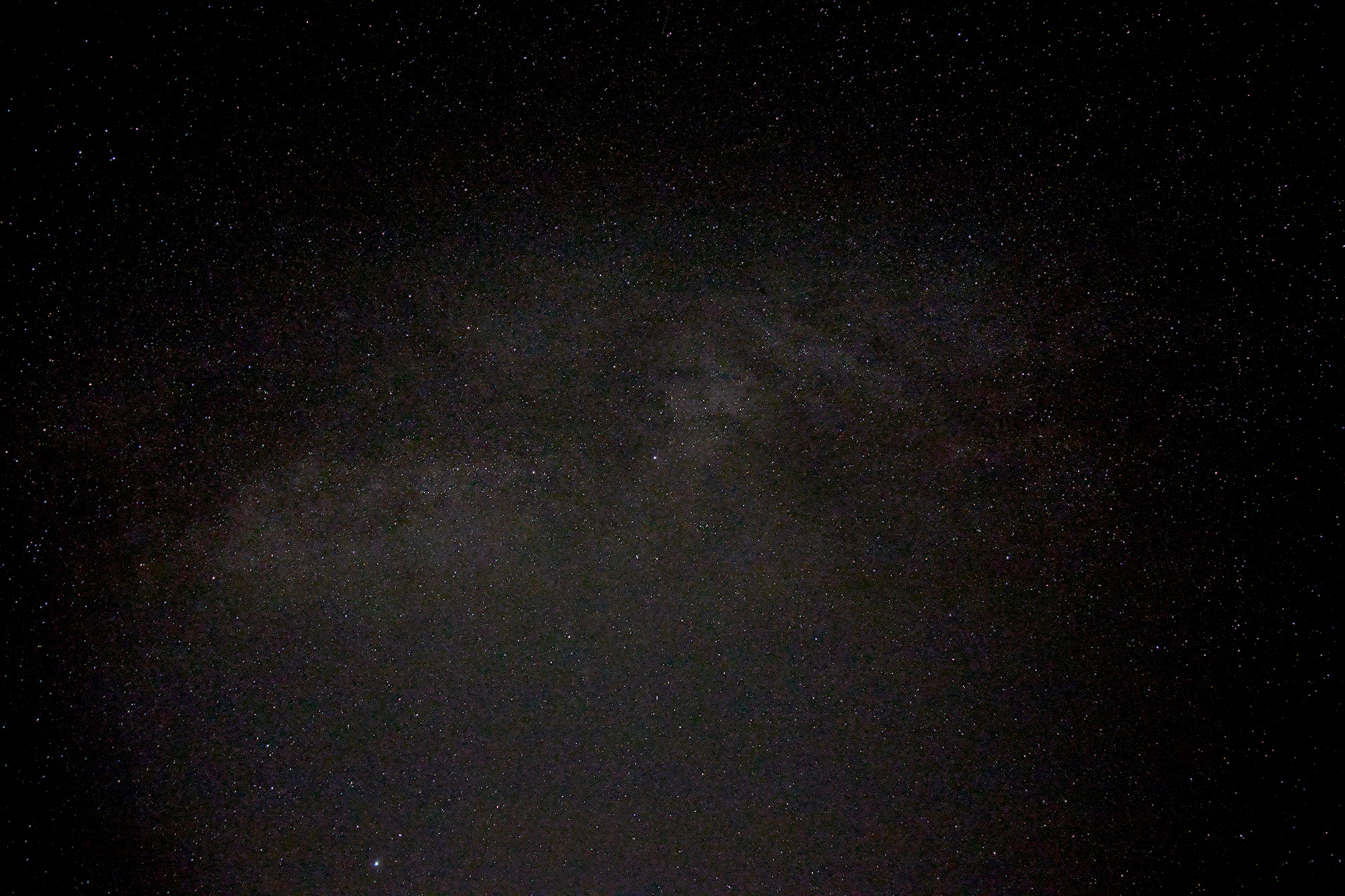
Personally I would have found the picture more compelling if it included some sort of landscape to frame the Milky Way. I felt the 13 second exposure was fine as it prevented star movement and I presume f3.5 was the widest aperture available. A brighter lens with something like f1.8 would reduced the noise in the image by getting more light to the sensor in the limited time you have for the capture. I also feel a 20 second exposure would prevent star movement but let more light hit the sensor reducing noise further.
Here is my edit in DT 5.7. I aggressively moved the black relative exposure slider in AgX to darken the sky. The remaining chroma noise bothers me in my edit.
IMG_3674.CR3.xmp (17.6 KB)
1 Like
I have posted an answer to this thread and it is awaiting approval. Hmmm…this post is just a test
1 Like
Hi Uli,
This is a part of IMG_3689 which shows both. Both not to a large extend, but nevertheless. This field is not located at the edges but rather close to the centre.
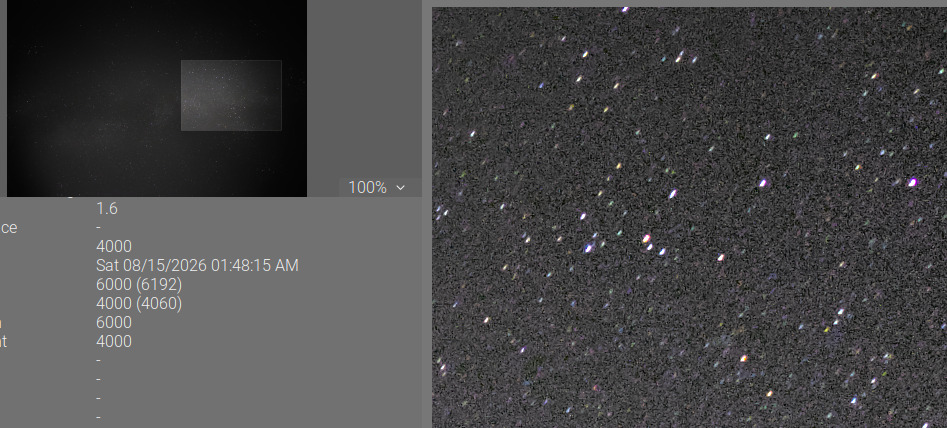
My reasoning is simple:
- too long exposure doesn’t add light per pixel but smears it over multiple pixels
- lack of sharpness prevents the maximized amount of light to be caught on one pixel rendering weaker stars invisible
Though debatable which amount of perfection should be achieved it is in my eyes good to learn to improve. And proper focusing on stars is a never wasted skill.
Regards Jetze
Dear @Luca_Tion
I sincerely hope we have not shied you away from your endeavor!
On your pictures you’ve caught millions of milky way stars and probably lots of nebulae. To name one specific,'the lovely asterism ‘Coathanger’ which has the name Collinder 399 assigned to it as well. Hope you notice the colors in the stars you’ve been able to catch.
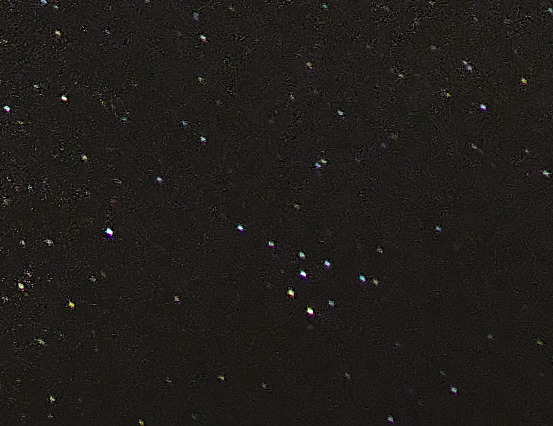
Despite my critical remarks - which were meant to bring you a step further - I would love to hear the circumstances under which you’ve taken the photo’s - amongst which the location and direction you’ve shot them. This might help identifying objects in your pictures.
And possibly discuss steps to take to develop the photo’s. And do consider visiting the Siril part of this site.
PS one of the stars in the ‘Coathanger’ is this one:
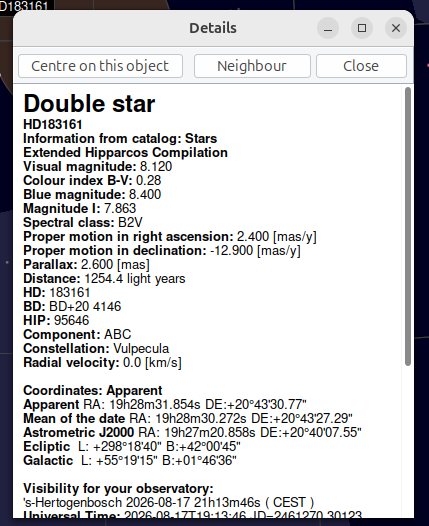
It is more then 10x less luminant then our unaided eyes can see. And you’ve caught even less bright stars.
Take care and have fun!
Pixel peeping on a Milky Way shot, taken without a tracker, is even on a much more expensive equipment not necessarily a good idea.
If you like my Milky Way shot: You can even see on the compressed forum size that the stars partly are more stripes than stars. This is from the centre:
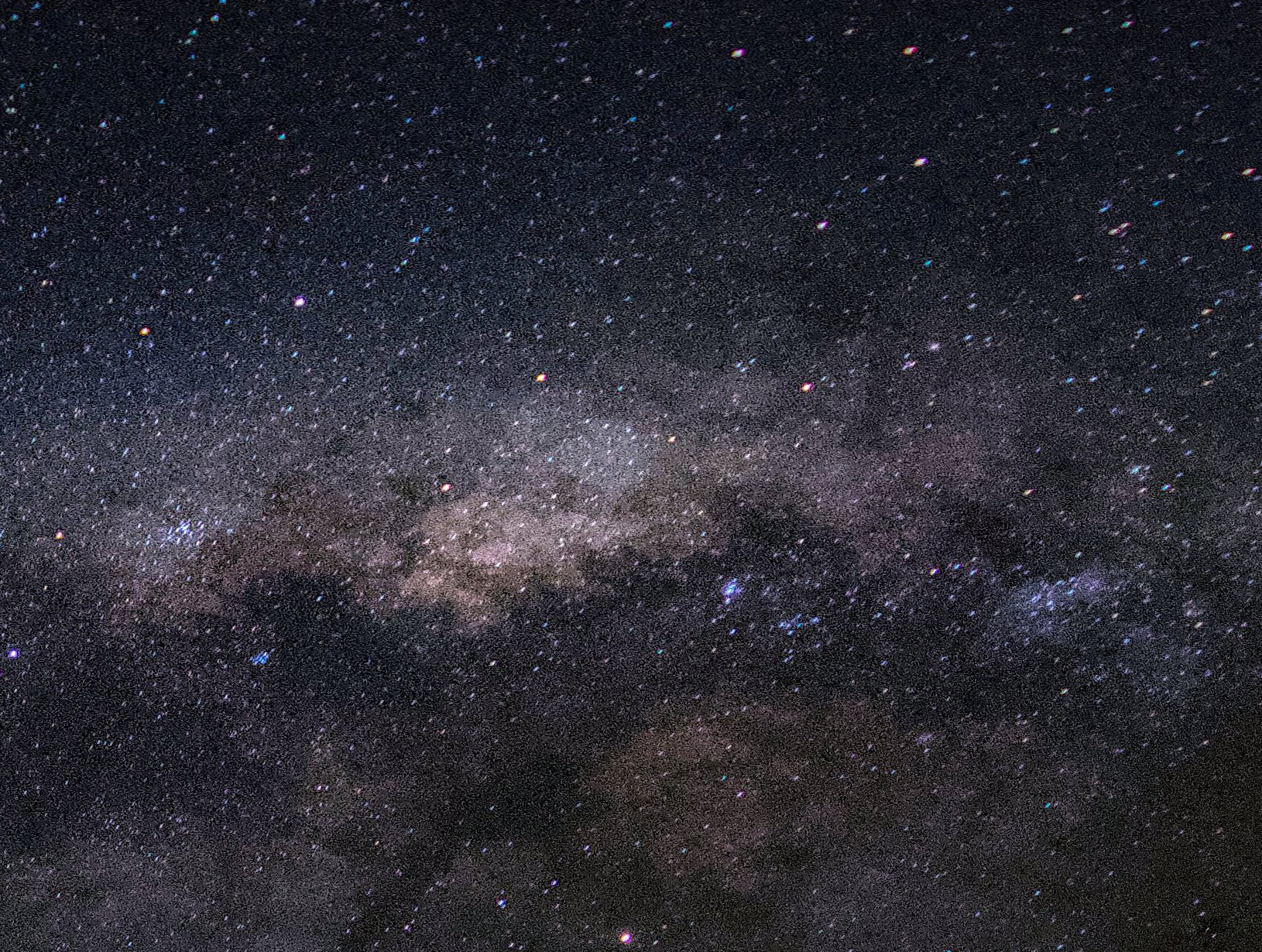
I wouldn’t call that perfect, but compared to the outer areas quite nice:
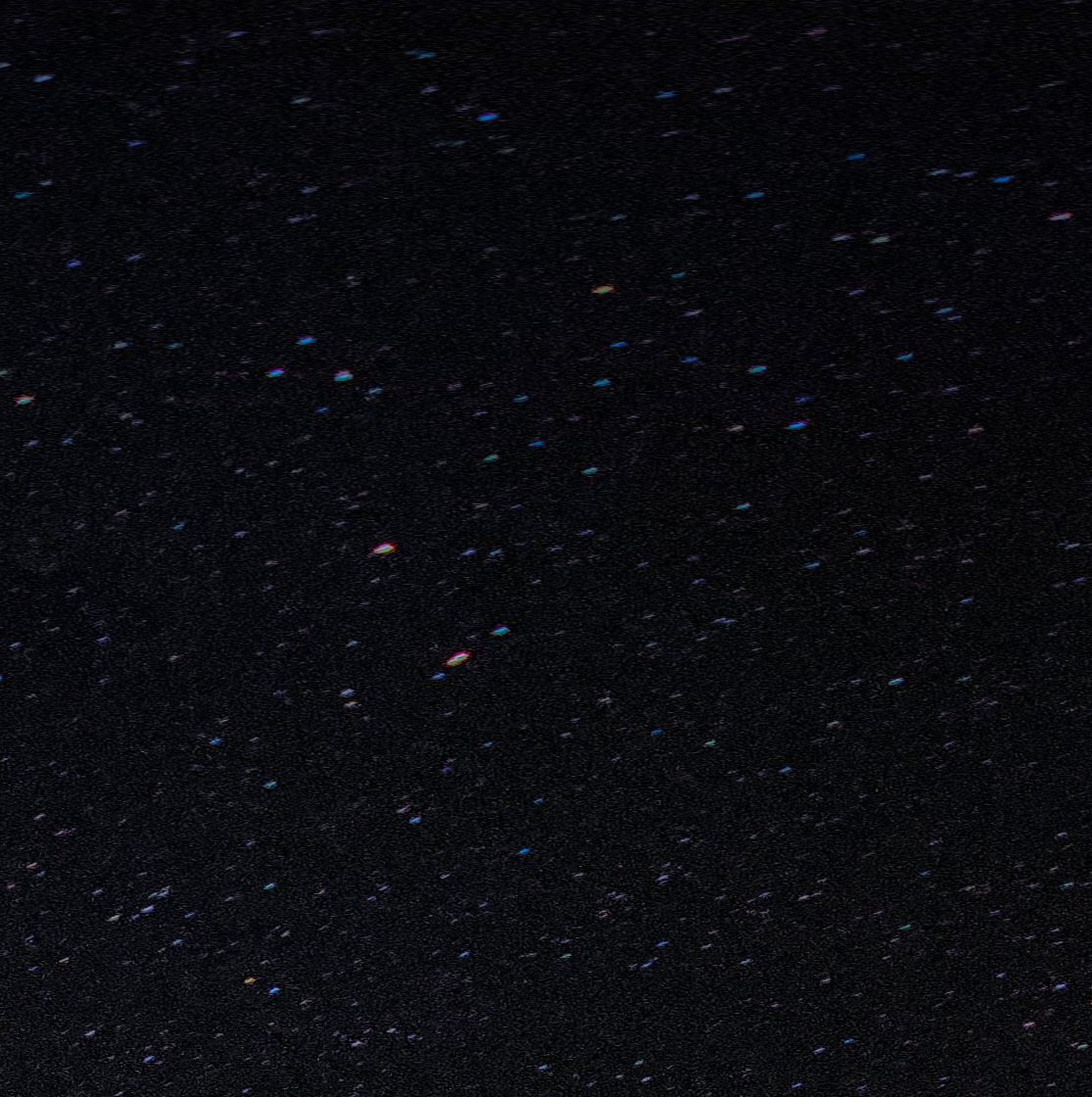
Does that mean it is a bad Milky Way shot? Well that lies in the eye of the beholder. There is a lot to improve. But with my technical equipment at that time I couldn’t do better (besides the torch problem and a bit of dirt on the lens).
I still like that shot. But I don’t pixel peep on Photos. The whole resolution is 8016 x 4356 pixels. Why should I start to look at it in 100% view.
Focussing on stars is nowadays with modern cameras not that difficult any more. On my DSLR at that time I had marked the true infinity position on the lens, so I didn’t really focus at all but adjusted this position. I bet the pictures of the TO are as sharp as they could get, with this lens and the atmosphere in between.