A friend reached out and asked if I could take the photos for his daughter’s wedding in October. I’m doing this as a favor to the family and am not getting paid for this, but I want to do the best that I can for them. I’m taking photos for the small event at the church, and they have a professional lined up to cover the larger wedding event and reception that evening. My experience is limited to nature and little kid’s soccer so I’m hoping that people here on this forum could help me with some advice.
Equipment:
Canon R7
18-150 f3.5-6.3 STM kit lens
EF 50mm f/1.4
RF 100-500mm f/4.5-7.1 L IS USM
Godox TT685 flash
Olympus OM1 MK II
M.Zuiko Digital ED 90mm f/3.5 Macro IS PRO Lens
Godox V480 flash
I am wondering if I should invest in either the Canon EF 24-105 f/4 L (can be had at a good value in the used market) or the M.Zuiko Digital ED 12-40mm f/2.8 PRO II (pricey but already on my wish list)
I expect that I’ll have both cameras with me to avoid changing lenses in real time. Both cameras have dual slots, so I intend to have the cameras loaded with cards and set to take dual copies.
Shooting itinerary: I’ve been through this with two daughters already, but I’d like to have a checklist of who to shoot and in what order. Obviously the bride and groom, families and the whole group. I could definitely benefit from advice on organizing the groups, posing, and scenes.
Etiquette: I’ll be in a church, and I want to place myself so I can take pictures and not detract from the ceremony. Thoughts on how to place myself so I don’t interfere would be appreciated. Also, how do I deal with flash?
Anything else I should know?
I’m excited with the prospect of doing this for them, and while I don’t expect to become an overnight professional, I want to do the best that I can.
Nothing to add tips-wise, but you have my respect for taking a wedding shoot. I’d be so nervous to mess up as the stakes are rather high. It’s not like a random portrait session or a sports moment where mistakes don’t matter too much – here there are two people entering a new major chapter of their lives
Without knowing your previous experience and knowledge: take as many photos as possible without thinking too much about composition, try to catch real feelings (smiles, reactions), use fill flash as much as possible (but practice before wedding and understand well flash exposure and camera exposure), know your camera settings by heart, keep always the camera prepared (set exposure every time the environment light is changed, even if you don’t take photos in that moment), take enough batteries and at least a charger, and remember to drink water (very important). Be relaxed and interact with people (say something nice or funny to the bride, tell something funny to other people, make them laugh or smile) the rest will come naturally.
You can read and watch tons of guides and tips, but the practice on the field will be totally different. In my opinion, this is a great opportunity to grow as a photographer, even if you don’t wanna be a wedding photographer: the experience is gold!
Personally I feel the R7 kit as is will be fine as is. The limiting factor will not be the camera gear it will be the the person behind the view finder. Leave the Olympus in the boot of your car as a spare in case of the R7 going faulty (unlikely). You will only need one camera and this lens will cover all scenarios.
My recommendation is to use flash as a fill in. I usually have the flash compensation set to a minus value so it fills shadows and doesn’t dominate the lighting. Probably -2 EV would work nice. Maybe do some test shooting before the wedding.
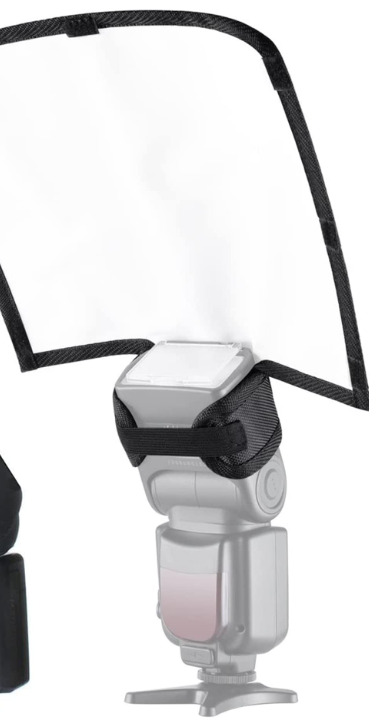
In the brides home try bouncing flash off the ceiling to give a soft even light to the scene rather than direct flash. Even at the wedding reception put a white card on the flash and bouncing light off that will give a nicer soft flash light. You could buy or improvise an inexpensive WHITE reflector. A piece of white card board would suffice.
A backup photographer might be helpful. I did this once on a wedding (beeing the backup). And while the other one made very nice pictures over the day, he managed somehow, to misconfigure the flash later in the evening. It was a relief for all that we had my pictures as backup for this timeslot.
I once saw this exact question on /r/photography and everyone’s advice was “don’t do it”. Perhaps it’s too discouraging but I personally wouldn’t want someone’s photos of a unique event resting on my personal abilities or lack thereof, given that I am not an event or even a wedding photographer. If you still go through with it, Popanz advice seems the best, have a backup.
I took photos at two weddings of friends. I likewise don’t have any experience with shooting events or people so I was also afraid to mess it up but it worked out well in both cases.
What I think is important, is to clearly communicate your (lack of) experience with with wedding photography to set realistic expectations. E.g. in my case, the results were good but a professional would likely have done better. They knew and accepted this in advance and were happy with the pictures they got.
Apart from this some tips:
Double-check your camera settings (also make sure you do not accidentally have set it to manual focus).
Check in advance what happens if you try to shoot without memory cards in the camera. Ideally it should show you an error (my camera can be configured on how to behave in this case).
If possible, enter the church a bit before the ceremony starts so you can already get an idea of good places to stand and find good camera settings for the light conditions.
Personally, I wouldn’t use a flash during the ceremony as I would find that rather distracting. However, I didn’t shoot in a church, light conditions there might be more tricky.
Set your camera to electronic shutter if possible, again to be less distracting. (however, I found it a bit unnerving to not have the audible feedback that I was taking pictures…)
Burst mode all the time!
Frequently check the images on the camera, so you notice early if some setting is off.
The most critical part is the exchange of rings and kissing. Be prepared that this may start without much heads-up and is over very quickly. So you have to follow the ceremony closely to not miss it. Here burst mode is most important.
Everything else is not so critical. Group shots can be repeated (assuming you check them immediately on the camera display) and most other situations are not so special that the lack of a photo of a certain situation will be an issue.
In case you take group shots, try to enforce that you’re the only one taking pictures. At the last wedding, other guests where standing next to me taking photos with their phones. This resulted in the people being photographed to be confused about which camera they should look at. If others want to take their own pictures (you probably can’t stop them) they should at least wait until you’re done.
I did a church event once as a favour and was wanting to do as much as possible with camera jpegs rather than raw/post. The daylight kept changing, sometimes with sunlight blasting through stained glass windows. I suggest check the orientation of the church and estimate where the sun will be at the relevant time. Practice setting a custom white balance with a sheet of paper or something, this might be useful if the light is pretty constant but a bit weird.
Thanks everyone for the suggestions, including the words of caution. All the recommendations on gear, settings and setting expectations are all on point.
In case I wasn’t clear, I’m only taking photos at the church itself for the small service, and they’ll have a wider service at the reception with a professional photographer on the scene. There is no way that I would attempt to cover an entire wedding, I’d be nervous even as a backup without some instruction from the lead.
I don’t know anything about the arrangements he made with the photographer, so I can’t speak to that.
No, I wouldn’t take the work for money. I used to coach the bride in soccer, so this is my gift to the family.
The father of the bride is an interesting guy. He progressed from coaching little kid’s soccer and now has FIFA referee credentials. He worked the World Cup and is slated to ref at the 2028 Olympics.
I’m taking photos for the small event at the church,
So, you are the only photographer? Good Luck. Tremendous pressure. If that is the case, I would
a/ Visit the site before hand at similar times
b/ Ask the church for Etiquette…can they allow flash?
If I were the only photographer (and an amateur), I would ensure all my photos are sharp and cover major moments. I think you already had experience with your daughters’ weddings. Lighting in the church is most challenging. Flash may not be the most pleasant to work with but I would still prefer to use it (if church allows) to freeze action and ensure pictures are sharp. If you carry another body, I prefer to dedicate for particular types of photography (eg black and white, no flash or telezoom)
It would be good to know more about the venue, especially the light. Yes, I understand it is a church, but that can range from a few small narrow stained-glass windows under an overcast sky to a modern church with white walls in the Mediterranean. This can mean a 3–5 stop difference.
I think that either camera body would be fine, but as for lenses above, I would consider only the 50mm f/1.4. Yes, I would also use this opportunity to splurge on the M.Zuiko Digital ED 12-40mm f/2.8 Or rent, not buy the extravagantly priced Panasonic 10–25mm f/1.7, depending on the field of view. I would scout the location beforehand.
I imagine the key will be flash usage, regardless of bodies and lenses. You will probably want to create a very diffuse light with some directionality. Personally I like a diffuser flash dome pointing left or right, roughly, so that faces do not have that filled look, but are still evenly lit. I am looking at purchasing the Godox V1 Pro in the near future for exactly this purpose, it can also do bursts.
Unless you are very experienced with flash usage, I would take test shots at the location. Eg take a few friends as subjects, and make a few shots, develop them roughly on the spot using a laptop (just exposure + AgX, really), and repeat until you are satisfied.
I think that this is a very nice gift with a personal touch. Best of luck!
As a former wedding photographer I would politely disagree with this lens choice. I mainly used a 35-105mm Nikon lens for weddings on the 35mm film camera. The wide angle was wide enough to get group shots and the zoom was long enough for intimate portraits. A 50mm prime would be very restrictive. However, the 50mm f1.4 on a second Canon body could be very handy in low light conditions when the focal length was suitable.