If, however, they ever build an X-Half with a built-in INSTAX printer (and raw support), I’d get one immediately. A friend is offering to sell their X-Half. It would be a great kids’ camera.
Though not for >€300…
In other news, MPB returned the 16-50 to me, or rather, the 23/1.4 that I had erroneously sent in. There was a weak moment there where I almost decided to keep it after all. But a saner mind prevailed, and I have since returned it for real. I double checked that this time it was the correct lens.
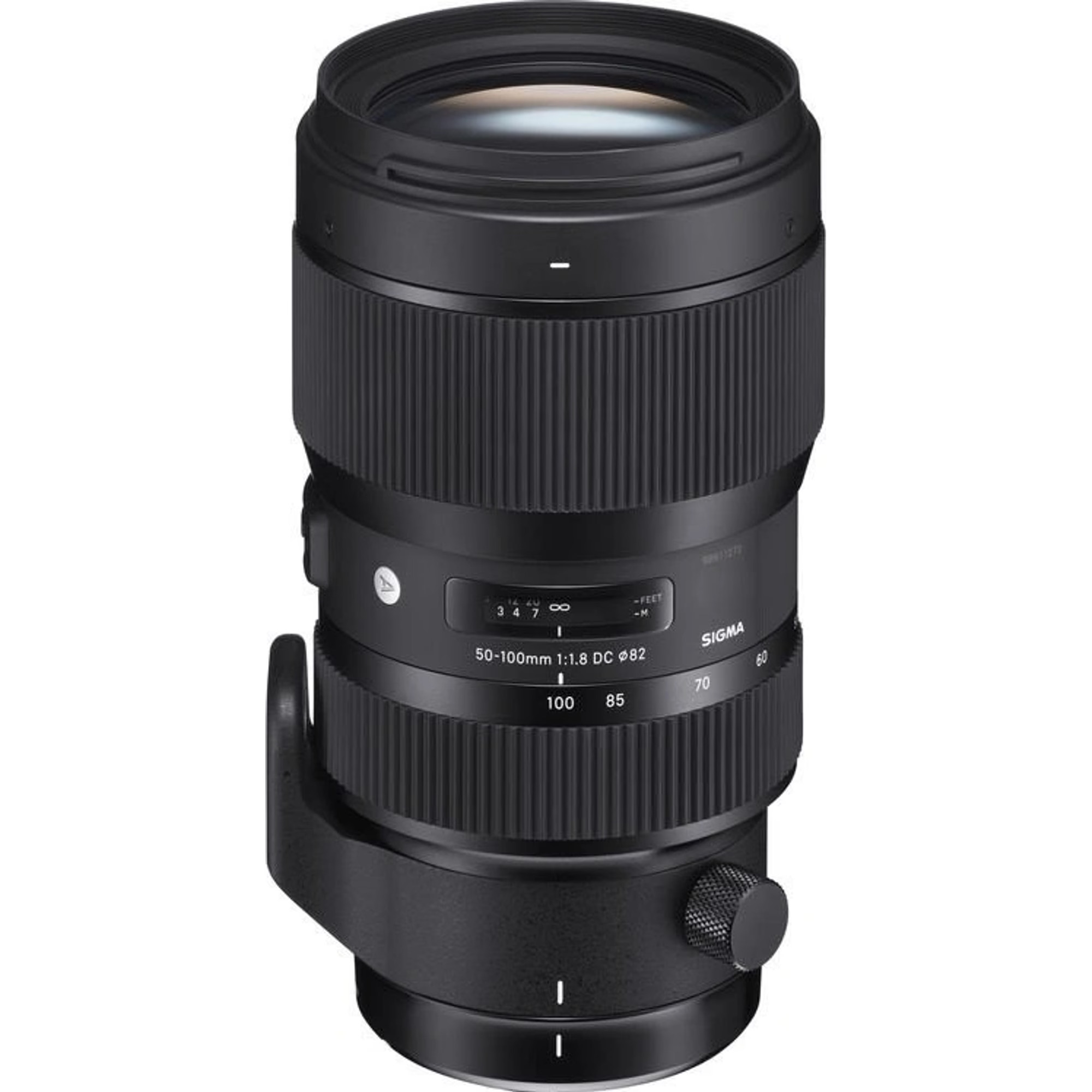
I was considering the Nikon rebadge of that lens (or is it the G1? idk) being lured by the fancy f/2.8 … but it’s quite expensive and doesn’t reach to 300 mm that tend to use sometimes.
I have slipped over the last few weeks, forgive my transgressions and forgive me for having access to the internet and its temptations of the tech.
Over the last three weeks I have received one TLR medium format camera, 10 rolls of 120 film, two individual variable led lights, a sous vide for film development, and very recently a 10-20mm Sigma a mount lens. Oh, and the seller threw in an nd 1000 filter with the lens.
But I swear, probably no more purchases before Christmas…maybe.
Don’t worry, this thread is very much a safe space for GAS sufferers. We’re all either active or recovering, but we’ll always stand with our gassy brothers and sisters.
Looking forward to seeing the results of your recent purchases. And remember, if your film development doesn’t work out as expected, you can always use the sous vide for steak, salmon and perfect vegetables.
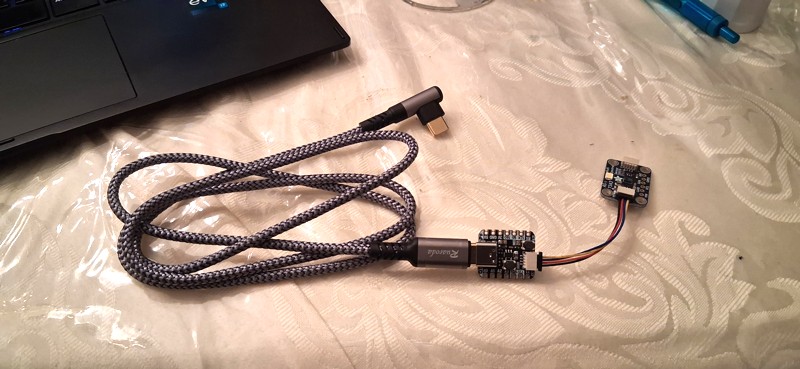
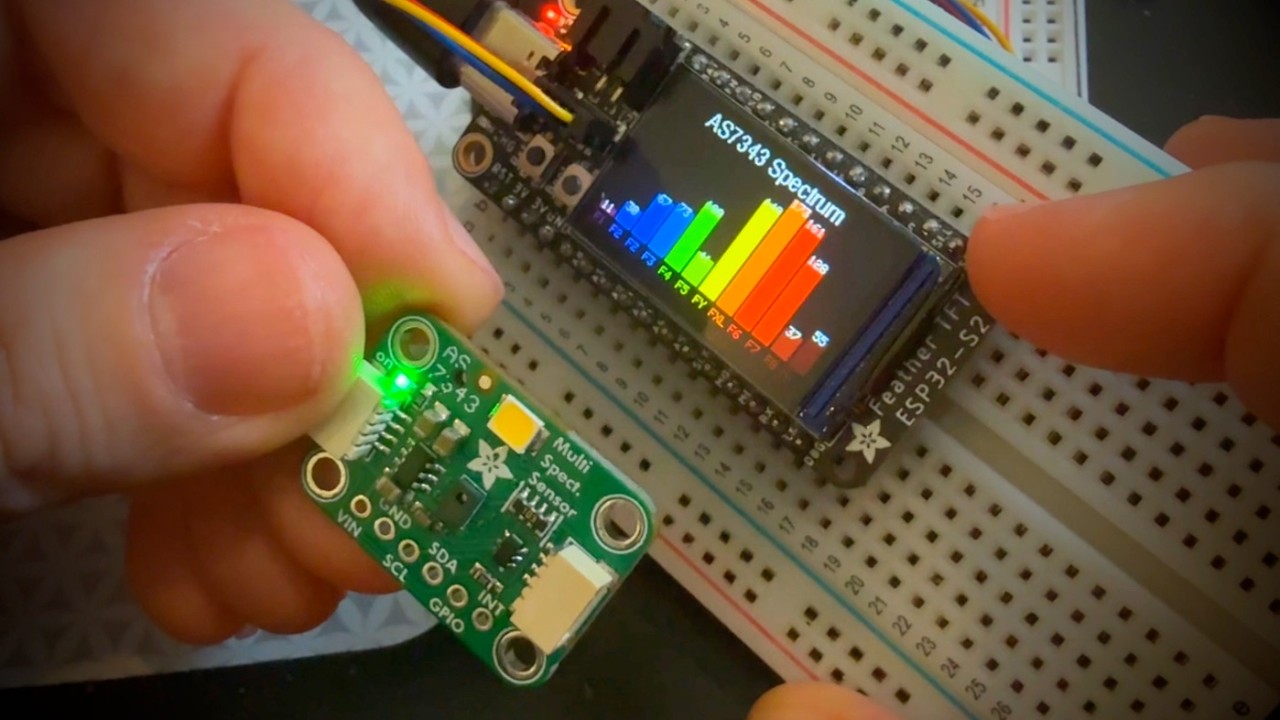
The easy-to-figure-out part is a USB-C cable. Attached to the end of it is a itty bitty computer, an Adafruit QT PY 2040. But it’s there only to talk to the thing on the end of the stranded cable, a 14-channel spectrometer. It’s the Adafruit AS7343 Spectral Sensor, product number 6477 if you want to get one.
The stranded cable is worth a few words, this is the STEMMA/Qwiik I2C standard supported by both Adafruit and Sparkfun breakout boards. Dirt-simple to wire up components without soldering, makes doing “electronics” simple. Then, Adafruit uses the CircuitPython system to put a run-time on the QT PY and their other computers where you can just drag code to the disk drive presented by the computer, and it runs, no flashing/burning. What a world we live in…
The QT PY is about $5US, the spectral sensor is about $20US, and the little cable was all of $0.95. This is a cheap hobby…
Actually, it’s really an 11-channel spectrometer, the other three channels are doing luminance things. So, I’m going to compare spectral readings from it vs the Calibrite Colorchecker Studio. Mainly for illuminators, one of the things I wish I had when I didi the spectral camera profiles was the ability to spectrally measure the illuminator. It also has a white LED for measuring reflectance (read, patches), I’ll test that too.
Wouldn’t a quantitative spectroscope be better for that? It should be much more detailed, though no digital data… I wonder @ggbutcher, how fast does the price increase for sensors with higher band count?
This one splays the rainbow on a measuring grid, you have to transcribe the wavelengths yourself. And, you can’t pull a specific energy value from a wavelength, important to biasing reflectance values to accommodate the illuminator.
The spectroscopes that measure in the <= 10nm interval range use a single-row analog sensor and point the diffraction grating at it. I’m not sure, but I think the Adafruit device uses individual sensors each with a specific bandpass filter.
I think I’ve talked about how my Nikon Z camera accepts USB charging from only C-to-C cables. Recently, I’ve noticed something else. My USB hub (connected to a USB A 3.1 port with an additional 5V / 4A power supply is able to charge my camera. It’s the fact that the power supply states only 5V rating – you can’t charge a 2-cell LiPol battery with that, so I wonder where the transformation happens?
 f/2.8