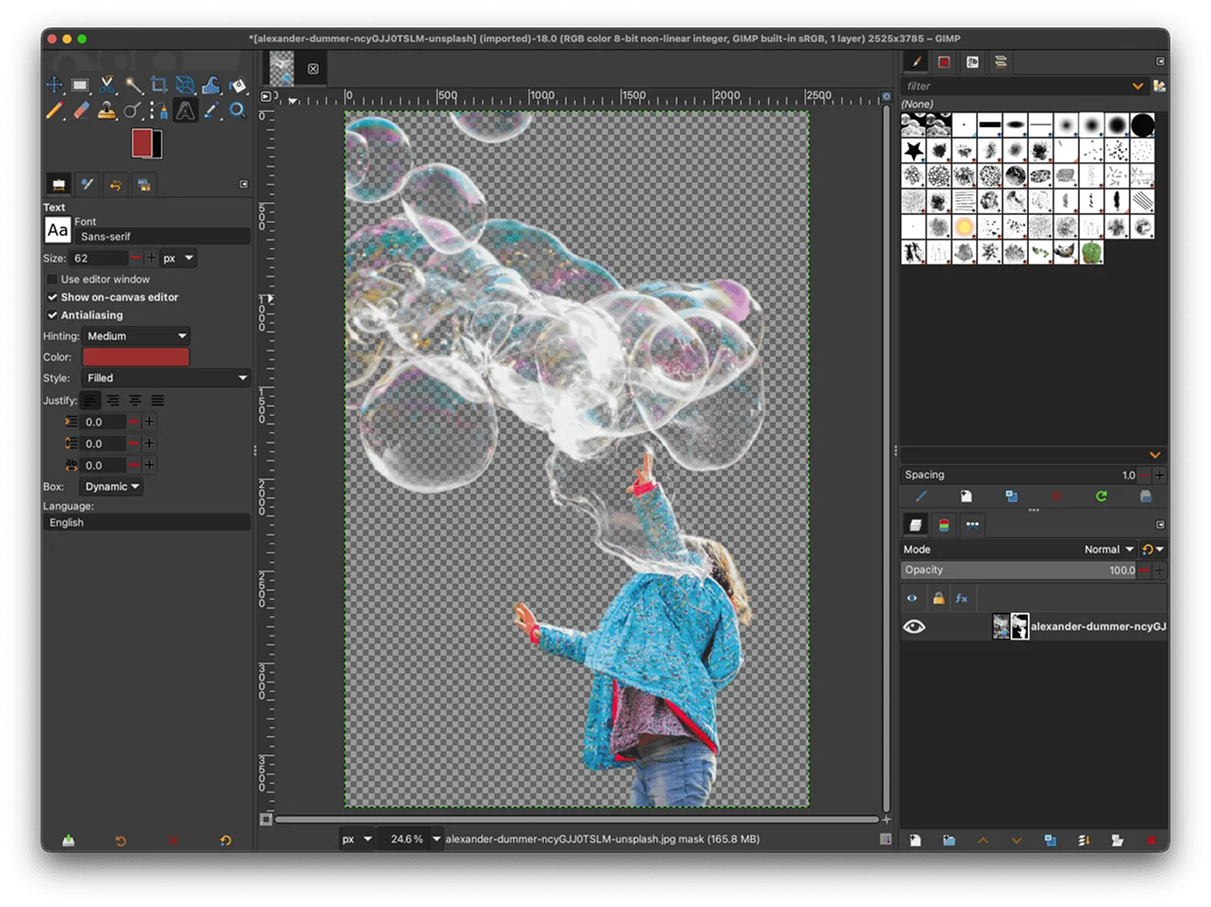
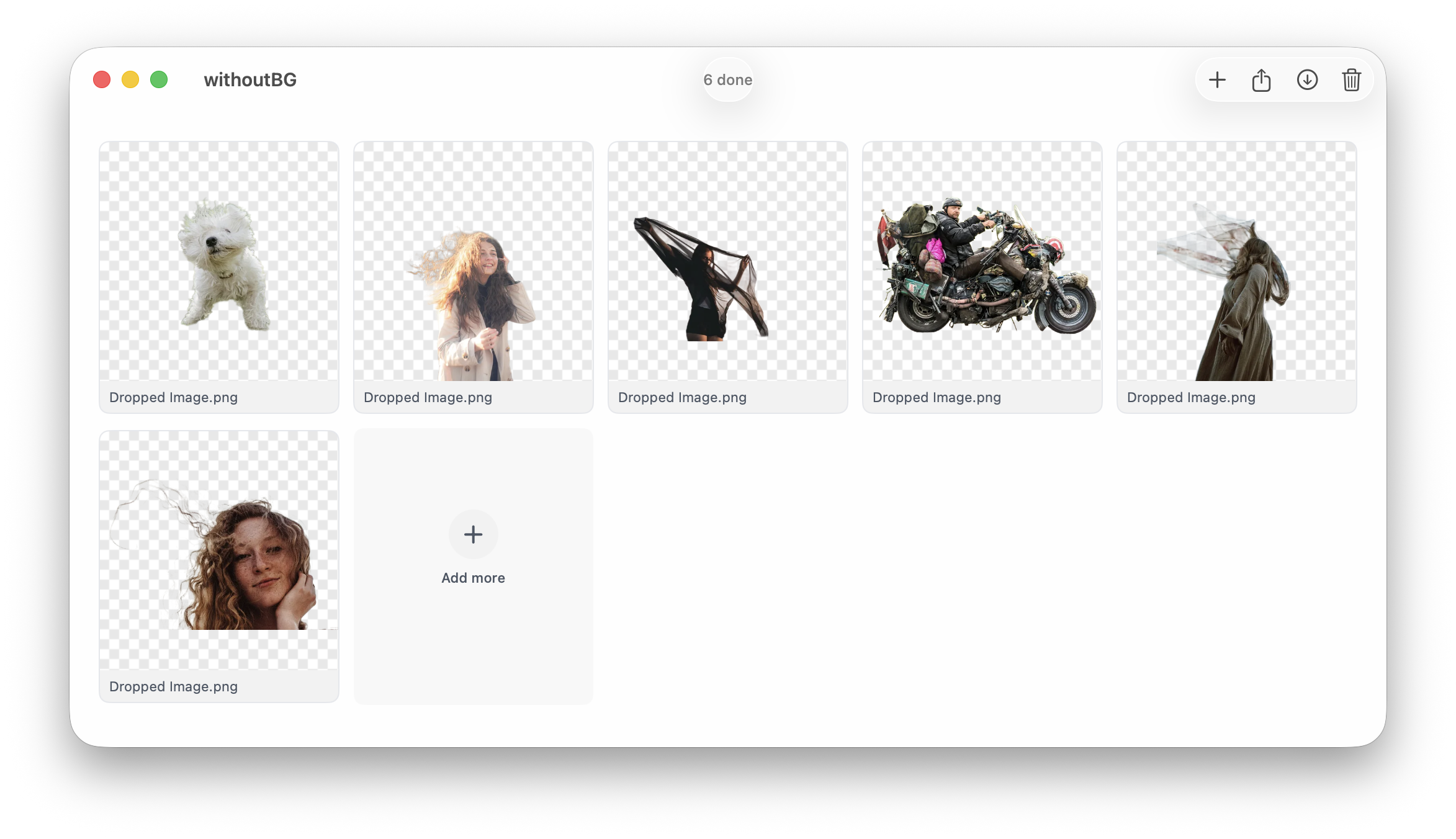
Everything uses the same inference engine, so you can choose the workflow that fits your setup.
I would really appreciate feedback from the PIXLS.US community, especially on installation, workflow, performance, image quality, and support for difficult images. Feature requests and bug reports are always welcome.
I asked the same question on imrans post on g-f-dot-net and it is;
withoutbg-openweights-v3-service-cpu is the lightest Docker image and is about 927 MB, including the model and runtime.
I am trying out a different “lighter” AI bg-removal Gimp plugin, a local installation with “only 600MB” of dependencies. As with most things image editing, it all depends on the image. Ai can work very well or it can leave you with a bit of manual editing.
Thanks for responding the above question and your feedback.
There is definitely a tradeoff between quality, speed, and model size. I think withoutBG Open Weights is a good balance for desktop use.
For this release, Docker was the most straightforward and hassle-free solution. However, I plan to improve this further. I’m considering building an easy-to-install standalone CLI tool that can also act as an HTTP server, which should significantly reduce the installation requirements.
Regarding the model size, there are lighter matting and segmentation models available, but they generally struggle more with transparency and fine details such as hair, fur, and semi-transparent objects.