We’ve spoken with the SFC already  Bradley Kuhn is an awesome guy.
3 Likes
Post correct link!
(you’ve linked github)
BTW: another reminder - if you’re using liberapay remember to renew your contributions or enable automatic contributions!
And to those who can - raise your contributions to open source devs and charities. Current times are hard for everybody but if you can - a donation can help!
2 Likes
Coming to this conversation very late, but being available in most commonly used OS in the world, and having more people who use it in result, is how professional adoption works. The more people hear about the software, the more people end up using. Huge amounts of people who use photoshop etc, are casuals actually. %7 professionals is not a bad ratio at all.
Also professionals need document formats and suits that are the industry norms for adoption to happen often in professional level. Most professionals don’t have the time to deal with extra hurdles, and as much as I hate to say this: part of that hurdle is installing an OS that didn’t come with their computers. (and desktop/laptops that come with linux are exceedingly rare, even more so outside of the US/Europe). Also to point out that if you are working in the industry as part of a large company wherever in the world you are, rather than freelancing, you might not have the option to choose your own software. Developing nations have less range/variation of work available usually, which means often these niche jobs exists even less or not feasible financially.
Another issue is promotion. When adobe comes up with a new program or a new version, they give it to popular youtubers, to vocational magazines etc to review them, to promote them, to create content around them. They have advertisements put out. (and even with these measures, smaller companies often have hard time gaining legitimacy against giant established ones) We don’t have that setup, we don’t have an advertisement budget, what advertisement we do is by volunteer work, just like development work (except often it is not even recognized as FLOSS work that contributes to projects - although thankfully that is beginning to change now. Also, unlike developing work for programmers, these contributions do not even contribute to our careers. )
In terms of internationality, even when they use it, they don’t necessarily become part of the networks that this survey reaches out to. English speaking for non-english speaking countries is also a self selecting group. People who are technically savy enough to be interested and explore and find open source communities like pixls.us or otherwise close within social networks to the developers and related channels is an even more self selecting group. Language is a barrier, it is not the only one.
Some of us are doing work to make this change, but it won’t happen overnight unfortunately. Would be happy to talk about this more, and please understand this is in no ways a criticism. These are right questions to ask, and asking these questions are the first step to start fixing them.
However this post ended up long enough.
7 Likes
100.000 I don’t know, but with 50.000 I was able to retain all tags and the main 4 itpc (title, description, author, rights). Before migrating I’ve also mirrored my collections to tags, so I didn’t loose them.
Interesting. Could you develop a bit what is not yet possible with darktable ?
Disclaimer: I never used lightroom so I am not advocating here, I only try to contribute to the discussion by mentioning different perspectives.
Yes, carrying over most of the metadata is possible, and that’s great. Still, some metadata is not carried over (e.g. flags), and still there are additional features of lightroom’s DAM that make sense to me that darktable does not have. (a) I love darktable, just to make that very clear, and (b) I am extremely thankful for the effort you and other devs put into it, and (c) I already tried to contribute a bit but at the moment with two little children, more commitment than participating in pixls.us and one or the other interaction on the issue tracker is simply not possible these days, likely in a couple of years again, but (d) I don’t like that some people claim some feature completeness for it, because it’s simply not true. I know that you know, but still … Some examples:
- Ordered named collections: In preparation of a slide show, photo book, blog post, … it is important to reorder the photographs according to the story they should tell. While manual ordering became possible in the mean time, it’s still not possible to have an explicit collection (one I give a name and select images directly to are within this collection) that has its own order. I have to deal with external libreoffice sheets to prepare my projects, which is cumbersome as it duplicates resources that are already there. I am not sure but I think this is possible in lightroom.
- The photobook module: While I think it is not necessary to have a real photo book module, it would be helpful to have a fake photobook module where you can assign images or groups to pages and have them appear visually side by side, such that you can arrange your layout roughly before all images are finally edited, going forth and back to editing images and arranging images. Edits, e.g. crops, may depend on layouts.
- Image stacking & alignment, panoramas, HDR etc.: I am not sure how this is all integrated in lightroom, but there seem to be internal possibilities for basic operations. I personally don’t miss them, but we are not talking about me here. There are lua scripts, but I guess it’s not the same. However, what even I miss are features to clearly mark images that belong to a certain set (e.g. belonging to a single panorama, an HDR, a focus stack) in a way that it is visible on the lighttable (coloured frames, some text layover, …). Coloured, named, nestable groups, maybe.
- In general it was a long time law/dogma that darktable does care only for single images. I think this is due to ease of XMP per picture paradigm, but I think it’s time to break that rule (it’s already broken for a long time due to this raw HDR feature, but this did not require additional metadata …). Time lapse is another example, where something such as multi-image metadata would be necessary.
I was more referring to the good integration of the adobe products, such as a raw loader in photoshop that uses the whole image editing feature set of lightroom, but I know as well that something similar is possible with darktable and gimp. And I know Aureliens plans for krita, which would also directly steer into that direction.
But as far as I know, not all information is stored in xmp (I think time correction was recently added, but IIRC there were more), so a full separation from library seems not possible yet. Maybe my information is outdated here.
A command line flag that avoids showing lighttable, film strip, etc. and also avoids adding an image to the database, such that all information is stored in xmp, may be a first step. Is this already there? More metadata support from darkroom would be necessary I guess in that case, such that adding title, map position etc. would still be possible.
Again, maybe my information is outdated. Big thanks again for all your effort!
2 Likes
Thanks for taking the time to answer. I understand better what you mean.
Interesting indeed.
1 Like
I wish I had seen this survey, but it seems to be gone now.  I didn’t see it on any other forums either…
It would be good to have a new survey because lots of new users have come to darktable in the last year. I have seen much more discussion about it on other forums than I used to see. If there is a new one I will post it on several forums I know about.
The overall results probably wouldn’t change much though. Unless users who are more likely to be on other, different sites/forums that were not found earlier are uncovered.
Darktable has had a lot of development hours put into it. Unfortunately imo it has a greater chance of becoming popular in the video and vfx industry than photography one. Adobe and others have set a standard for photography and that is that anyone needs to be able to become a photo retoucher in half an hour or less of using their software. Lowering the barrier to entry so that anyone can start a photography business, buy their license and drive your price down.
We just maybe have a chance to attract some hard core serious and popular artists and maybe brush off with some of their popularity.
I think we still haven’t seen anyone using Darktable to its fullest potential. Maybe Darktable has the potential for helping a serious photographer to get back his place in the industry. And to stand out from all the Instagram kids. Maybe Darktable is worth the learning time investment. At least that’s what I hope for. I hope for it eventually to pay of, I hope for the new knowledge to open my creative possibilities and make me more efficient and it’s that’s true I think that’s how Darktable should be marketed.
That’s a double edged sword. The problem is when Adobe releases a new version everyone inherently thinks it’s the best thing since sliced bread but when there is a new version of Darktable, everyone thinks it still sucks.
And that’s directly related to how hard it is to learn and achieve a good looking result. I guarantee you none of those very popular youtubers know how to use Darktable to even review it properly so they just say it’s ok but not there yet. And tho that statement still holds true for now, I don’t think they do any good to the software when they don’t even point out its strong points beyond flexible masking options.
The point is, we have to be those youtubers. We who know or are trying to understand the software deeply. Not just understand the software but the workflow it is designed for. Darktable borrows a lot from movie and vfx grading, not so much from other photo editors I’d say. And that’s what messes up a lot of people if you don’t explain it to them. And before explaining, you first have to learn it yourself. And one thing you quickly realise with Darktable is that you are never done learning new things no matter how good you think you are. And that too should be explained as such. New users need to know that Darktable is not finished and it will be a commitment to use it. But that will come with a very nice reward that you’ll learn a lot and you’ll be so capable to do any grade on any professional software. You don’t get that with Lightroom, but you do get quick result without knowing any theory behind how you got there.
Darktable is a great software that can do much more than Lightroom, but still can’t 100% replace it. That’s what I know for a fact. What I also know for a fact is that that is going to change in the near future at the current pace of development. Every week there’s something new, every week it’s getting closer to replacing Lr 100%. It will be a glorious day when that happens.
4 Likes
Where can I see the survey’s results?
This survey is more than 2 years old. So I doubt results remains available.
There is a new survey up.
It’s here: darktable user survey 2022.
1 Like
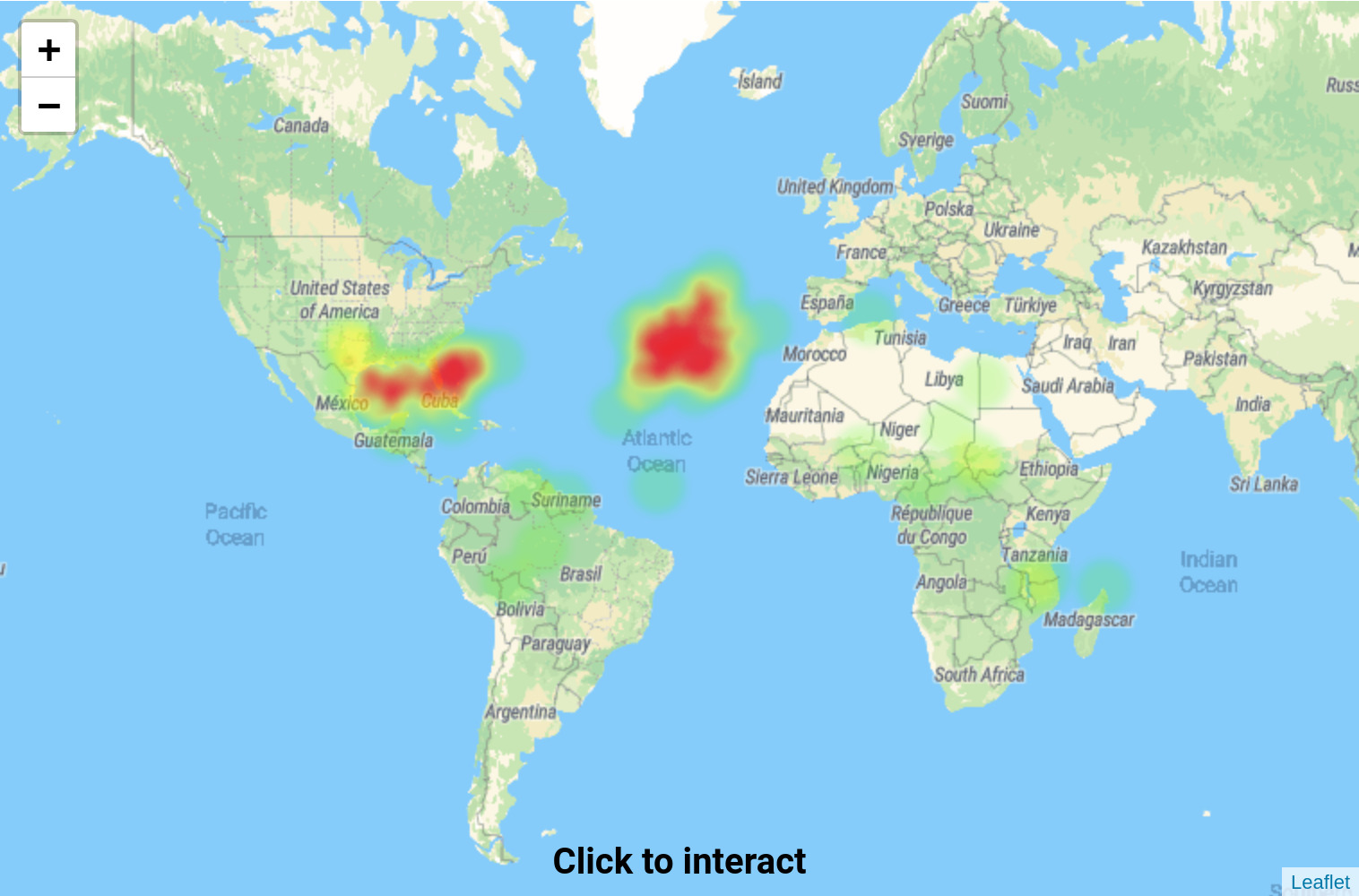
Hm, after the survey you will see the current result, but I am sure I do neither live in the caribbean nor in the atlantic ocean  .
.
1 Like
If I could zoom in (it just spins) I might be barely under the edge of the Gulf of Mexico concentration… maybe. 
Thank you for the link. I think such survey is useful…
Not sure about the map - looks strange…
Thanks for the link! I’ve filled in the survey… I wonder how many users have?
When I filled it out, the lowest percentages anywhere were two percent. So I’d guess it’s been 40-70 people so far.
1 Like
The 2020 results are out:
1 Like
Thanks for the heads up @kmilos . Interesting reading, and well presented I thought. I might note that the published results are for 2020, with last years results coming up next.
Edit: noticed it actually says so in the headline. Oops.
The article concludes with
This is bad.
A photo processing software should attract a distribution of users that matches the distribution of real-life photographers. [and darktable’s users are too technical]
I don’t agree with that assessment at all. There are a good dozen of commercial products out there catering to all kinds of audiences already. Why should darktable have to cater to the average photographer as well? They are already well-served.
Darktable is uniquely technical, and attracts a technical audience, as evidenced by this very survey. As one of those technical people, this is what I love about darktable! This is emphatically not “bad” at all!
3 Likes