No, I get it. Good luck, life is hard. I’m sorry you feel like you have to come here and take your cheap shots to feel better.
Indeed. Sadly I was having issues with koreader, hence this purchase.
I have used it a bit more and for me these are the strong points:
- It’s fast to send data to it, be it epubs, articles from the web, new fonts, etc
- Crosspoint is very well thought out
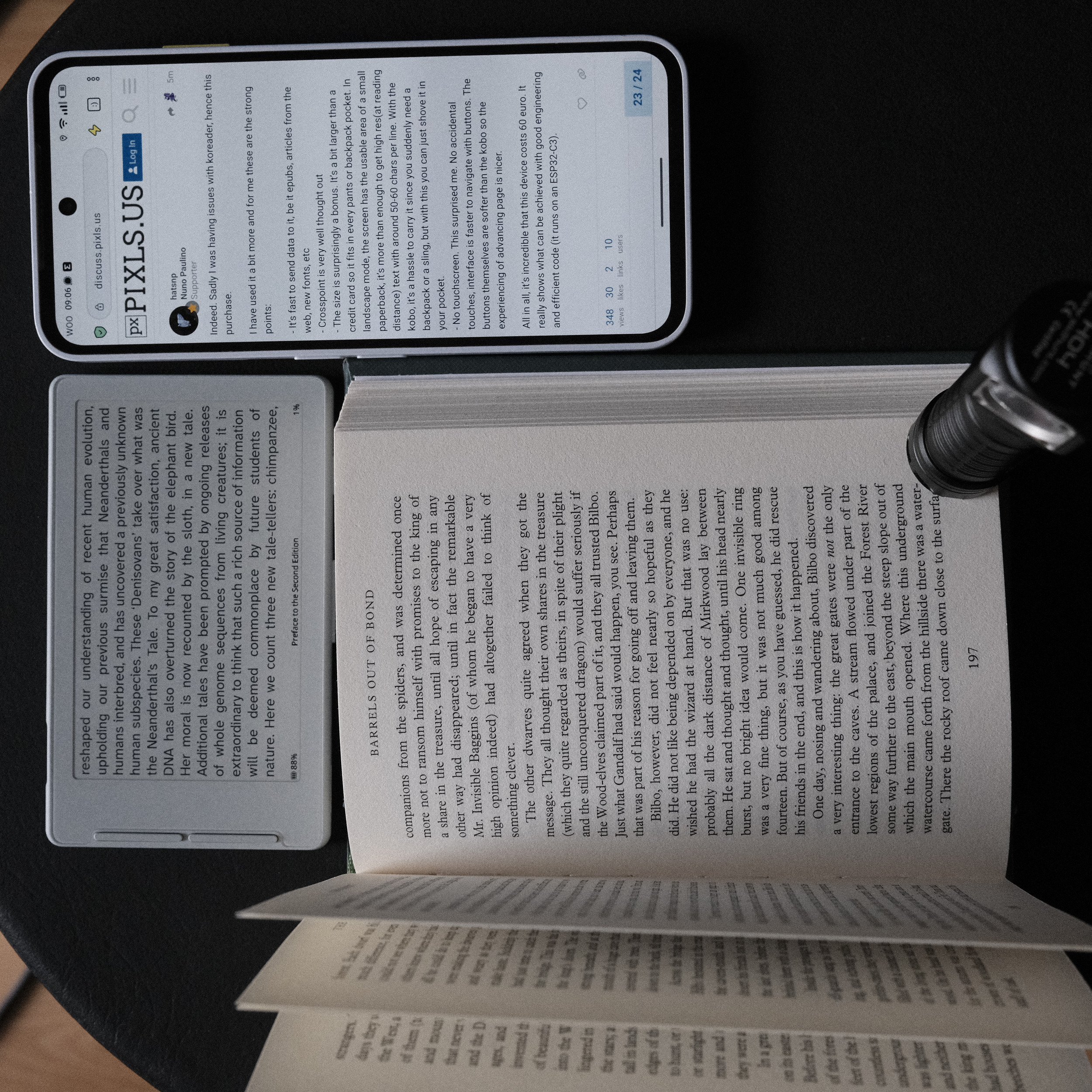
- The size is surprisingly a bonus. It’s a bit larger than a credit card so it fits in every pants or backpack pocket. In landscape mode, the screen has the usable area of a small paperback, it’s more than enough to get high res(at reading distance) text with around 50-60 chars per line. With the kobo, it’s a hassle to carry it since you suddenly need a backpack or a sling, but with this you can just shove it in your pocket.
- No touchscreen. This surprised me. No accidental touches, interface is faster to navigate with buttons. The buttons themselves are softer than the kobo so the experiencing of advancing page is nicer.
All in all, it’s incredible that this device costs 60 euro. It really shows what can be achieved with good engineering and efficient code (it runs on an ESP32-C3).
Size comparison:
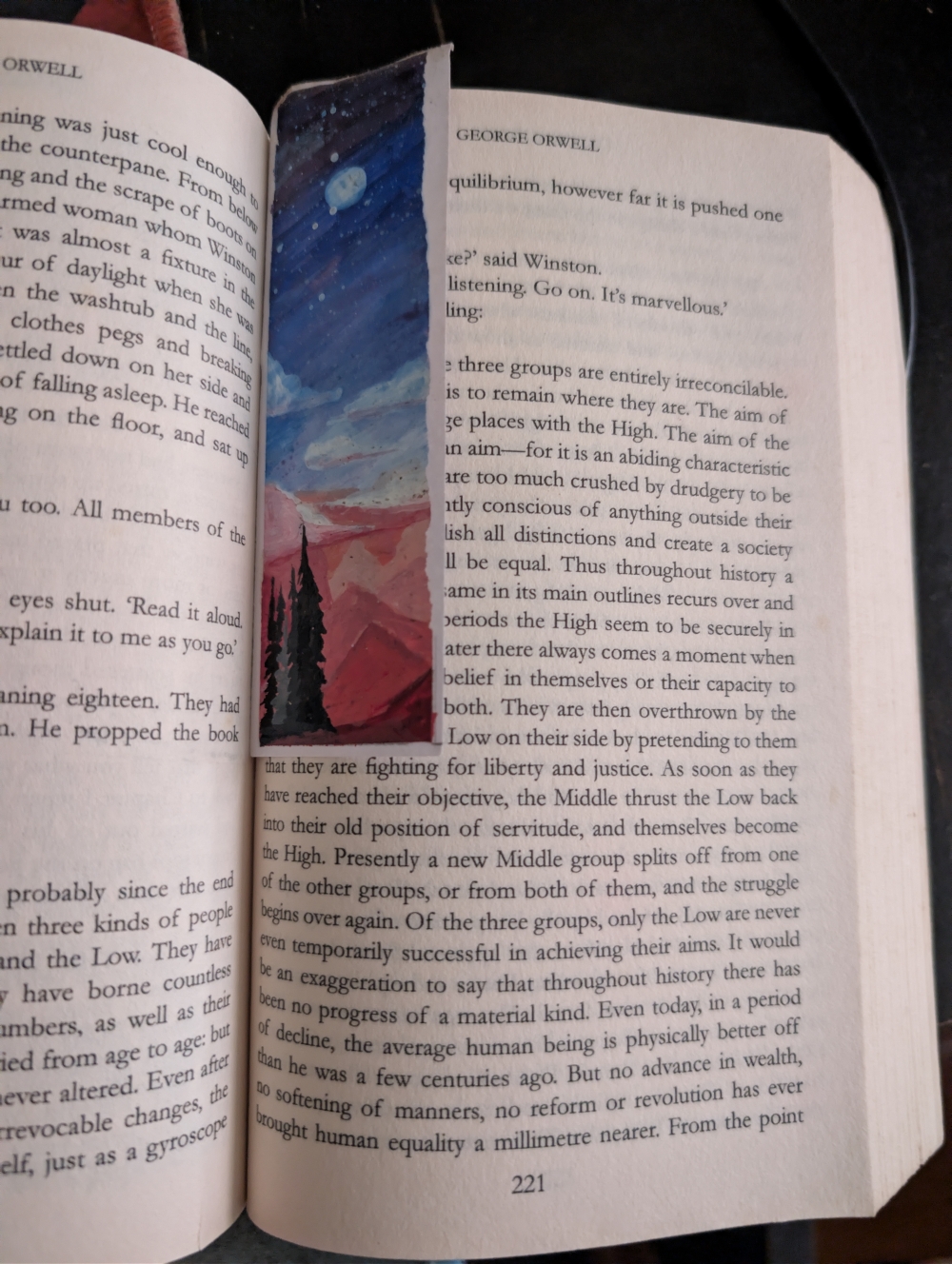
I can tell it feels really nice in real life. I could never trade the physical experience of reading a book or the parts of that experience like making your own little bookmark(s) (or dropping it on your face when you dozed off for a second after a good lunch on a sunday afternoon…anybody? )
Although the Big Brother(s) of today have made it incredibly easy to both access and even experience a part of it, I really feel sad seeing more tech related hubs than actual libraries.
Here where I live ( if you don’t know, the nearest McD is at least 150-200Km Away as a reference to how “in the middle of nowhere” my little town is ) I have seen these so called libraries pop up which are basically study rooms, mostly full throughout the year and especially around any govt. vacancy exam times.
Now the students who join them call it a library, the owner names it as a Library and the entire culture of “leaving your house- (acting/to try to) study- socialize with similar aged people - come back after the day is spent in that little cube and repeat the next day” is the new trendiest library culture around here.
When I entered college I tried to seek one of these and see if they actually have books because my college didn’t have anything of sorts and going back to the school I just graduated from didn’t feel like a very bright idea. If the above library culture was accompanied by an actual space with books, It would’ve been fine but it hurt so much when I realised none of the dozen new libraries that opened in my town within the last 5 years are actually “Libraries”…and the only ones that have books in them are all the big old Govt. School libraries.
Why the long story and how is it related to FOSS general talk you may ask?
Well, I started reading e-books . First google’s own google play books. then when I realised how locked down the system is I went back to physical books but the convenience of ebooks was genuinely very good and the trade for when I am traveling or other similar times was absolutely worth it So I started finding apps and projects that would let me have an offline but more powerful experience. Here are a few projects I have found so far.
- For PC I recently discovered Bookokrat :
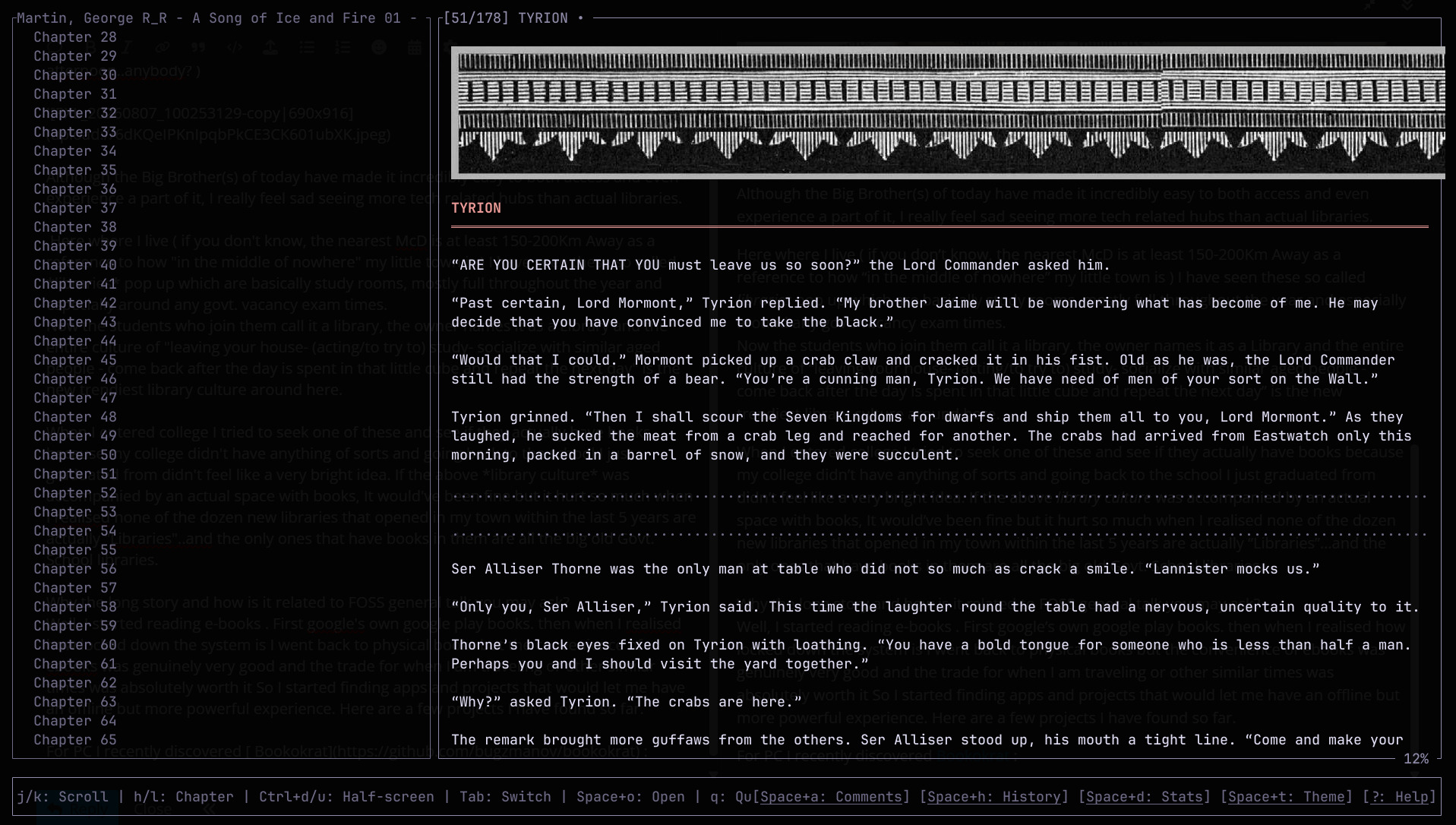
It is smooth, it even works in termux (which now has sixel support so your cover art and other images work), it looks pretty much everything I would want in a simple enough ebook reader on my pc. It’s a TUI app so I kept it at the top : )
-
Another alternaitve which I use more often is koodo-reader
Which I found to be the best way to read books on PC. -
For my Android I use Librera FD Which was the answer after the long story above. I settled there.
There’s also NoveLA I use for Light novels or similar stuff with 1000+ chapters with continuous scrolling and TTS support.
Before ending this excessively long post I would like to pull focus towards our right to not just buy ebooks as a digital media but OWN them. This is by far the most frustrating part for me. Yes SaIliNg tHE HigH SeAs Will be fine and easy but authors and brilliant artists behind each book I read contribute to my conscience in more than one way with each read and I would feel discouraged to even read ebooks if I cannot own them by paying them a miniscule amount of which they would only recieve a fraction.
I am going through words per day/session myself so I know how hard it is to consistently write 2k word or so every day, then redo entire chapters and then get it through the first draft and countless other things before it is even presented to a publisher.
I recently found this video in my feed and I think Modos Flow | Crowd Supply this is how far they have gotten. I think if there are such options out there in the future, Owning both the hardware and software will be as welcoming for me as it gets and Along with my hope of having my own little library of books I purchased over the years, I will have a way to access a larger digital collection that I can immerse myself into anytime-anywhere. (I still want more libraries huh)