I generally don’t shoot wide open with my vintage glass because the lenses typically get way too soft.
1 Like
I have only just briefly talked about this, more like a matter-of-fact statement, but no, I haven’t really done a video on this subject. I’ll right it down in my “to-do” list and I will get to it sometime in the (near) future.
While true, I don’t ever find my images so soft that it bothers me. It doesn’t really seem like it detracts from the image and quite frankly, I think I sometimes prefer that soft look. It suits my style.
3 Likes
I’ve been considering the TTArtisan 25mm 2.0. It has a few flaws, but none of them are deal breakers for my intended use. Mentioning it here in reponse as it’s suposed to be notably sharp wide open and it’s inexpensive (around $60 US, or £70 UK I think).
https://m.youtube.com/results?sp=mAEA&search_query=ttartisan+25mm+2.0
1 Like
While manual focus is great of those situations, for fast-moving subjects I also like focus bracketing. It took me a while to get comfortable with it (the units my camera uses for steps are arbitrary), but I figured it out by experimenting. I usually make \pm2 shots, ending up with five images, one of them usually has the subject in focus.
Indeed. I find it ironic that in the age of digital cameras, where you get to review the results instantly and don’t have to spend time & money on developing film, apparently few people want to invest in learning about their tools.
For example, dpreview articles about camera bodies now discuss ML-based subject recognition and focus tracking extensively so I imagine that this is something that the audience is very interested in. Sure it is an important feature for pro sports photographers and similar, but for the general audience, spending 20 hours with their camera will result in better photos than spending $2000 on the latest camera body.
4 Likes
@Tamas_Papp - You bring up a what’s for me a very good point. You also underscore the limitations of what passes for “camera reviews” these days. Some of the more useful features and capabilities are all too often overlooked.
You said it right when you said we “… don’t have to spend time & money on developing film
…” Just yesterday I looked down at my current little camera and realized I held in my hands an entire very capable “mini-lab.”
I used to work in photolabs in Hollywood and Irvine, California (back when dinosaurs roamed the earth). My colleagues and I would’ve been thrilled to have the kind of flexibility for colors and BW tonal rendition that we now have.
Which, again to not to hijack this thread (too much), makes me laugh when I read titles to articles that say silly things like “Sony would do so much better in the marketplace if they offered film simulations like Fuji.” The writers obviously know zip zero about what they’re talking about and it’s clear to me they have spent absolutely no time understanding what these little “mini-labs” are capable of.
2 Likes
While you make a very relevant point, and I have the same personal preferences, I think that camera companies are recently also targeting people who want to spend as little as possible fiddling with the lab in their hands and want to focus on photography instead.
Consider the Panasonic S9, recently released, which has a great sensor, very few controls, but a dedicated LUT button and a whole LUT ecosystem including a phone app. At the same time they released a 26mm F8 (nice review here, see the title) manual focus lens for street photography. I sincerely hope they succeed with this.
1 Like
I find the state of mind sitting in front on a monitor tweaking a RAW file is quite different to flipping through a photobook or going to a photo exhibition. It’s hard not to be wowed by the detail available in modern sensors and want to go with that. Then you go to something like this exhibition where that level of sharpness would be detrimental and it doesn’t matter:
But a question.
If you’re not good at manually zone focusing, how does one avoid missing focus with an evf? It seems quite imprecise compared with a split prism, even with punching in and peaking.
1 Like
@TonyBarrett - I very much like some of Julia’s work. And I recently learned she deliberately defocused some of her images to see if she couldn’t achieve a more “artistic” effect.
Just now at the Palais Galliera in Paris there is a stunning show of some of the finest works of Paolo Roversi(see: https://www.palaisgalliera.paris.fr/en/exhibitions/paolo-roversi ) until the middle of next month.
Like Julia Margaret Cameron, Paolo’s really big camera work aren’t what we might consider to be “tack sharp.” Yet, and yet… OMFG… that work is gorgeous. I had to buy the show catalogue because even printed small on a print-press some of the images really “sing.”
2 Likes
Practice and you’ll get better. It took me about 5 years of shooting street basically always wide open and I’m now quite fast and confident with it, so much so that I rarely even miss focus anymore)l.
An important caveat is that I don’t aim for tack-sharp, perfect, clinically precise focus. Good enough is often good enough, the moment/story of the scene, the lighting and composition are factors that I care for much more. It’s them that make/or break an image and not the focus.
3 Likes
I’d love to go and see Francesca Woodman’s work. Maybe one day I’ll be able to make the journey.
Thanks for pointing these out. I didn’t knowingly know his work
I teach camera classes to a variety of students with a variety of needs, skills levels, and many different cameras. Only occasionally do I see a model of camera that approaches manual focus with any serious attempt. For most they are challenging to say the least in manual focus because we have lost the beauty of microprisms and split screens to ensure tack sharp images. Instead you are presented with a matte focusing screen or an EVF which puts the photographer behind the eight ball with manual focusing.
I recently bought a Canon R7 and it has a complex autofocus system which even for a skilled photographer like myself I am still learning and mastering. It also has made a very reasonable attempt at reintroducing manual focus as a viable option. I have setup the manual focus options to include peaking and for the camera to show a focus guide that indicates if the focus is correct for the displayed focus point which I set to a single focus point and place over the subject. Manual focus is again a reasonable option with this camera and the works possible as nice as the microprisms and split screens of the past. Some other manufacturers also do a good job. I like the cameras that magnify the centre of the screen when rotating the focus dial and immediately return to the full screen when you stop adjusting focus (nice).
1 Like
Yes, my LUMIX punches in to magnify the image in the evf and does peaking (tho it seems a bit all over areas of contrast in the image quite often). I still find it tricky but maybe that’s partly because I’m trying to use it when the autofocus would fail and it’s naturally tricky:
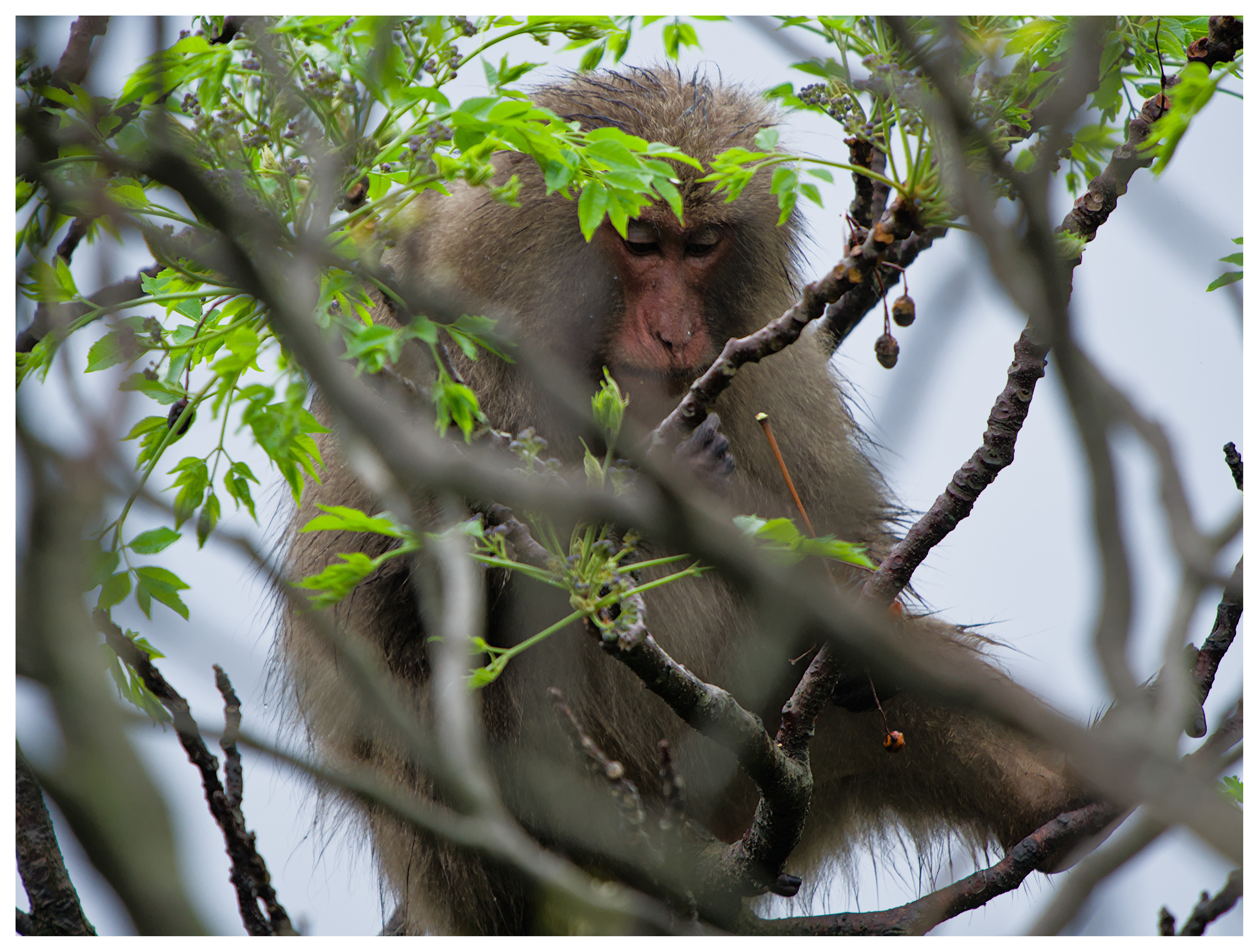
Also it’s often when using a (stabilized) extreme telephoto (in this case 200-800mm equivalent).
4 Likes
Great capture… Almost like he has a laurel wreath on his head 
2 Likes
I hadn’t even noticed that…
Glad you posted this on pixls.us. Very interesting. I have subscribed. Thanks.
1 Like
My Fuji X-T20 has zoom and focus peaking.
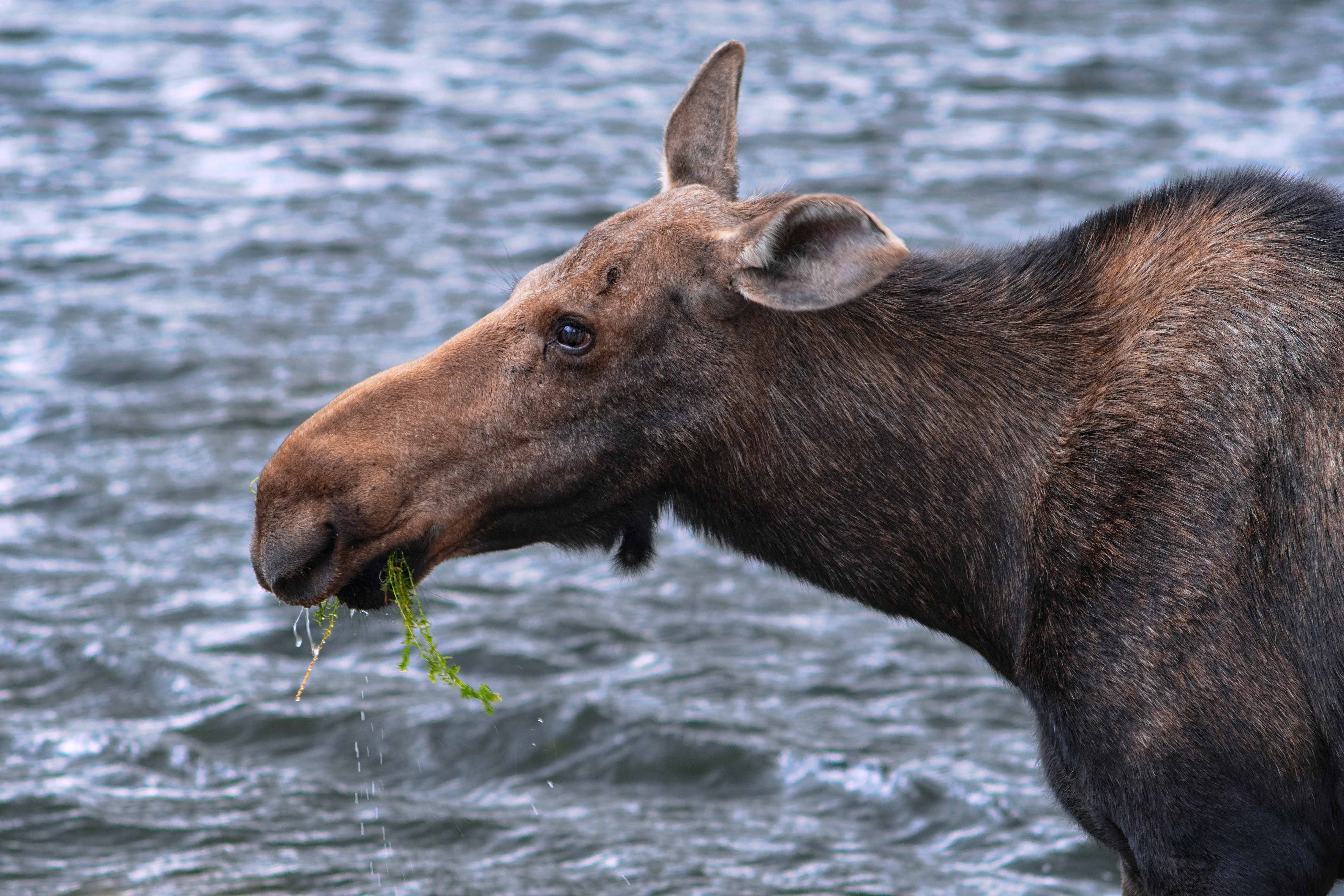
Hexanon 135 f/3.2 (@ mods, full resolution to show details in the focus)
4 Likes
This becomes a bit circular. The reviewers talk about focus tracking, so the audience assumes this is important. And because the audience thinks it’s important, the reviewer talks about it more!
I also think the existence of professional reviewers is a mixed blessing. If your job is to review cameras, you will naturally focus on how cameras differ from each other, and which ones are better and which worse. While there may be objective answers to these questions, they become distracting and counter productive. In real terms the difference between the best camera at a given price point, and the third/fourth/fifth, is trivial compared to the difference between an individual using any of those cameras for the first time, and the same individual using the same camera after a month or year of deliberate practice.
2 Likes