Talking of lenses and prices, this is the first lens I’ve seen that’s (hand) made in Scotland:
https://omnarlenses.com/omnar-bertele-5cm-f-2-mc-flb/
By the people who run this website (I didn’t know they were Scottish, either):
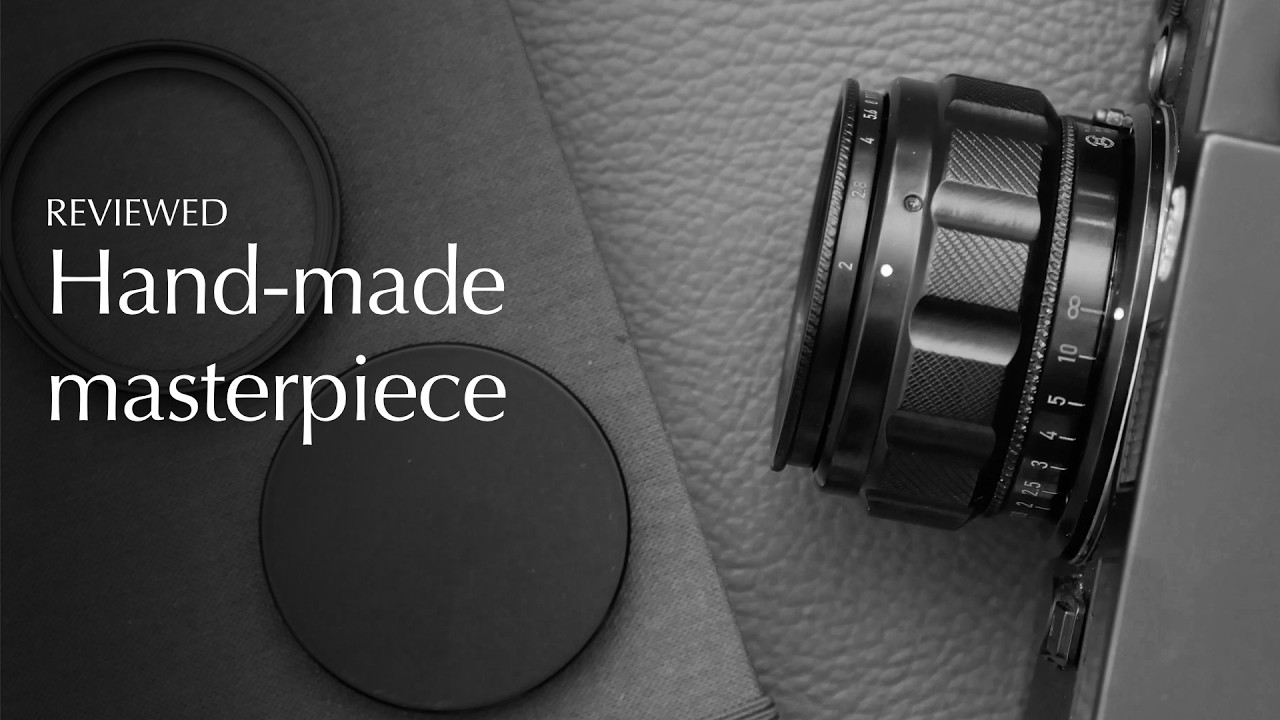
Talking of lenses and prices, this is the first lens I’ve seen that’s (hand) made in Scotland:
https://omnarlenses.com/omnar-bertele-5cm-f-2-mc-flb/
By the people who run this website (I didn’t know they were Scottish, either):
It’s strange that I don’t have the same enthusiasm for my phone photos even though I’ve captured some very nice shots with it. I think a lot of that is knowing that I don’t have the same editing latitude that I have with my “real” cameras.
Yes, I feel similarly. When I look at some of my favourite photos over the last couple of years, a few of them have been taken with my phone, but I still somehow relegate them to the level of “phone photo” and don’t feel as proud of them.
Phones are modern marvels, and I really am impressed by what they can do. But perhaps the fact that they do so much by themselves is why I don’t feel as proud of the photos. Even though I still edit the RAWs, I still can’t sculpt them in the way I can with photos from a larger sensor, like you said.
I think it’s for similar reasons that I decided against going for the Olympus TG-5 that someone was selling near me. I liked the idea of a pocketable camera that could stand up to the elements, but ultimately the sensor is just like a phone sensor, so I don’t think I’ll enjoy the editing/processing experience as much.
I am going to preorder the GR iv, debating if I’d sell the III, my gut says keep it, but I’m not sure why. I don’t need to accumulate stuff.
It’s hard to sell a camera sometimes. You get attached to them. I still have my Canon DSLR lying around, but I never use it.
… and similar comments.
I am sure someone here would like to buy it from you if it is in good condition…
High megapixel counts make some sense to me fle these fixed-prime cameras, as they enable deep cropping, to compensate for the lack of zoom. But without IBIS, that’s a difficult proposition (same as the GFX100, I suppose).
I don’t really buy that to be honest. After all, they did put IBIS into the GR III. It’s a comparatively weak IBIS (3 stops IIRC), but it’s still extremely useful. Especially for a tiny camera such as this, which is often used one handed, at arm’s length.
I keep my GR on a strap (well string) during hot summer days. I find it to large for my shorts but then I’m European so my shorts tend to be smallish and I don’t even want my phone in them.
Any other time of year the GR is small enough to bring without thinking.
Regarding the GR Vs RX discussion they are both small cameras but they have different priorities. The GR is all about handling whilst the Rx seems more about IQ both withing a tight size envelope . The Rx has a wonderfully lens but everyone seems to hate the handling.
The coming GR seems to be a rather small upgrade but rumours suggest they will be made in China to avoid supply issues. They probably decided to make a few changes to it with the move of manufacturing.
Except apparently OM System. I mean, they probably can add more megapixels, but they don’t seem to want to, and there are some good reasons why. Cramming more pixels on the M4/3 sensor could add more noise, diffraction issues and they might have to update some lenses to properly resolve the resolution. And of course, their computational features could suffer without a bigger processor to handle the extra MP…
I’ve definitely come around to the idea that they don’t need to add too many MP on to their sensors, but the problem they have is one of perception. The perception is that their sensors are behind the times and inferior. They could do with some updates, yes, but I’m not convinced they need to go high resolution.
Apparently, they are considering in-camera AI upscaling, but I’m not convinced. Do we really need to upscale in camera? Why not keep the images lower resolution and then you have the option to only upscale the ones you really want to after importing on to your PC? Upscaling every image in-camera seems unnecessary. After all, how many images are we going to print out in a large format where the extra resolution matters?
I think they should look at improving their Handheld High Res Shot feature to make it more versatile. This could be a really nice differentiator from the other brands and retains the benefits of their smaller res sensors (smaller bodies, faster processing, cheaper, etc…)
Yes, it is readout speed. They need it for their computational features.
I am not sure about this. Certainly it is one of the things being parroted by clueless people, but the idea that more megapixels is better has been around since the dawn of digital photography.
Not really, it will not appease the people who dislike crop sensors, they will just come up with another argument to justify it. AFAIK AI upscaling was considered, but there is no OM camera that has it.
Some friends who have OM cameras told me that they tried out this feature because it was exciting, but are not using it in practice because the standard resolution is more than enough enough. (They can’t stop raving about the GND though).
What do you want an 80MP image for?
Cropping 
I have said this many times on this forum, but significant cropping is an illusion because of the square law.
Crop your 80MP image 3x (which almost any zoom lens can do), and you have a 9MP image. And on most systems, even the most basic kit zoom will give better image quality, as you will be in the resolution range where sharpness decreases a lot (holding the viewed size invariant).
In practice, cropping is for minor corrections of framing.
I’ve been enjoying the xpan crop of my GFX so far, and that crop still leaves me with a 50mpix image.
I think any feature that you forget to use, like I do with HHHR and the potential to crop, means you don’t really need to use it.
I agree for most cases, but when you are constrained by the range of your optics (wildlife), more resolution will help you get a crop where the image still retains decent resolution. Sure, cropping 3x will net you 9MP on an 80MP image, but that’s still a lot better than 2MP on a 20MP image. 9MP is usable, 2MP is borderline unusable(1080p).
For cases where you can adapt to the scene with different focal lengths, cropping is not that useful if you have the required zoom lens.
And respected reviewers and review sites. I’m 100% in agreement with you that more does not equal better, and that 20MP is probably fine for most people most of the time, but the perception that OM System sensors are behind the times is quite damaging and I think they should try to combat it.
It’s just marketing at the end of the day, but that cannot be ignored if they want to succeed and increase market share.
OM System need to show innovation somewhere. It doesn’t need to be by increasing the MP count, but it needs to be somewhere and they need to do a good job of marketing their innovation and shutting the naysayers up. I think they can do this with computational features, but also going back to their PEN line. There is huge demand for compact cameras right now, and OM and Panasonic should not miss this opportunity.
Yes, this is key. Cropping can keep you in that range of usable. It’s not always what you want, and it’s not always desirable, but it is an option that can be useful in some situations. I actually love the idea that OM System includes High Res Shot, especially the handheld option. I wouldn’t always use it, but the option to use it is a compelling feature.
I have a 40MP APS-C sensor, and I have some pictures cropped quite heavily that are still very usable and can be printed at a decent size. It’s a nice feature to have.
I think the issue is that the situations where you often want to crop heavily—wildlife—are those where you can’t use things like handheld high resolution.
Wildlife is hard!
Regards, Freddie.
Yep, this is why we need sensors with those resolutions natively 
If Samsung can cram 100MP into a teeny tiny sensor, surely bigger ones could’ve advanced a bit already, even with their limitations due to bigger size.
While I am not sure we need to go that far (it increases file sizes, post-processing times, and requires more expensive hardware on the camera) I think a very strong argument can be made for getting to 36MP.
This is what you need to get 8K video which, for better or worse, is a selling point. Sure, most people don’t use it but still take notice of it. Much like the 0-60 time of a car, or the size of the TV in a hotel room. Thoroughly irrelevant metrics, but still perceived as a mark of quality.
Regards. Freddie.
Yes, exactly. We can discuss all day about whether people need 50MP or 8K video or whatever, but at the end of the day, perception matters. In the case of OM System, I really hope they thrive but I don’t think they can based on good vibes and a healthy used market. Anyway, hopefully they are just in a transition phase and their latest models are just to show that they’re alive. Maybe in the background they are planning some big things.
On another note, rumours suggest Canon is going to release a Powershot G camera later this year. It will be more photography focused than the previous V model. Will it have an EVF? And will it be priced well?