That’s a shame to hear about the adapter. I was going to keep my primes when I move to mirrorless later this year , 3 of them are wide.
I’ve got a couple of adaptors for old film lenses. An M42 for my Helios 44-2 and an Olympus OM mount for my old primes. Really looking forward to trying my Olympus 85mm f/2. Being able to adapt vintage lenses is one of the main reasons I wanted full frame.
It was when I started researching the OM 12-100 F4 that I discovered what compelling FF options there are now. By all accounts, that OM lens is excellent, but at the end of the day, it’s still 560g and is F8 equivalent all through the range in terms of DoF.
The Tamron lens you mention isn’t quite as wide, but it’s cheaper, faster (F2.8-5.6) and at 575g essentially the same weight!
And the Sigma 20-200mm offers a wider focal range while being the same price, faster (F3.5-6.3) and at 550g essentially the same weight.
You’re giving up the constant aperture, but they are both faster throughout the whole range in terms of DoF.
While my M.Zuiko 14-150mm F4-5.6 is not in the same league as the 12-100 F4, I think it makes more sense for creating a compact M43 kit.
For those willing to shoot APS-C on FF, there are other superzoom options that fall into that same focal range, including the Sony 18-200 F3.5-6.3 (27-300mm equivalent). There are also a couple of x17 superzooms, but I assume image quality suffers a bit too much with these.
1 Like
To be honest, I am constantly vacillating on the topic of all-in-one zooms. Yes, more reach is always nice to have. But reviewing photos from a recent trip, I found that I rarely, if ever, get good photos out of the 100–200mm (FF) range; too short for wildlife, too long for street, and in hot/humid climates you can see atmospheric blur already at those distances. The 120mm is kind of nice to have, but it’s not like one cannot crop in to ~100mm from good quality 70mm, it’s not a big deal.
1 Like
You know what? I may have been using the telephoto range of 150+ mm way less than I always thought. Before I had the Sigma 105mm macro, a lot of my detail shots were captured with the 70-300mm. At long focal length it got some nice background blur. After getting the macro, I noticed a big drop in usage.
To be fair, even before getting the 105mm macro the usage was not very frequent. Most shots besides details were occasional animals, but that was really not often. Sure, there were some landscape/city shots every now and then that turned out really nice, but other than that…  ?
?
I’m now thinking whether I need a tele zoom at all. I suppose having something like a Tamron Z 70-300mm from MPB for €410 would be nice, but even that feels like a pointless purchase
1 Like
Totally in agreement with you. And as always, there are scenarios and situations that are the exception rather than the rule. There is the rare occasion when having the 300mm reach on my OM-5 has got me a shot that I simply wouldn’t get, such as a bald eagle a long way off. But for general travel and landscape work, it’s overkill. And the quality at that long end is mediocre at best.
For M43, I’m constantly asking myself if the 12-45 F4 would be better. It has a wider angle at the short end, is a smaller and lighter lens, sharper throughout the whole range, has a constant aperture, and 24-90mm reach is a great standard focal length. It could be the perfect travel/landscape/street lens.
And with the Fuji, I think my 16-80mm (24-120mm equivalent) is perhaps a sweet spot, lying somewhere between a standard zoom and a superzoom.
That said, there are always those situations when 120mm doesn’t feel like enough! Perhaps the M.Zuiko 12-100 (24-200mm FF) is the sweet spot?
But then I always come back to kit portability and whether it’s worth lugging around something big and heavy when travelling. Sometimes it’s just best to accept you will miss shots. And when I start going down that road, I start to think if I should just go for smaller, cheaper and faster primes and forget zooms altogether! How about that for vacillating?! 
1 Like
My primary use for long focal-length is, to coin a term, “frame-packing” (not ‘compression’, don’t want to start that argument…). Shots like this:
IMO Such compositions give warped sense of scale, which draws interest.
8 Likes
Agreed @ggbutcher. In my landscape work, I like to use a telephoto to emphasize geometry, layers and shapes, which aren’t always obvious when using our eyes.
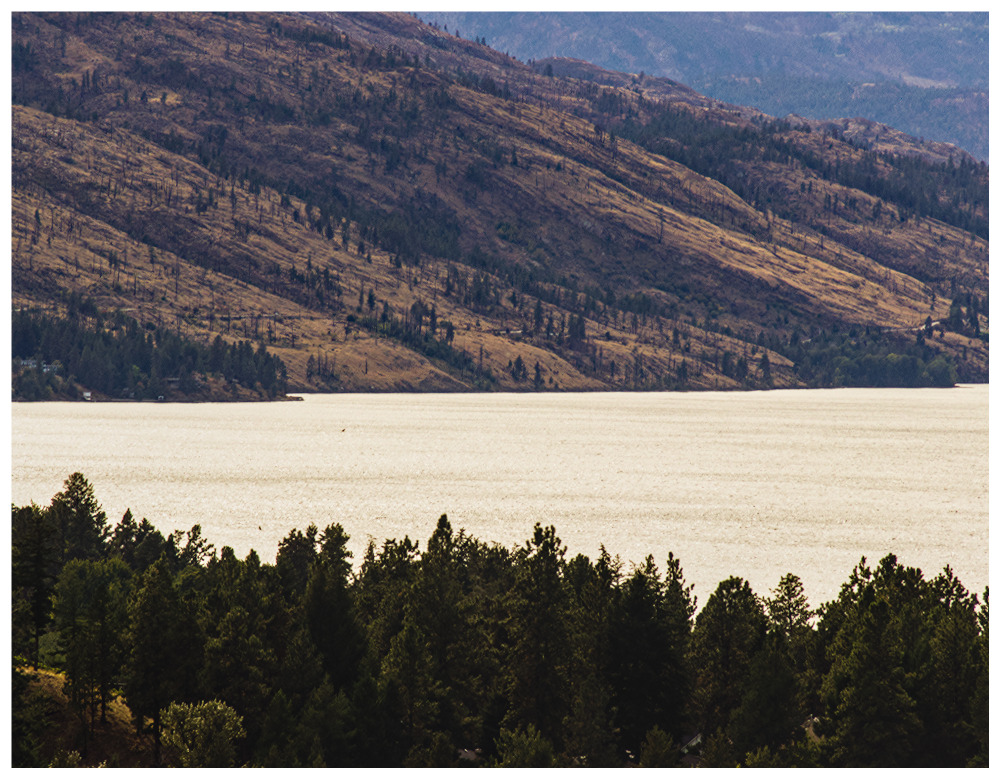
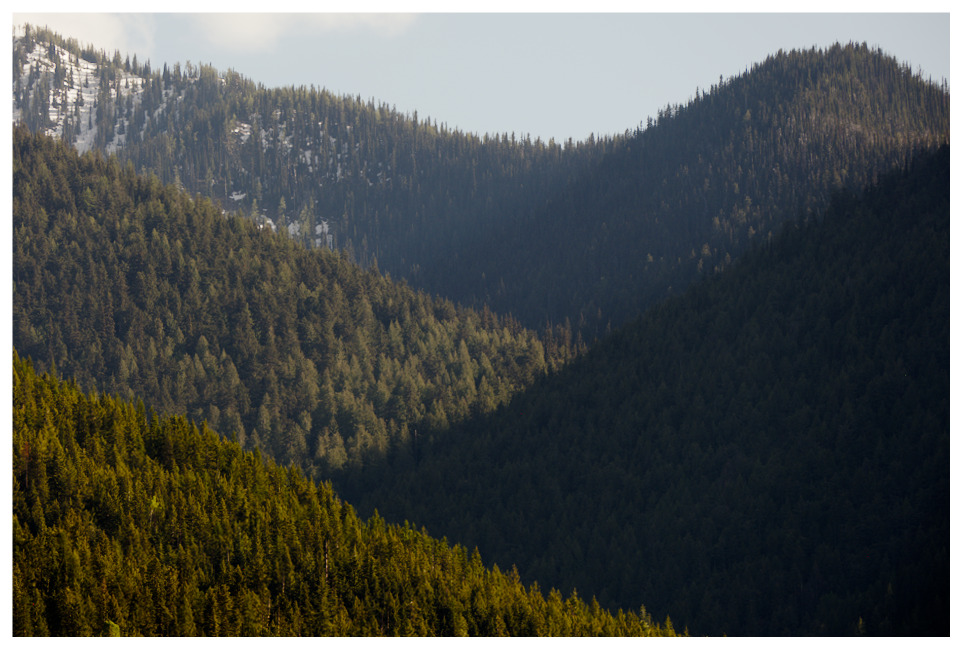
Everyone thinks “wide-angle” when you mention landscape photography, but I think longer focal lengths are just as interesting, often more so.
4 Likes
Exactly. Telephoto also allows to “crop” into scenes with interesting framing that works only from a specific spot.
1 Like
Yes, definitely, and this is why I’m always chasing a higher MP camera in addition to a telephoto in my kit. I really like cropping flexibility. I sometimes ask myself if I should just be trying to frame it better on location, but it isn’t always possible. Sometimes you don’t have the right lens, and sometimes you don’t have the time to spend valuable minutes tweaking the framing. I’m often with family and trying not to annoy them too much with my photography!
But I do still grapple with my desire for a higher MP camera. Annoyingly, camera manufacturers always put high-res sensors in their high-end bodies, along with stacked sensors, dual card slots, high burst rates, premium video specs, etc. which I don’t need.
And because I’m not a wealthy man, I’m forced to shop in the used market for older cameras if I want a high-res sensor at a price I want to pay. So, I’m constantly asking myself if I should just get over my high-res obsession and learn to love 24MP, which would open up many more possibilities.
So, to get this thread somewhat back on topic, do any of you Z owners feel you are missing the cropping ability with the Z5 and Z6 lines?
Do you ever use upscaling software to improve resolution on heavily cropped photos?
1 Like
This is my highest Mpx camera ever, so luckily I haven’t had the chance to be spoiled and miss the ability. I find it perfectly fine for my needs since I don’t do wildlife anymore where heavy cropping was always the norm.
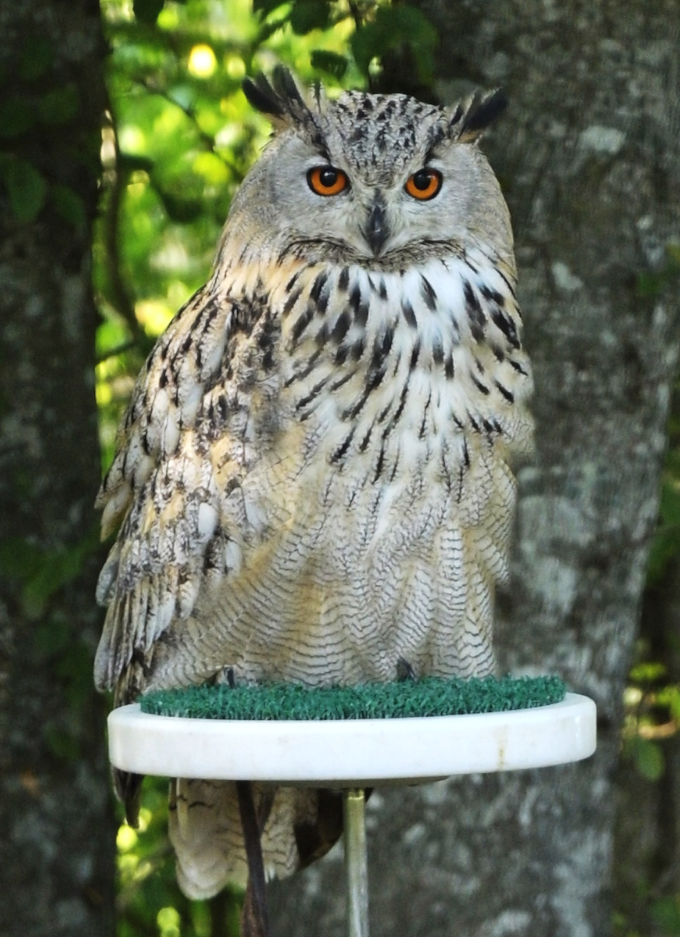
I’ve used CNN2x from @David_Tschumperle’s G’MIC for one of my shots of Kubo the Siberian owl sitting on his perch far away where I cropped a 70mm photo down to like 0.6Mpx 
It wasn’t a “serious” shot, rather a little snapshot…
2 Likes
Again, for landscape, why not just use pixel shift to get the extra pixel resolution and improved colour resolution?
It’s waaaay too fiddly to use - you need to set up a really sturdy tripod and need a perfectly still scene - even the slightest wind will mess up the photo. Besides, you can only get a JPEG for edits in Darktable. NEFX doesn’t work yet.
It’s an option in certain circumstances, yes, but you can’t have any movement in the shot, not even wind blowing grass/branches.
I have never used it successfully on my X-T5. It always produces artifacts. Every single time. Plus, you need a tripod and to process it on your computer at home. There’s no chance to check the result in the field.
On my OM-5, pixel shift works surprisingly well because you can use it handheld. But movement of any kind is still a problem, so it’s not a good option when there are fast-moving clouds, water, people, wind, etc. I also could do with a sharper lens to show it at its best.
I’d be interested in trying Panasonic’s implementation because that has an option to freeze motion.
But I haven’t so far found pixel shift to be a better option than a high MP camera. It’s very situational and still a bit clunky with most implementations.
2 Likes
Yeah this feature is useful only for something like photographing paintings in a museum and outdoors it’s really impractical
Your point about needing a better lens would also be true with a high MP camera. Fair point on everything else. I’ve not got OSS software for pixel shift, so haven’t had a chance to try it yet.
1 Like
Yes, you’re right, although my point there was more that I haven’t really seen the feature at its best, so I can’t properly judge how much I value it. In my tests so far, I’ve often just used the regular 20MP file (which the OM-5 automatically creates alongside the high-res version) because it’s been just as good. But if I know I’m going to crop when I’m out in the field, I think it can be a good option if the conditions allow it. It also extends the DR by about 1 stop and produces improved colours. In theory, it’s a great feature, but I think it needs to improve before it negates the need for high res bodies.
While it’s often said that you need the best glass to get the most out of a high MP camera, tests have shown that the extra details are also beneficial for lower quality lenses too.
I’d probably buy a Z5 II R (35-45MP) tomorrow if they made it. Something tells me they won’t though 
1 Like
Just a bit. I do try to get my composition at capture, but due to my subjects can’t always stand where I want. Also, sometimes I just see it differently at home, so I will crop in software to get the composition I ultimately want. A Z 7-class camera would facilitate that.
I have never upscaled an image. Not a fan of making up data…
1 Like
No way. I love my Z6. Regardless of the megapixel count, cropping a lot usually means a bad photo. It typically means more contrast than detail that makes photos look crunchy. There’s a SLIGHT advantage you get with a higher megapixel camera of course, but it’s not nearly as much as the 1.37x linear factor suggested by their resolution differences. I’d say in reality it’s more like 1.1x to 1.2x.
So far, the best photos I’ve taken are still the ones that require very little cropping.
That’s not to say the Z6 can’t crop. Even a 1.4x crop on a Z6 still looks great.
I’ve been shooting 24MP for over 10 years and this year when I upgraded bodies I didn’t feel any need for more. Before that I had a 16MP camera and whilst I appreciate the extra that was rarely limiting.
1 Like