Leofoto legs are good, but I don’t know about their heads.
Carbon fiber itself exists on a stiffness-price spectrum. The strongest but least stiff CF is cheap but no stiffer than aluminum for the same weight. Ultra high modulus CF is roughly 4x stiffer and 4x more expensive.
I too went with 3-segment tripods, Feisol CT-3342 and CT-3372. Leofoto wasn’t available back then so Feisol was the best price/performance balance south of RRS and Gitzo.
GMap still has more businesses and live traffic and public transit routing. On the other hand, there was e.g. that one time we lay at anchor in some random harbor somewhere in the Greek boondocks, where GMap was truly useless. But Mapy showed a bakery “opens at 8:30”, and true enough, at half past eight the next morning, a beat-up pickup truck came rattling into the harbor, selling bread out of his passenger door window.
To say nothing of the countless times where GMap just didn’t know anything about cycling or walking tracks; gave completely garbage routing as it doesn’t take elevation into account; or simply didn’t work at all for lack of internet connectivity.
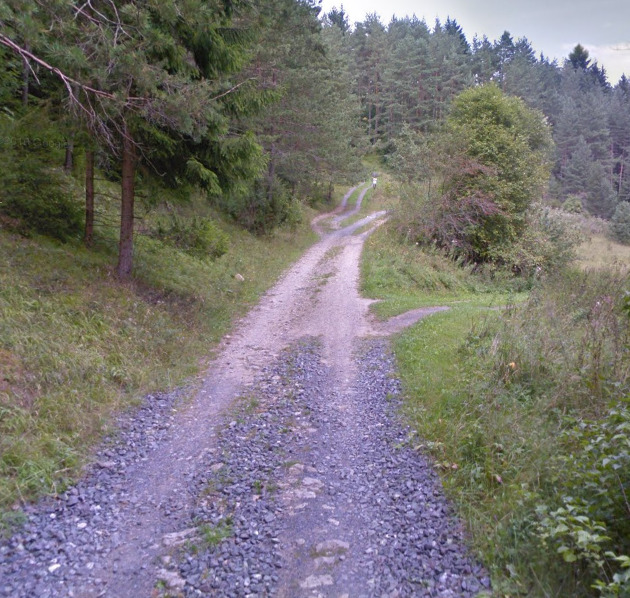
I once drove a car with the guidance of Mapy.cz and didn’t realize I need to check the offered route with a “shortcut”. Said shortcut looked a bit likeee this … and I drove a standard hatchback
These routes are the ones where if you drive a rust bucket you can finally have some fun
To be fair, sometimes gmaps also sends people into these crazy routes. For car navigation I use Waze, especially since it warns me about radars, accidents, going over the speed limit, etc.
I’ve tried Waze, but over Android Auto it kept freezing about every 15 minutes… I ended up using GMaps which work fine. Also, I’ve read about a possibility that EU countries might implement a ban for radar warnings like Germany. Not sure if that’s true
I have for many years used Sygic for car navigation - used it in Europe, Australia (where I live), New Zealand (which I visit every year or so). Every year I’m happy to renew my subscription because while not glitch-free, it leaves Google in the dust.
Originally went with Sygic because of live traffic performance, live GPS speedometer (which was only possible using a kludge overlay with Google at the time), combined with great offline maps and map updates.
All that you mention is good preparation for you to navigate out of an unknown location. Ideally, you should also cover the case where you are in an unknown location, and something happens that prevents you from trekking out of that location. For this, you could use a Garmin InReach, or similar. I have a ZOLEO Satellite Communicator, which provides a SOS function, texting via satellite, offline maps, etc. Works great at a fraction of the Garmin price.
Yeah, the Sat Comm SOS (and check-in as these are solo trips) seems almost mandatory. I am not necessarily averse to running nav and sat comms on separate devices, depending on the details/costs. A Zoleo is an option, but I thought they only worked via connection to your phone? Zoleo uses the Iridium sat network right? If not, have you noticed any connection issues when under dense tree canopy and/or in steep valleys (I am assuming you are in mid-latitude areas…which may be a dumb thing to assume lol)
Partially true, partially false. You can send SOS or canned check-in messages with just the Zoleo and its satellite connection. If you want to send a text, you need to use the phone for a keyboard, but the message can be sent by the Zoleo via satellite. Responses from your contacts are not visible unless the Zoleo is paired with your phone. If you want to use offline maps, you need the screen on your phone, because the Zoleo has no screen.
Right.
That’s a valid question, Iridium or not. I happen to be in mid-latitude. I use it to keep my wife aware of where I am when I am in remote places, which is actually why I got it. It’s been pretty reliable for that. The one gotcha is that, iif the Zoleo and your phone get out of Bluetooth range of one another, the connection between them will drop and you need to re-establish that connection. Typical scenario:
I send a check-in via a button on the Zoleo
I put down my backpack (which has the Zoleo attached), get side-tracked by something 50 m away.
My wife sends a “got it” to me
I don’t see it because the Bluetooth connection has dropped.
I love you all, but my remote comm requirements go in the opposite direction. When son and I go to the mountains on our father’s day sojourn, we know we’ll get ‘no service’ on the cell phones way before we arrive at the campsite, and just remember to go in with enough gasoline to make it back out if something happens.
Civilization is encroaching remote Colorado, though. At the state part cabins we occasionally rent, we now have 5G coverage, so board games and such have been replace by everyone sitting on the furniture scratching on their phones. The small town I where I go to work on railcar restorations now has service; indeed, one of my better morning ‘steam-in-the-air’ shots has a danged cell tower in the background:
I hear you. For me, at least, the satellite communicator is there to activate SaR and help them locate me in case of emergencies. Either through me using an SOS, or because I missed check-ins (canned message with coordinates).
Solo backpacking, especially when you are not in your 20’s, comes with risks which can can be (partially) mitigated with technology. I’ll take it. If I was never more than a couple miles from a trailhead, I probably wouldn’t bother.
Not sure how that would help you in case there is an accident or a vehicle breakdown.
The low bandwidth satellite communication these devices use is not meant to be used like a phone, it does not even allow that. It is really there for emergencies and checking in. I think it is a great invention.
[The other thing I like to carry to remote locations is topical hemostatic agents (dressing with kaolin).]
It won’t, we just make sure the vehicle(s) are in decent shape, including tires, when we go. We’re still tow-truck accessible, but it wouldn’t be cheap. The area is, not intentionally, graded such that there’s an initial part of the road where big RVs* can go, then the road gets a little tougher but the small RVs can do it, and then it gets tougher yet so only 4WD vehicles can enter. We do a site in that area; the road gets even rougher after that.
As I approach the age where my dad had his stroke, we’re probably going to move to a campground. Oh, and my posts will probably get a lot shorter…
To you tripod experts: Is there any sub 150 euro tripod that does the job just good enough? There is a place near me full of damselflies and I would like to make a small movie, but recording them handheld, even with lens stabilization, is near impossible. The place is not windy and further stabilization can be added in post, so the tripod doesn’t need to be perfect. it would be great if it offered the ability to hang the camera upside down though.
I have a K&F jobby that works well enough and even has a sideways bar if you want that, that was €120 or so. With the center column up it gets to eye height, which was a must-have for me.
In some nebulous future, I might add a tripod that doesn’t have a center columnn, but those tend to be in a different price bracket. This’ll do the job for now.
I’m absolutely fan of Rollei tripods - they are well crafted and absolutely worth the price. I’m using the C5i carbon, my wife the Compact Traveller No.1 carbon. Both are capable of putting the body “upside down”, are lightweight and ARCA Swiss compatible