Subject to remarks I made in some other post, that noise and iso are not necessarily absolutely related and that it all depends on how the light falls on areas of the picture that matter, in the general case, one stop from 1600 to 3200, on my older aps-c camera could make the picture unusable. 3200 to 6400 would very probably be noticeable on my newer ff camera.
1/250 to 1/125 might make all the difference to blur.
As someone who works mostly in lowish light, one stop often seems like quite a lot! and my screen is only 1920*1280.
It’s only when the final medium (and yes, this is increasingly the case) is going to be a phone screen that we can away with… far too much!
DJI is even declining to say precisely who manufactured its new image sensor. […] it’s worth noting that Sony, a frequent maker of the image sensors in DJI’s products, just announced its debut LOFIC image sensor for smartphones and other mobile devices a couple of weeks ago.
so there may be a player capable of making 1" LOFIC sensors who may not even be Sony. That’s a big deal. A type 1" sensor is roughly 1/2 the area of micro 4/3 and 1/3 of an APS-C.
M4/3 peeps in the comments already hoping for such a sensor in their chosen format but I wonder if the producers will need sufficient volumes to keep the price lowish and it might be too late for M4/3. Pure speculation
Also, the article suggests that there was a lot of signal processing engineering involved to make use to this.
I am not assuming that major traditional camera brands will just use LOFIC sensors from tomorrow onwards. It’s just that it addresses a pain point of smaller sensors, and there are diminishing returns for larger ones, which already have a lot of dynamic range that is enough for most users. So it makes more sense to include these in smaller sensor devices, just like BSI sensors debuted in phones.
I quickly scrolled through their LOFIC Xiaomi review and it didn’t look that great. The telephoto shots on a regular sensor looked better, that said, this could be due to grading/edits that the writer did to the pictures, there was almost no “natural” looking edit amongst all the shots, which makes it hard to really judge the quality of the sensor. Most shots also had a weird sharpening going on which made it even harder to properly judge the quality…
My understanding is that only the main sensor is LOFIC, the tele isn’t, but I could be wrong.
The value added by LOFIC sensors seems to be this: if you want to capture highlights in a brightly lit scene, you don’t have to reduce light hitting the shadows and add noise there.
That’s it. They don’t help in dark places etc, they are not magically giving you more light. Just dynamic range. They also don’t do anything to colors (other than what you get from the advantages above.)
What remains to be seen when the tech comes to cameras is readout speed.
Yes, I was thinking that Petapixel story was over complicating it. It’s just the highlights don’t burn out so easily so the camera can lift exposure, which helps the shadows. Maybe they get paid by the word.
I think it is absolutely crucial tech, especially for small sensors.
Currently they deal with dynamic range by taking multiple exposures which has its own problems, and mostly works for still images, not video.
If you want to capture highlights, with traditional sensors, you are effectively wasting either light or dynamic range.
That’s entirely within the possibility of the technology. My understanding is that the “overflow” part is not captured with the same precision as the “normal” range. But who cares about the rightmost bits in highlight values? They are irrelevant.
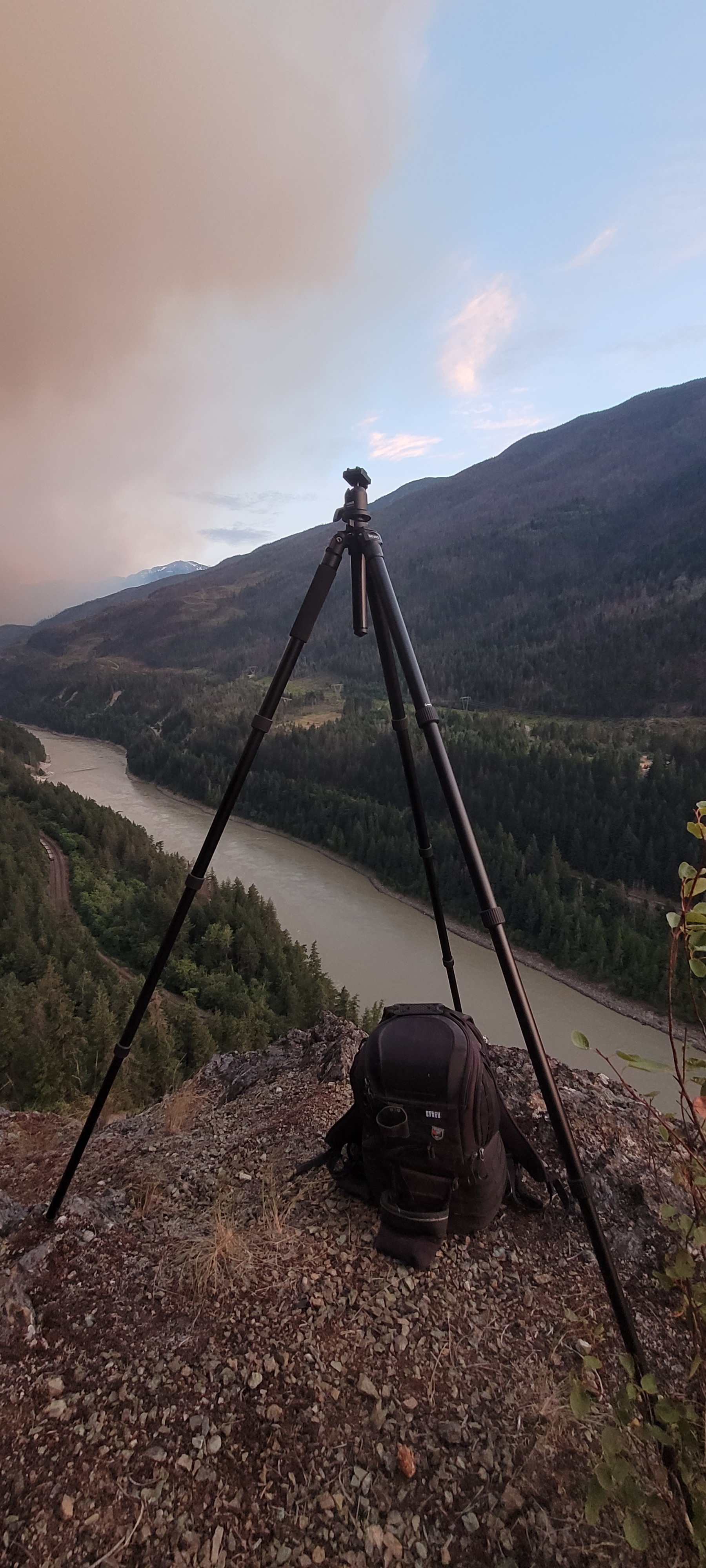
Almost forgot… Got a new (to me) used tripod as well. It’s a tank.
Benro Aluminium magnesium design from quite a few years back (in tech terms).
Gear bag for scale.