I like Chira and her channel. But the editing with Luminar Neo is horrible. Just pushing (AI) sliders without learning anything about the underlying principles. I like doing my “creative” edits using more basic tools.
3 Likes
There was a time when when I was one of the judges for an annual photography calendar competition. The rules stated that images were not to be manipulated. That was fine for a number of years but then one potential entrant suggested that all digital images are manipulated by their very nature. I was asked to comment on this and my response was to agree and change the ruling to “not excessively manipulated”. That then left a lot of wriggle room or common sense in the judging.
I also believe anyone who believes photographs should never be manipulated are deluded because the nature of the the beast is manipulating light, forcing it through a lens, capturing said light on film or sensor and then processing or developing the image to display on some medium such as a print or computer screen. Maybe the best way to limit the opportunity of manipulation is to shoot color slide film, but even that is not pure in its capture.
Maybe a better question is when is manipulation so excessive that an image stops being photography.
1 Like
I had a related discussion with @mino here - essentially, the photography resembled what might be found in a bird-identification book, rather than a true photograph of a bird.
Again @heckflosse thought one of my captures from 2021 looked fake, and it is easy to think that this one could be a composite. (It definitely was not - the Globemaster was very close).
The purist definition drawn from the literal “drawing with light” would suggest that the following are no-nos which are merely digital manipulations:
- adding in one or more elements, i.e. creating a composite image.
- removing undesired elements, i.e. power poles, telephone towers.
Yet manipulations of these sorts were also being used even before 1900 in silver-halide photography.
I think you have helpfully refined the question, Terry. However I also think that it remains sufficiently subjective as to have as many responses as respondents. My evidence for this is the passionate and sometimes vitriolic debate about AI inclusion in darktable that was so evident in the first half of 2026 in particular.
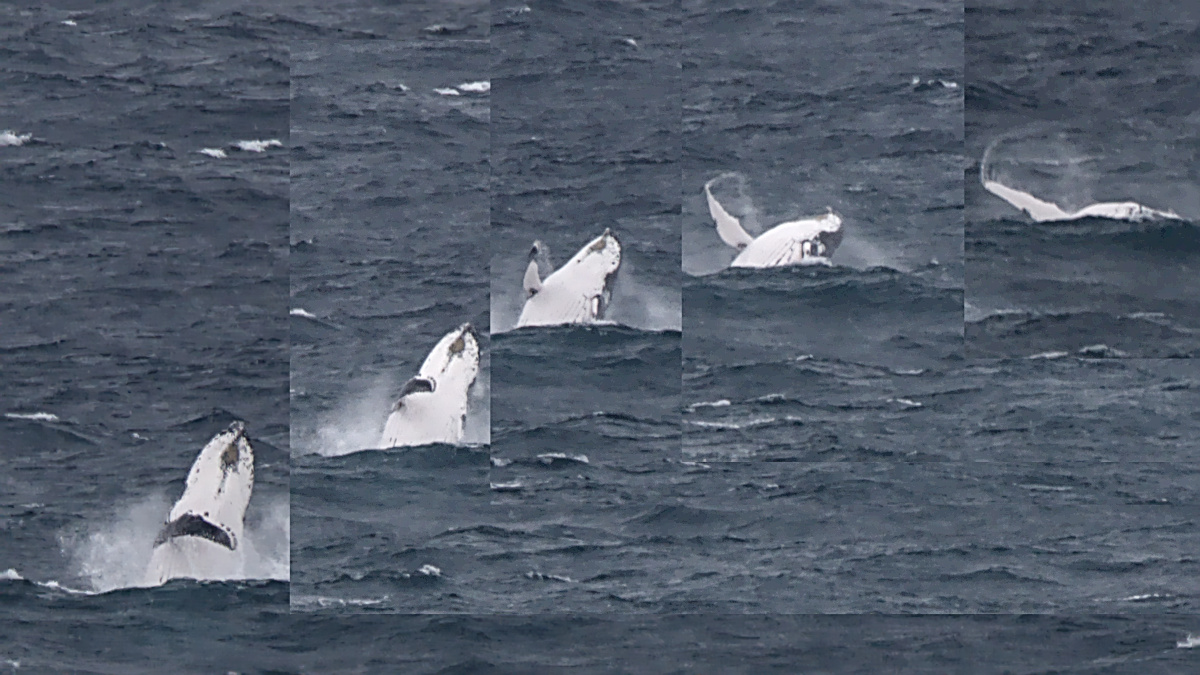
As you also put it - it depends upon the rules. If composite images are deemed outside the scope, an image is ineligible. Does that mean that composites are not photography? Here’s a (not very refined) composite that tells a story for me, that I absolutely deem photography, just not within a particular scope:
3 Likes
FWIW, I find the “is … photography?” type of questions pretty meaningless.
Everything is photography if it involved capturing light at some point on a surface, which could be film or an sensor, and resulted in images.
But it is not a label that confers authenticity, artistic value, or whatever people want to attach to it. It just tells us how the process started.
If some people want to restrict it further for some particular reason (eg a photo contest), that is fine, they just have to say so. “For this particular contest, we only accept photos of langurs doing handstands, lightly edited.”
1 Like
The tongue in cheek thing here is that they can be seen as the same question. The difference is that the original and your form has a vibe to it that suggests that an objective answer exists, while mine leans into the subjectivity of the issue.
2 Likes
I think my own opinion is that in a non-journalistic context I don’t really care about whether an image is heavily edited or not and whether it still tightly corresponds to the scene, since photography is just one of many techniques to create pictures to me.
But, as with all art, context is highly relevant to my perception of the picture. If it looks cheap to me because I can tell that someone just carelessly pushed a sharpness or saturation slider, if I find out that the image was produced through highly non-ethical means or even if I learn that the image was generated by AI with very little human intent in the process, then much of the appeal of a piece of art is lost to me.
3 Likes
Again, this is a circular statement. It says that a photograph is not a photograph when it stops being a photograph. However, I agree with the basic sentiment.
1 Like
At the time, I thought it interesting that you had mixed feelings about that image. Maybe the above quote provides the reason why? A true photograph has a certain look, and that image was an edge case?
2 Likes