Do you make use of this vertical scope?? I would expect this is so you don’t get such a compressed waveform view in Portrait shots and nothing more???..makes me realize I don’t take many portrait shots…
Nope. But I don’t even make proper use of the horizontal view, either: I never really check where exactly a peak or ‘valley’ is in the image.
Oh thank you for this! Does this explain why in nightscapes LED lit scenes (streets) (can) show a greenish light instead of a more yellowish/whitish light which I see?
All bets are off with LEDs, as they can produce “white” either with a mixture of color leds, or conversion with phosphor coatings, resulting in a bunch of narrow spectra that the eye perceives as some version of “white”.
This can be problematic in several ways: eg if an object reflects in the wavelengths that is not covered by the spectrum, or only partially covered (eg think the space between red & green, or green & blue), its colors will be off.
Correcting the whole image with simple WB settings is tricky, you will have to compensate parts by hue and/or brightness, either with a mask or color balance rgb. (An example image would focus the discussion.)
2 Likes
Thanks. Will have to dig for one, however easier would be to take a picture tonight…
Stay tuned please.
Indeed. IMHO one of the most disturbing trends in the illumination industry is the development of “RGB-encoded” light sources - the rat bastards take the tristimulus response of human vision and focus their energy on producing wavelengths at those three peaks. And make our heads work to accommodate that… 
The spectral sensitivity camera profiling I do requires a full-spectrum light source. To meet that need, I procured a neat little LowellPro tungsten-halogen spotlight, pretty much covers the visible spectrum albeit with the characteristic gradual decrease in energy toward the low end. Now, that device is discontinued, and it’s becoming hard to find studio lighting devices that aren’t LED-based and tristimulus-shaped. Just to illustrate the difference, here’s a plot I found somewhere of some of the discussed light:
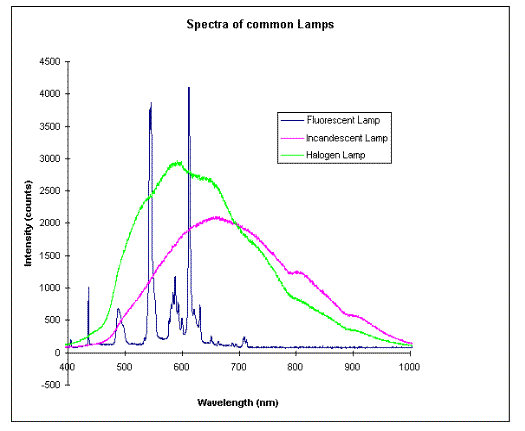
Colors in a daylight scene aren’t just RGB triples, they’re rather complex combinations of wavelengths and energies that can span the full visible spectrum. RGB encoding is just a metameric equivalent, and a coarse approximation at that. Wrap your head around that…
5 Likes
An example…
Straight out of camera:
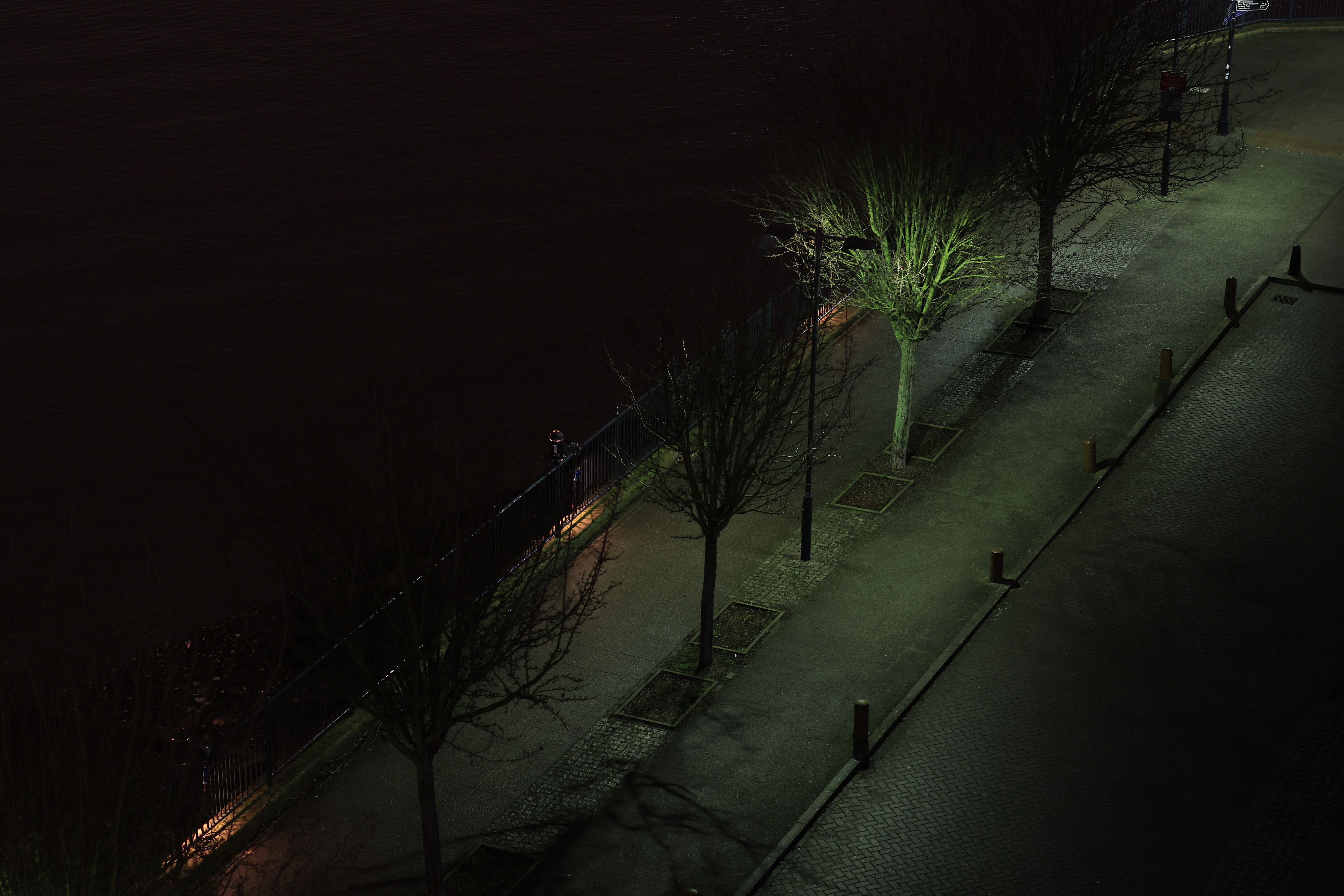
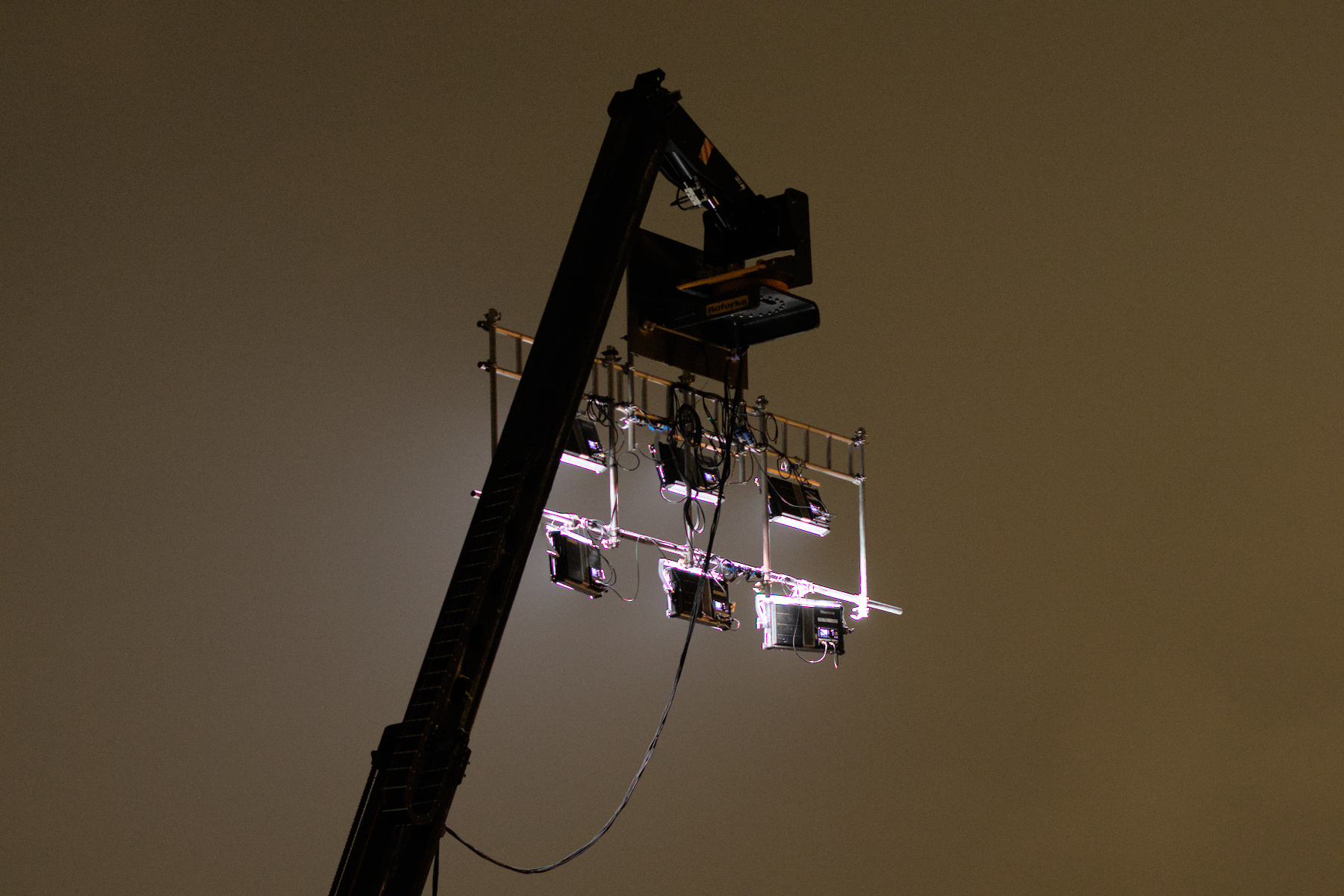
Note the three more yellowish lights mounted on the railing (there is some filming going on and they seem to be OK).
IMG_20220118_5216.CR3 (18.1 MB)
My first impression is… bummer one cannot correct for that in Post. Just bring one narrow wavelength down and no data to amplify in between, will not work.
I’m not a huge fan of LED photography lights for that reason. They’re amazing for portability, lower power use and versatility in terms of special effect lighting but as a main light on their own they’re kind of “meh.” If I use them I try to have some other closer-to-continuous spectrum light source in the shot too to help cover some of the missing wavelengths. I used some Godox LC500Rs as an only light source on a portrait shoot some time ago and outside of the 5500K preset I found them to be just not great in the color department.
Remember kids, your subject can’t reflect light that ain’t in the spectrum!
2 Likes
I did a quick & dirty removal of the green cast (you can do much better if you invest a bit more time, sorry I am on a laptop now).
IMG_20220118_5216.CR3.xmp (10.1 KB)
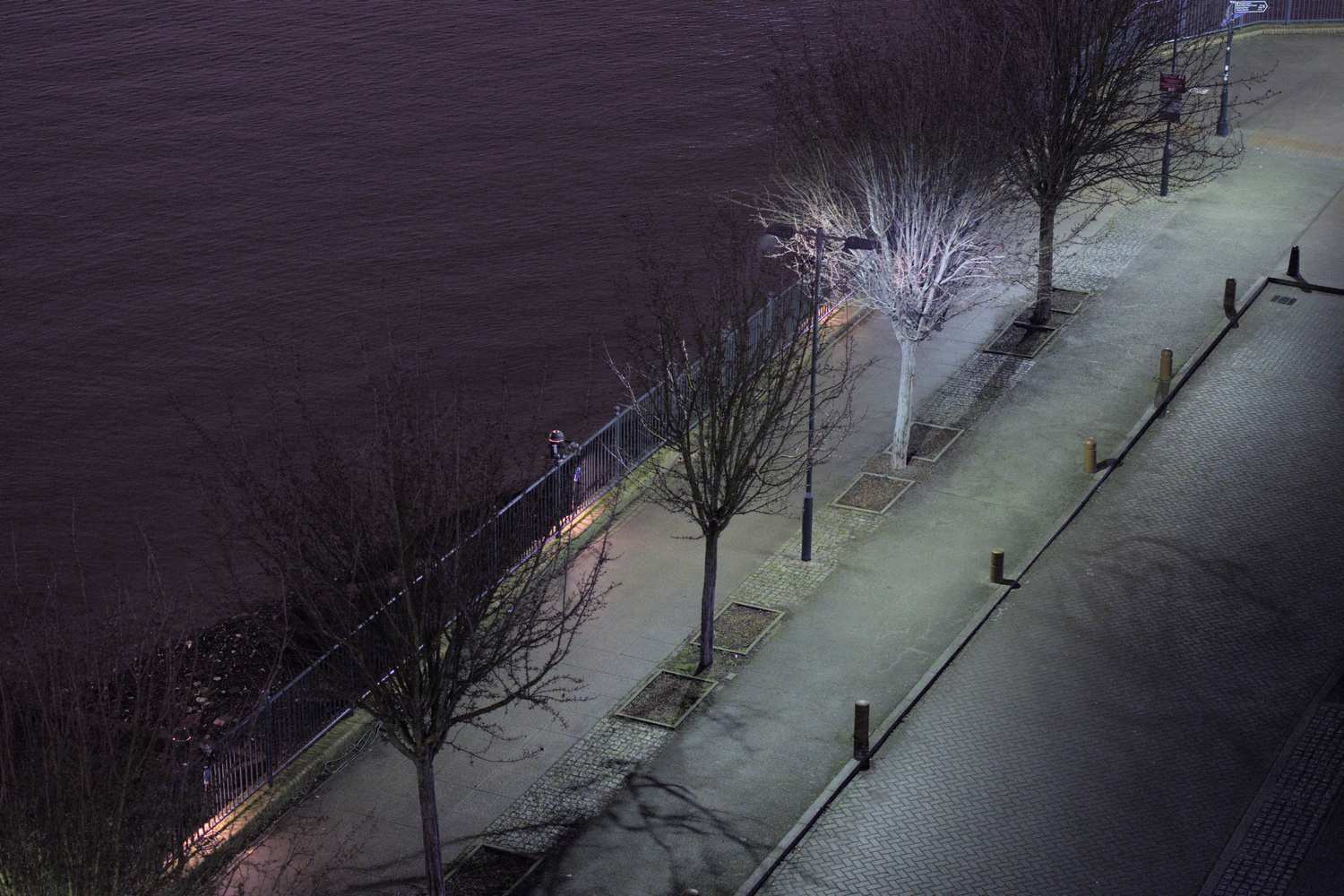
Ultimately it is an aesthetic choice, but you get the principle.
1 Like
Thank you Tamas.
As you can see you removed some of the green cast but not all of it. Moreover, greenish has been translated to white-ish. It is indeed an aesthetic choice.
They are filming some series at the moment. The area is, obviously, full of full-spectrum lights wich produce a pleasing (background) light.
I can understand why lhutton is not a fan of (cheap?) LED photography lights. Well I always still have my flashes.
There seems to be at least 3 kinds of light in the scene:
- some kind of ambient light (eg it illuminates the water), not very strong but still significant as LEDs are very directional so it plays a role,
- the streetlights above the trees,
- the warmer lights near the rails.
I don’t see the light you mention, but maybe they are outside the scene and play a role too.
Yes, as I said you can do better, but it is somewhat time-consuming. FWIW, I only invest time into this kind of fiddling if I really care about the photo.
I share your frustration about this — I recently did some street photos in a nice-looking street at night that came out weird, because shop windows and the outside areas of bars/restaurants had very different light sources, mostly LED, and the camera picked up the various hues in their full glory. In the end I discarded the photo.
1 Like
There was a barge bit further away on the river (not pointing at the green trees directly):
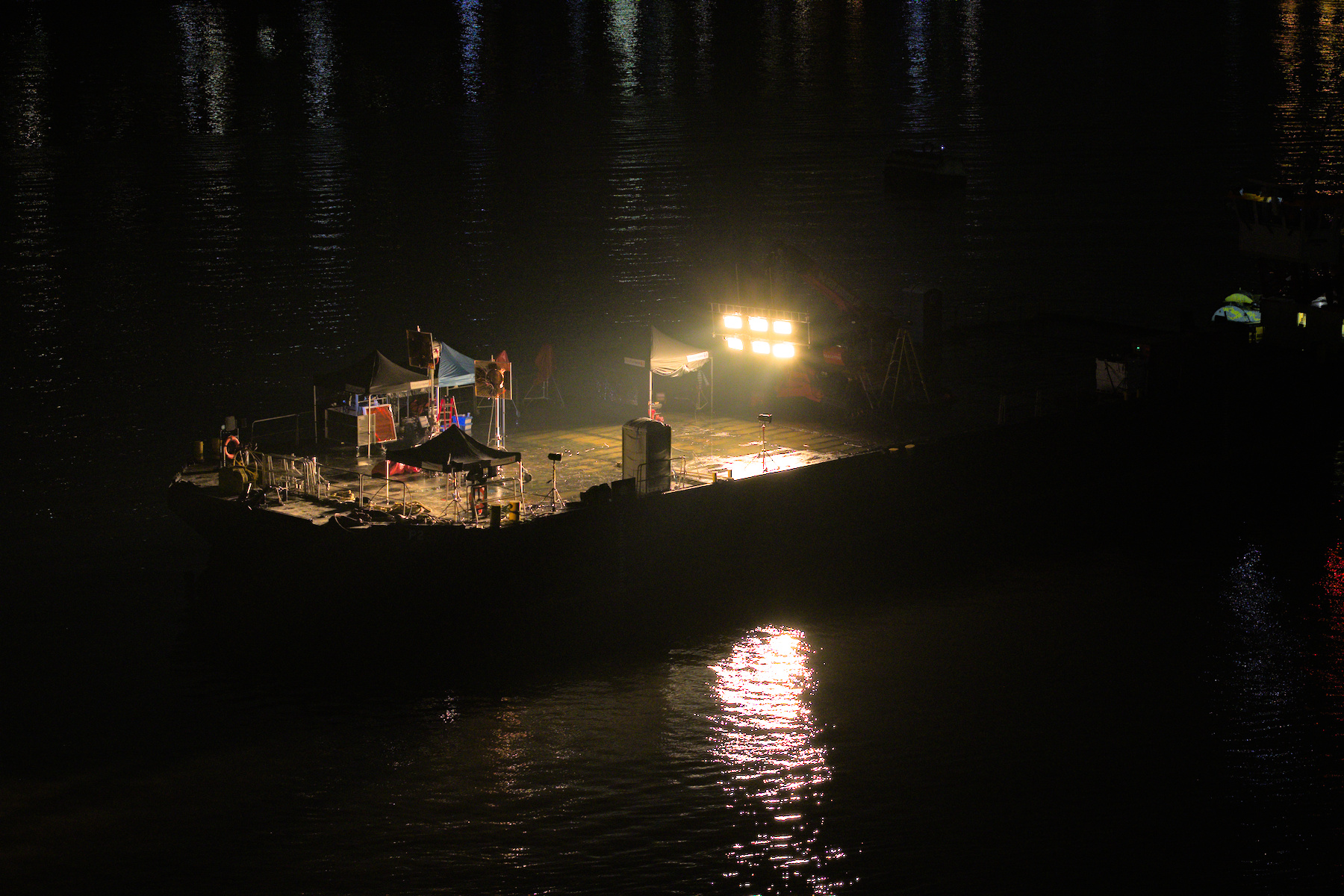
And another set of the same lights further down the road (not pointing at the green trees at all):
In both cases you do not see the greenish tint; that “feature” is only produced by the streetlights.
There are of course also other (less bright) lights somewhere; my guess is that these bright lights, light up the background a bit only.
Oh, what a setup. I want one… 
IMHO a profoundly interesting discussion on lighting in the scene. I’ve seen discussions at DPReview where folk lament their camera’s poor performance in producing a color cast on a particular object when the rest of the image looks fine, and it’s fairly easy to see that green cast comes from the reflected light from an adjacent object. It’s why large film productions spend thousands bathing the entire scene with light they can control…
2 Likes
Bathing the entire scene with light? They start shooting at night (with a full moon)! So my guess is they don’t want the background and the river bank to be too dark. This also means that every scene/take has to be meticulously planned!
1 Like
The moon is a pretty neutral reflector of sunlight, so a daylight color temperature isn’t out of consideration.
There’s a rather accomplished astronomer who occasionally posts on the astro forum at DPReview, and he laments the tendency for others to color-grade images of deep-sky objects blue-ish - he uses simple daylight whitebalances and his images are more reddish, and probably more accurate to the presented wavelengths.
As with all things light, consider the source… 
With the ones I’ve observed, you betcha. On a railroading forum I follow, the historical wonks lament when a movie crew comes to a museum railroad and paints the equipment “non-historical” colors. To my experience, the DP and cinematographer are just trying to make the whole scene look the way they envision, and sometimes that doesn’t look “historic”, or even realistic.
1 Like