vote and suggest your favorite, i’ll do my best to digitize some more profiles when i will find some free time and energy in the following nights
i added some stocks that were suggested in the main thread by @mikae1, @Thomsen, @Vicer_Fx and more.
feel free to suggest more in this thread, and make a good pitch for them so i can get excited and do the work, if you can link to a data-sheet PDF and have example photos even better.
i would love to bring back to life some vintage stuff!
[cine / filming / negative / vintage] kodak 5247
[cine / filming / negative / vintage] kodak 5248
[cine / printing] eastman exr 5386
[cine / printing] fujifilm eterna-CP
[still / positive / vintage] kodakchrome 25
[bw] double-x and tri-x (bw will require mode updates first)
I would love to see autochrome added to the list. A very distinctive and beautiful look, and being the first practical commercial colour photography process, none more historically significant. (However, being potato starch on glass plates, as opposed to film, I’m not sure if the available processing information is adaptable for the spektrafilm workflow.)
I think that the next major updates (after current lut export and spectral accuracy improvements) should consist of adding a range of black and white films and papers (maybe from ilford!).
And also refinements to positive films! (I am trying to make provia look good with couplers settings but cannot achieve satisfactory results yet)
I am the biggest fuji lover on the planet and it hurts me so much that you aren’t able to make theirs stocks look as good as kodak because of the limited, less consistent data online
Shot 2 rolls of Version II and it is very much like shooting positive film but on negative film!
Greens are amazing on this film but samples online are mostly very poor because frontier and noritsu scanners don’t know how to deal with this film. It doesn’t have orange mask!
Sorry for voting for more work Can’t say if b&w is a good prioritization right now. But considering how well the color work side of Spektrafilm is going, I’m rather eager to see what Spektrafilm could do with b&w.
Harman Phoenix doe not provide absorption spectra for the developed film. i guess we could use generic ones. if i remember well, it does not make use of masking couplers (at least in version 1), this could for sure add a new type of look.
i wonder if the simulation with the generic dye absorption spectra might capture any of this. interesting!
no worries BW is clearly in the road map, an it was where i started early on with the first grain experiments. it will be a pleasure to get back to. i just need to find again the focus to work efficiently in the few hours that i can put into this. especially, when lately i have started to be scattered in many “spektrafilm fronts”
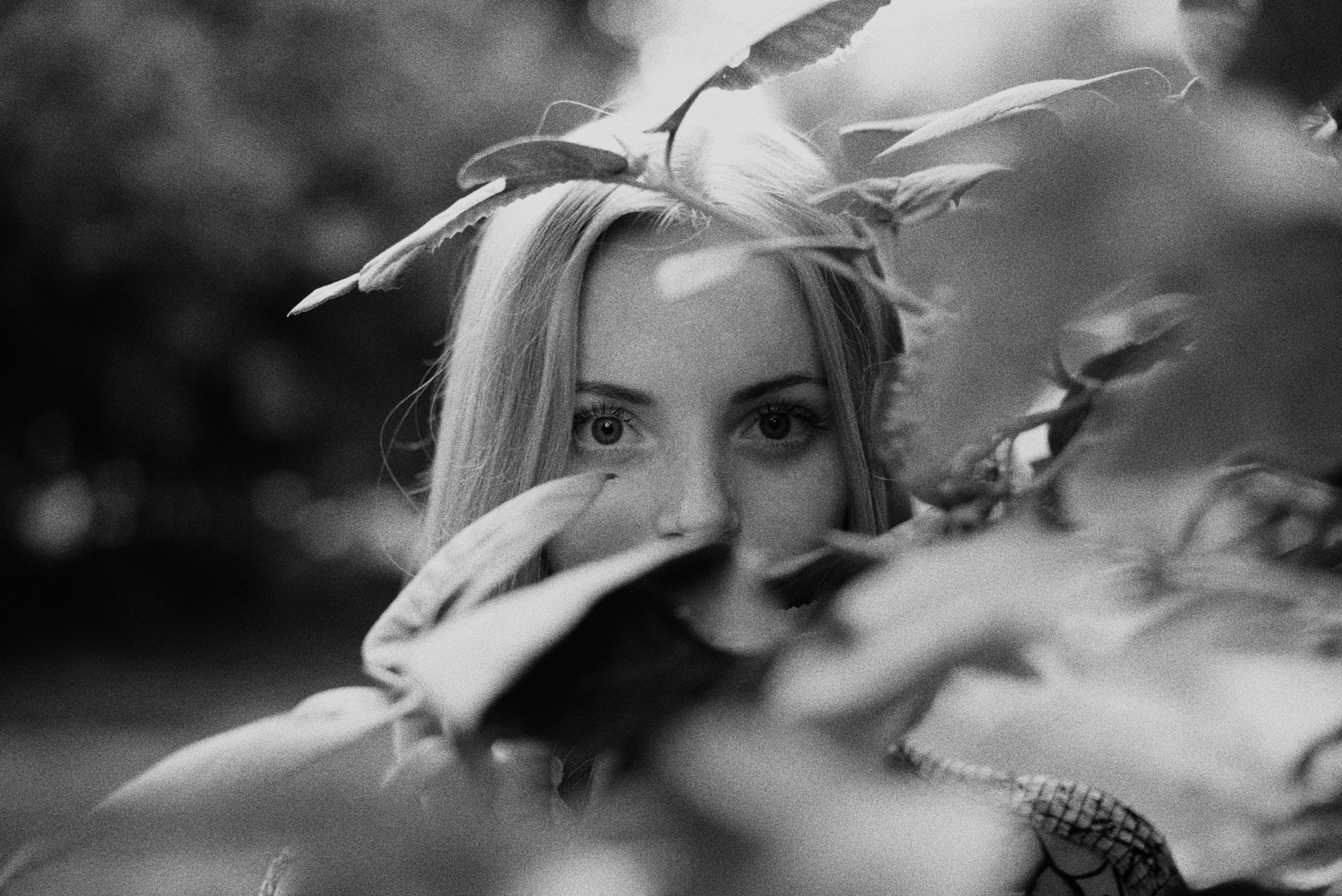
i am reporting a little development in the black and white spektrafilm quest.
i digitized some cine stocks: kodak_triplexkodak_doublex and kodak_2302
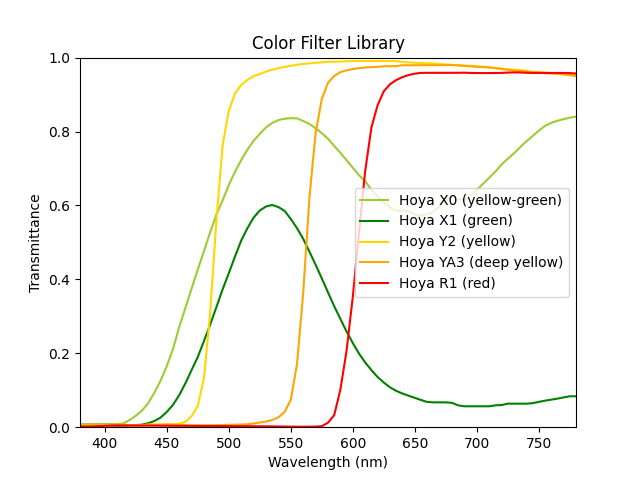
i have to fine tune the grain model, i will do it in the next days, but i could not resist to add some spectral color filters to the virtual camera. i digitized some typically used hoya color filters.
that allows to tune the development and “screw up” the the curves if wanted. it is fully possible to print black and white film on RA-4 paper and obtain tinted prints.
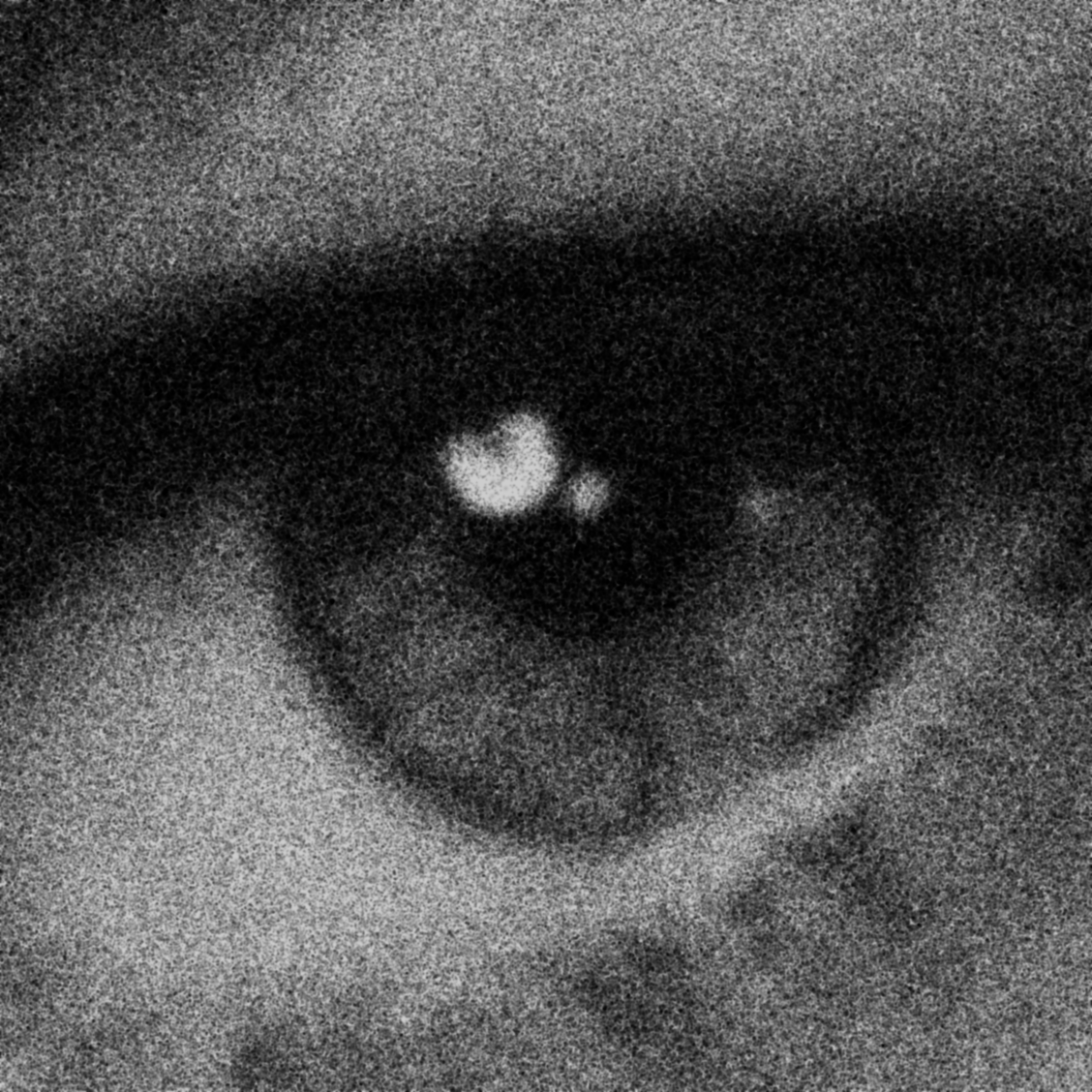
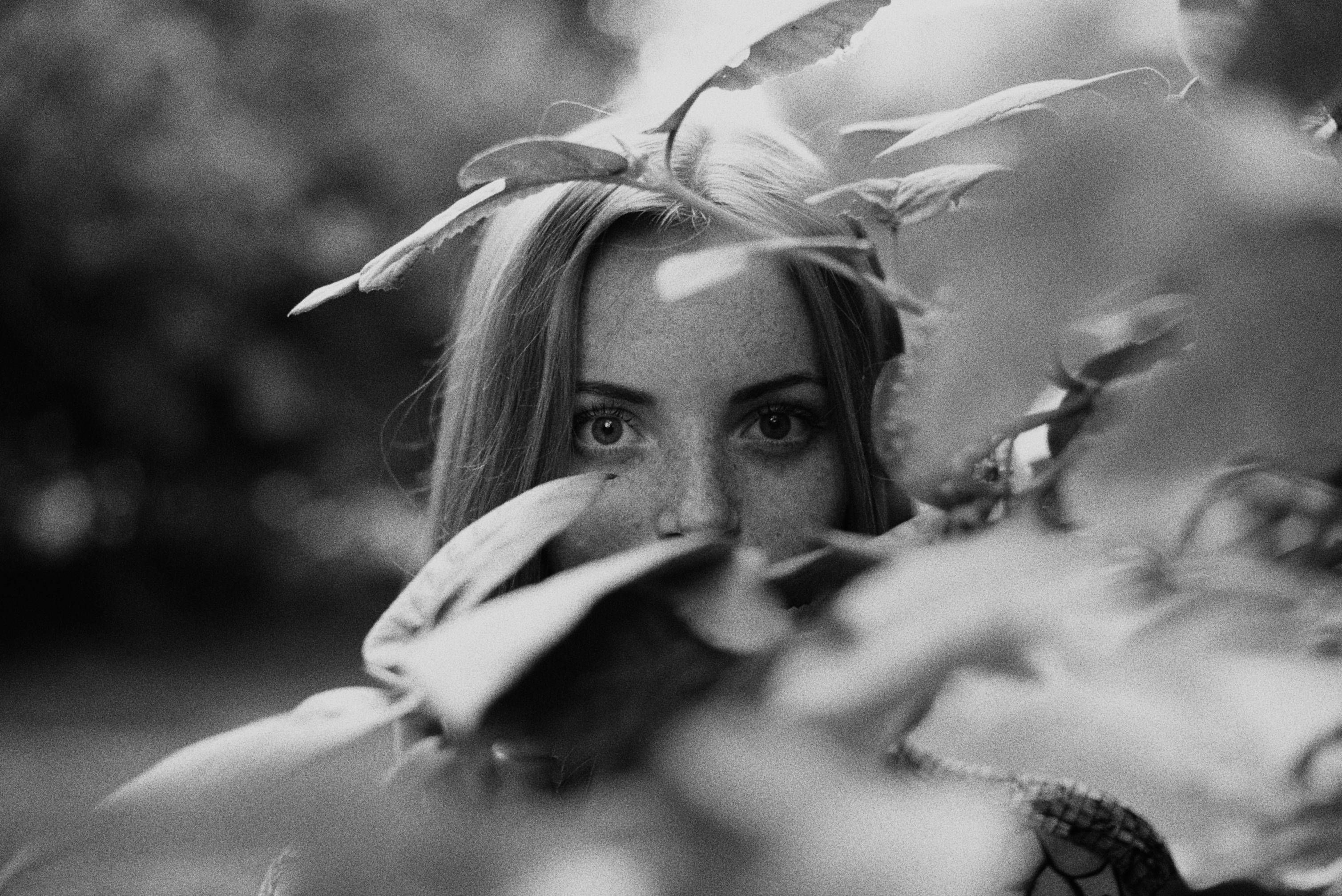
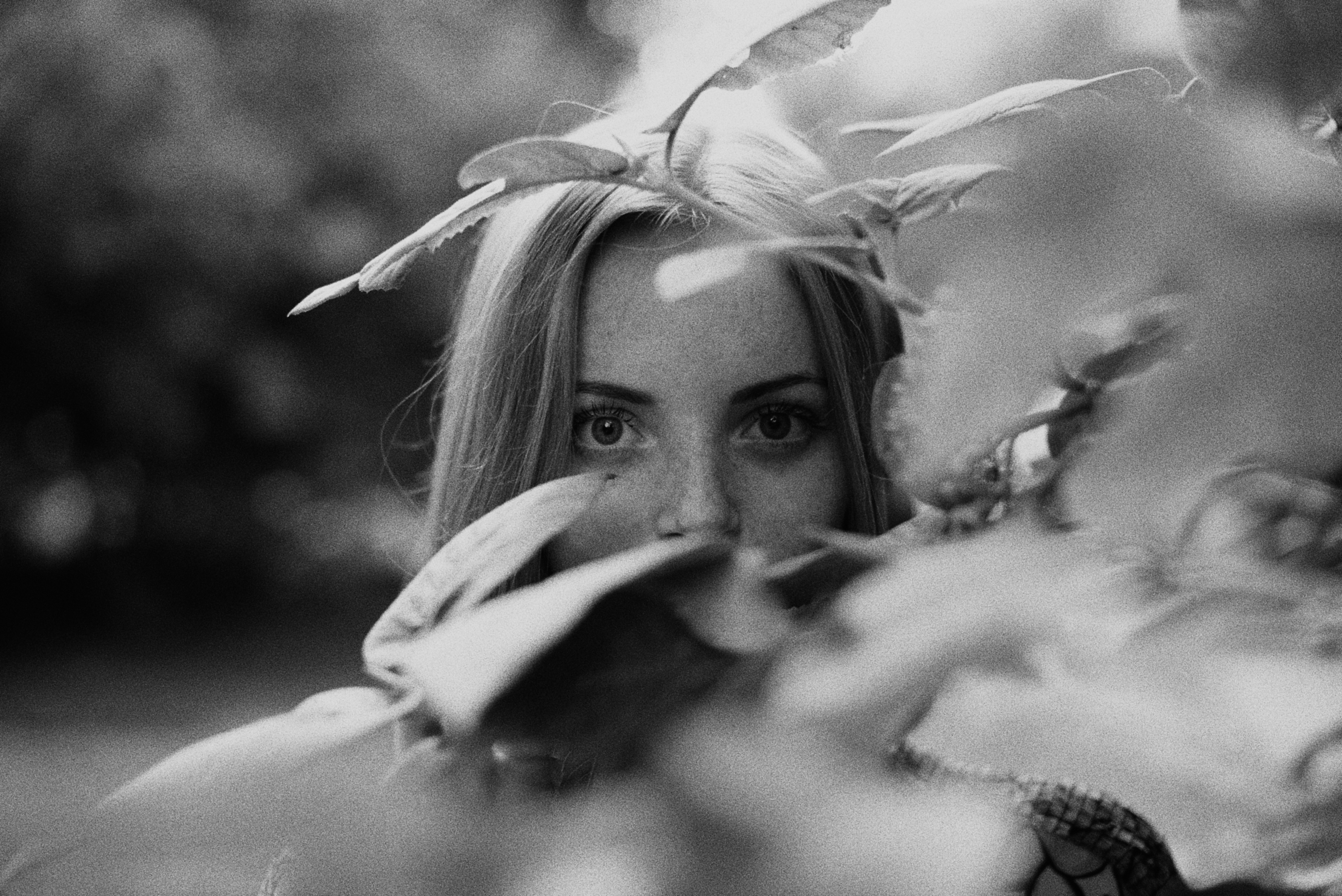
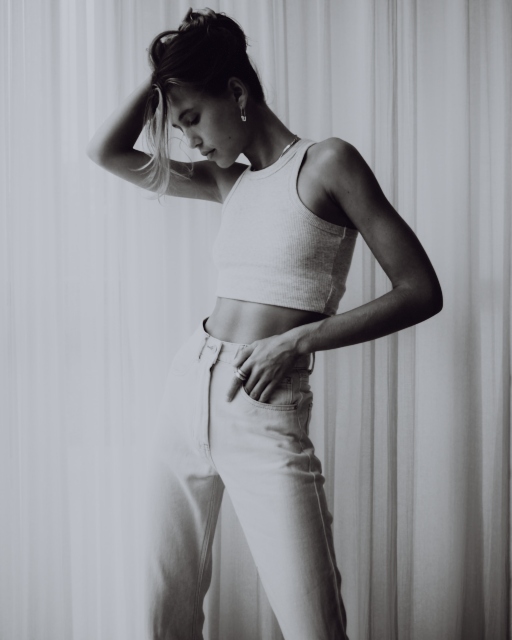
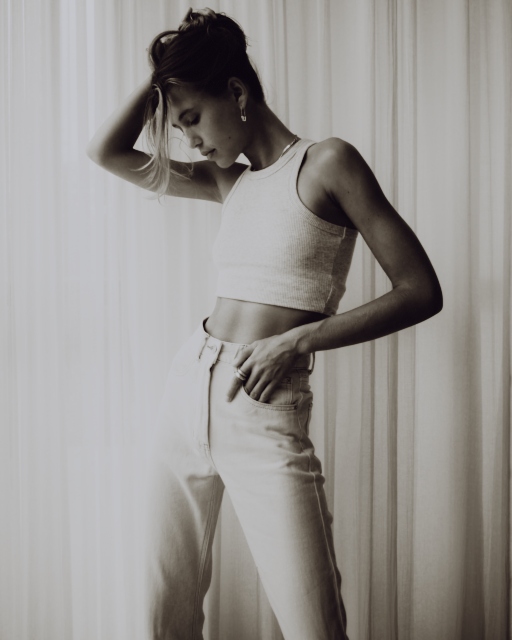
here some examples with enlarger filters: (left) 0Y0M, (center) -4Y0M, (right) 4Y4M
do you have any recommendation for a selection of papers to pair with?
multigrade paper might require some modeling to get the variable contrast with the enlarger lights right. i admit that i am not very knowledgeable about the black and white side. any comment or suggestion to curate a list is welcome.
minimal bw mvp with cine stocks now available in dev
I started looking for data (any data) about my favorite paper from when I was shooting b/w film, Oriental Seagul fiber, but I couldn’t find anything. I’m only mobile right now, so I’ll keep looking when I get back to the laptop.
In the enlarger we were able to use magenta filters to add contrast to the print.
It’d be really cool to be able to have something that loomed like a silver gelatin print, as those are beautiful. Nic silverfx did a good job of emulating, I think.
First of all, thank you to all the developers for getting the software to such a usable state.
I wanted to ask whether there are any plans to make the profile creation process public in the future. I noticed it was mentioned in commit “dfb0219” that the profile creator had been split out into a separate package, but I have not been able to find it published afterwards.
If this has already been published and I have simply overlooked it, I apologize — I would appreciate it if you could point me to it.
Also, if film profiles are going to be distributed under the SPEKTRAFILM_LICENSE, I would greatly appreciate it if the profiles could also include information about the sources of the various data used in the film profile creation process.
variable contrast paper would be really cool to have, since we already have the virtual enlarger in place. i will experiment it it!
hey ghost! thanks for the kind words.
i absolutely want to have a working profile creator suite at some point in the near future shared. i just have to work on it, and i am already lost in so many features currently in my little free time.
to many words will follow. TLDR: the profile creator will come soon.
the profile creation is arguably one of the most difficult part of the project (there are many other difficult elements of course). and it has complex implications in general for the project.
what was available in the repo was stale and needs some love. the profile creator side of things is really more “artisanal” than people might think:
there is the digitization of curves from the datasheet (i use webplotdigitizer) that is itself prone to variability and sometimes graphs need to be manually extended to better fit the 380-780 range with some manual guesswork (really inventing the continuations).
sometimes, datasheet miss key data and we need to try generic forms or “donor data” and morph and try to fit with what already have. a glaring example is “fujifilm_crystal_archive_typeii” that do not publish density curves in the datasheet.
there are a few new features that have huge codebases and are separate by necessity, like the fitting of bandpass filter for the camera based on the otsu/nist/forest-colors datasets.
more often than not a custom calibration or operations are necessary to fix particular blemishes and inconsistencies of a particular data-sheet. making the process a live evolving one.
achieving the quality that people expect from spektrafilm does come from quality profiles. and for now i would need to really write a manual on the full process and automatize some of my “intuition” work.
i do wanna work on it, and share a working prototype in the near future. i just need some time and i do not wanna burnout on the multiple fronts.
plus we need to stabilize the model itself that is still in rapid development to make sure the profile creation is stable and provides all the feature and data the runtime needs. thus in order of causality it comes after the runtime, but it is equally important and it will be shared soon.
having bad profiles going around is not a great feature for anyone, and might even create bad reputation for the project at this embryonal stage.
open to get feedback and critisism on this!
on the simple side of things:
i agree that it would be nice to keep track of the labels of the datasheet we digitized, and possibly have many versions of the same stock from a few decades. this would be very cool.
regarding the SPEKTRAFILM_LICENSE, it is really just CC BY-SA 4.0 + a little non binding preamble describing the working ethic of the project. a little control on the profile side of things is also helping on the licensing of the LUT that is a very fragile for an emerging “unkonwn” project. this need will also dissolve by itself if spektrafilm become more known. plus, CC BY-SA 4.0 is better than GPL for profiles/LUTs because it allows adoptions by bigger players that would be scared of the GPL infection to their pipelines.
I am curious if we can already, somewhat, simulate expired stocks! Although I don’t have personal experience with any of this but the “surprise” part of the experience is very… motivating.
Results are less important than the joy of shooting sometimes but any tips if I want to go ahead and try simulating say expired gold200 or something else?
From what I understand the sensitivity of the film is reduced so you either get an underexposed image or you need to overexpose relative to box speed . Grain is also much more prominent from what I have seen and ofcourse distinctive low contrast tinted images (foggy?) .
There are many surprises expired stocks bring and although it will be a very niche thing but to me it is more interesting than say “trying to emulate disposable cams”.
I may be interested in the digitisation of other stocks but this one seems more interesting.
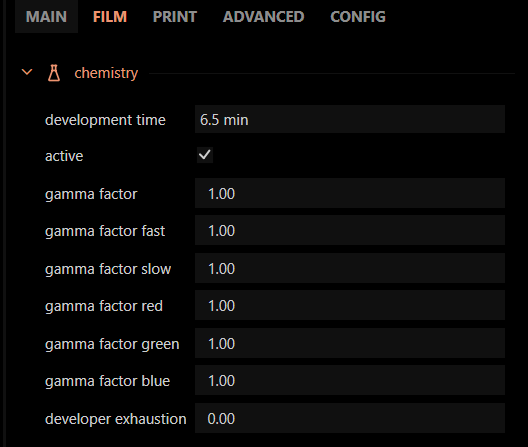
You can experiment with many parameters yourself to get quite close - start by using the “auto print exposure” check box checked (set to on) and then use the camera exposure comp to severely underexpose the input - that will give you sort of a pushed film look, crushed shadows, color shifts - not too far off from expired stock - and still based on realistic spectral response. Then pump the grain up, play around with the base/couplers sliders, use print gamma to get more contrast…
Anyway, and correct me if I am wrong, the spektrafilm core is somewhat strictly based on “scientific” and measured numbers/graphs (at least for now?); expired film, as you said yourself, brings many surprises, and I think that you cant really quantify and measure the random surprises - maybe if you find spectral response graphs measured on expired film? Though I doubt that the publishers ever did those.
 if you can link to a data-sheet PDF and have example photos even better.