A few years ago, I shot a series of chrysanthemums in our dining room. Owing to the metering mode, center-weighted average, the image was by most criteria ‘overexposed’, as the center was pointed at a relatively dark part of the scene. Messing with the tone curve I decided to pull the dark background to almost black, and I made a rather brooding image:
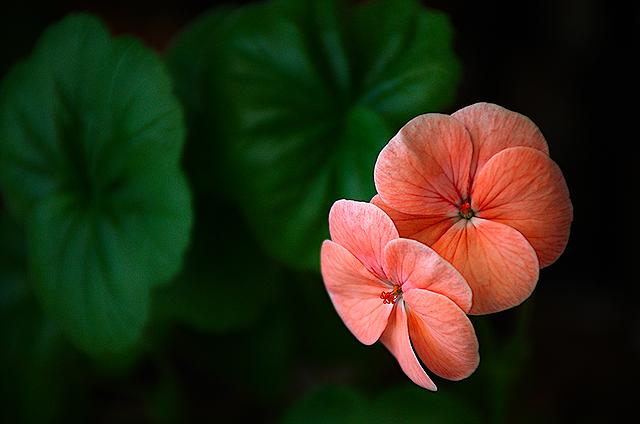
I’ve come back to this image from time to time, enamored with the idea that arbitrarily crushing the lower parts of the histogram could isolate the subject so. But recently, I decided to pick apart all of the tone curves inflicted upon the image to see where the linear data might be. So, I altered the processing to eliminate all the curves, including the sRGB gamma curve in the export profile. This turned out to be a non-trivial exercise; I had to turn off color management, add a color conversion step to convert the color to sRGB without the associated tone curve (thank you, Elle Stone’s profile set), and I had to use exiftool to strip out the embedded profile because rawproc conspired to put it in no matter what I told it (gonna change that when I get the chance). And so, here is the result rendition, absolutely without infliction of any tone curve whatsoever:
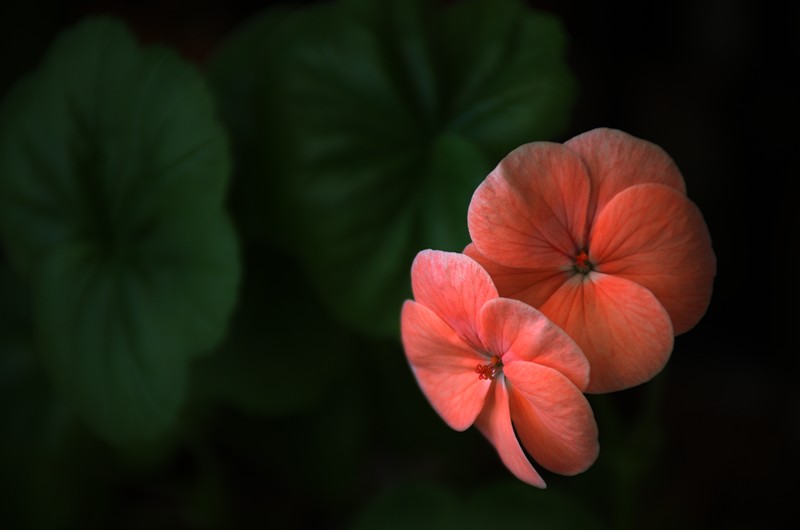
Look a bit familiar?
Soooo… my original effort turned out to be the result of two tone curves fighting each other, my ‘aesthetic’ curve applied in the toolchain to pull down the low parts, followed by the export profile with its gamma curve that put the data back where it originally was.
I’m also interested in what you all see; my assertion is the above two renditions should be about the same regarding tone distribution. But, color management being the inconsistently-applied thing it is, you may see different.
But, the second image is indeed a rendition of the original linear data. Go figure…