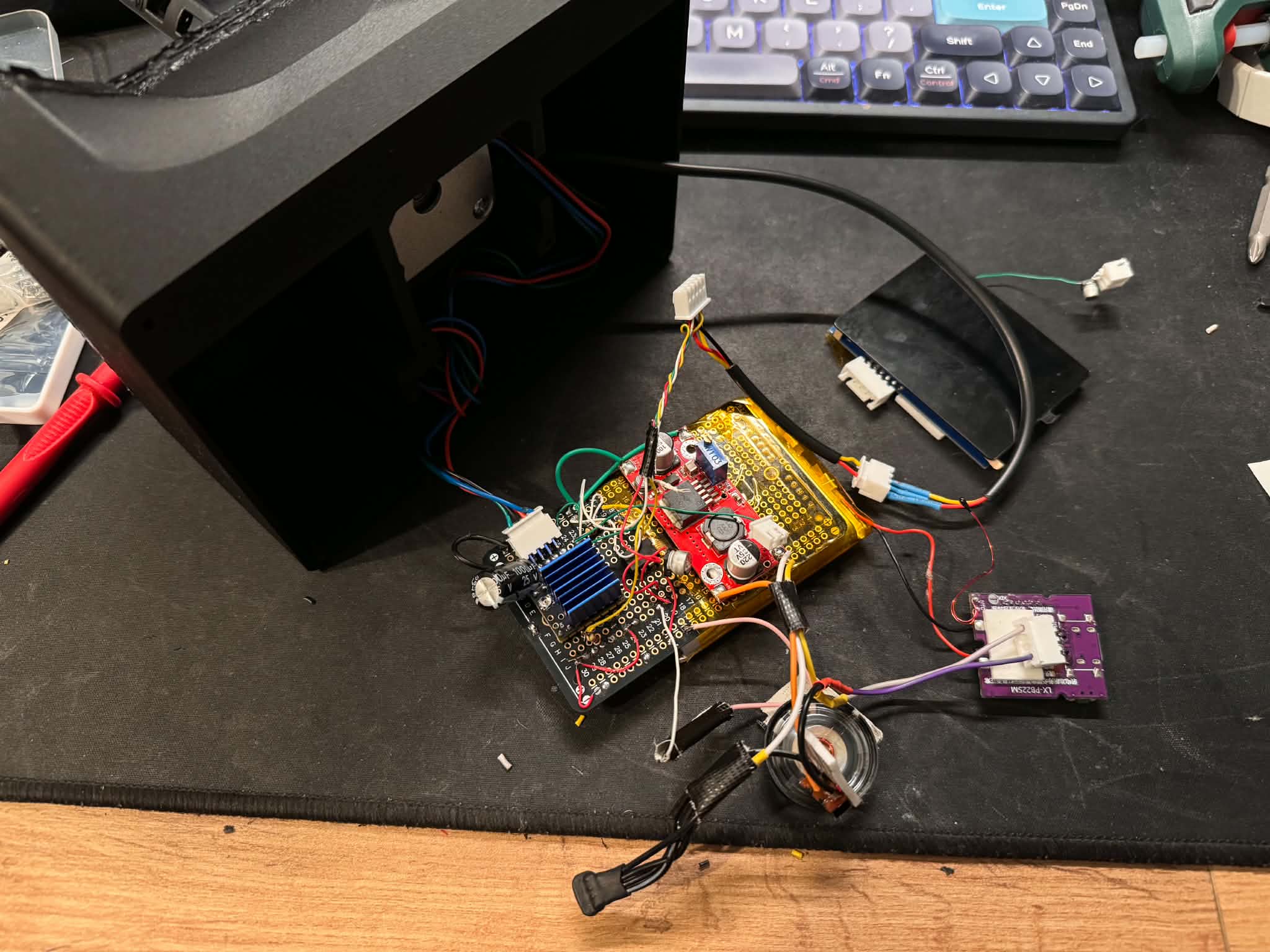
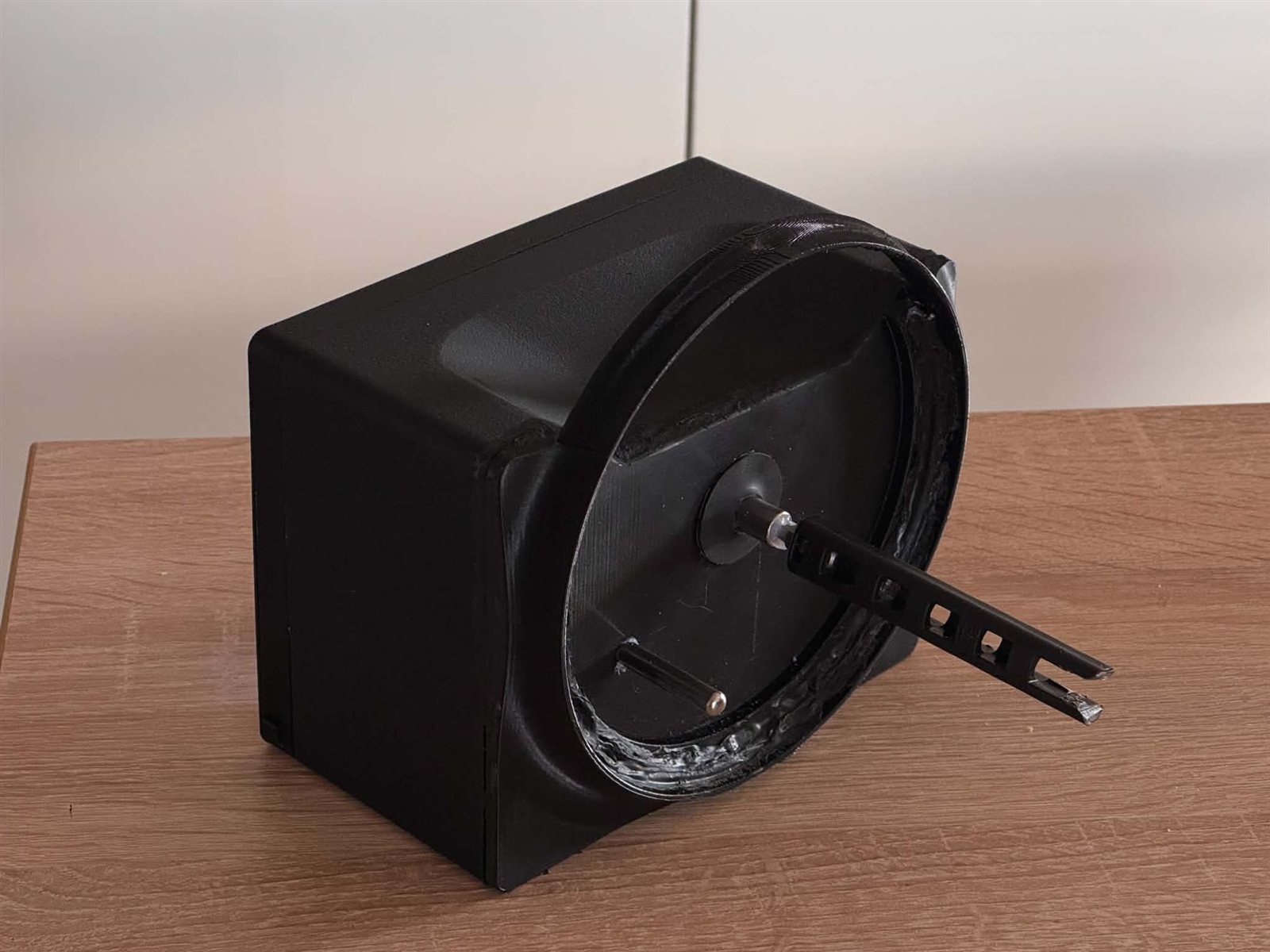
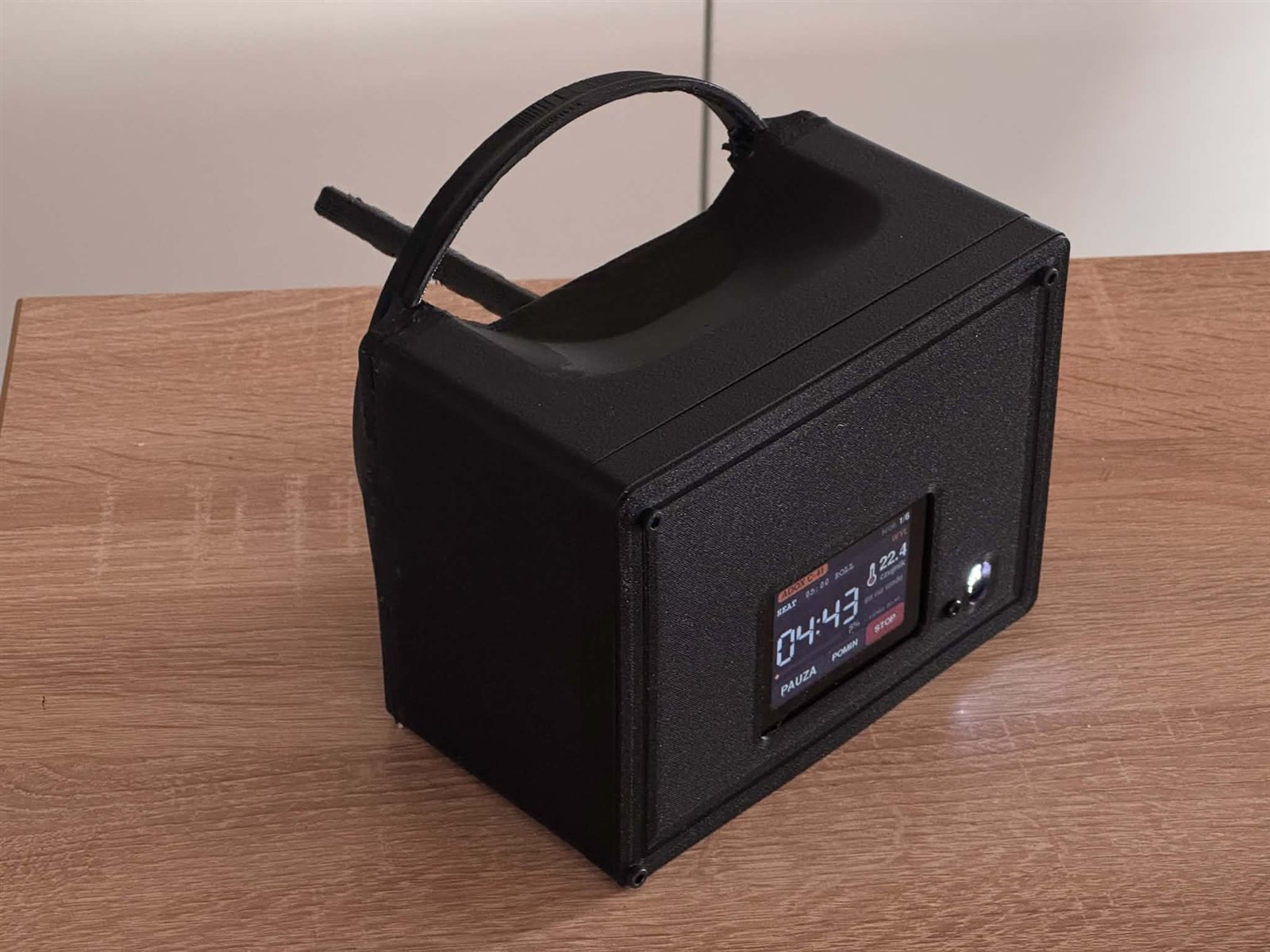
Hi, following the example of the Ago film processor, I built a film-developing agitator.
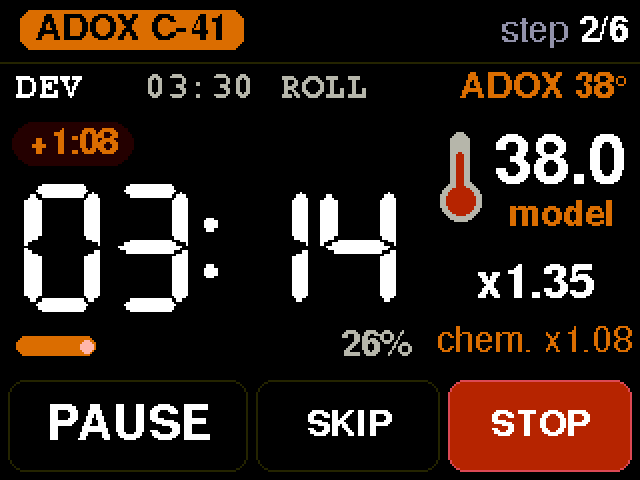
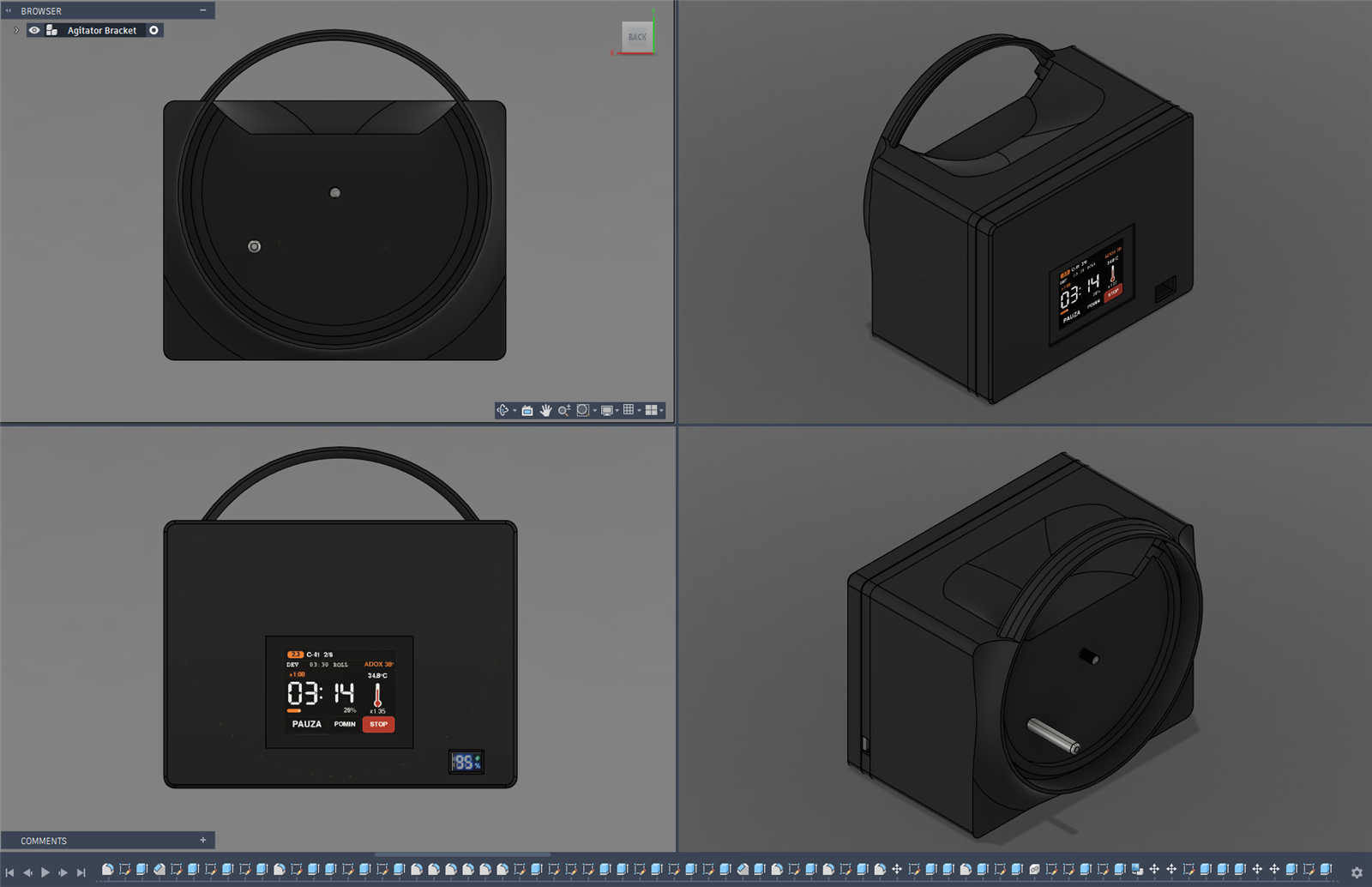
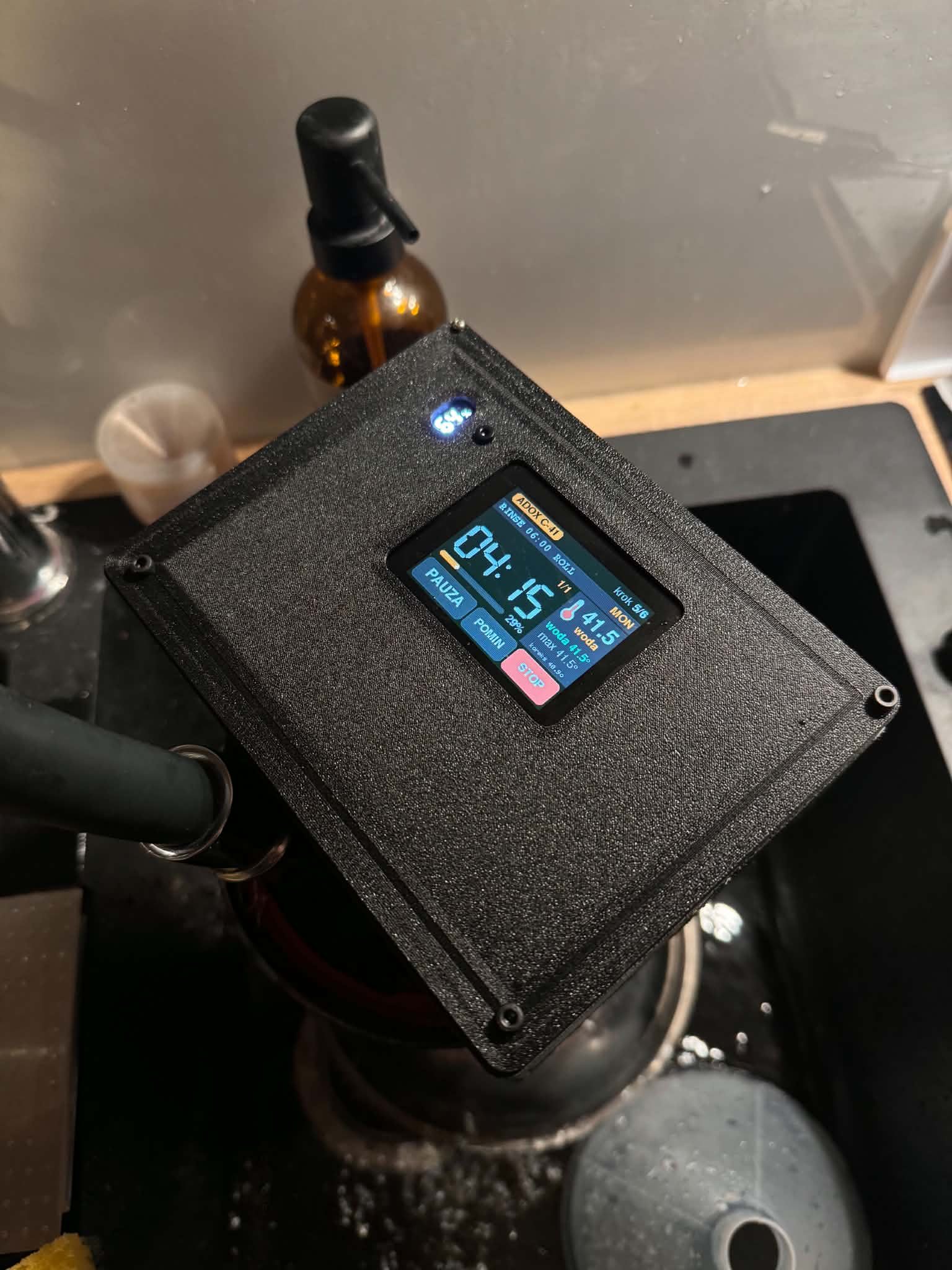
The system calculates the processing time based on whether the tank is positioned vertically (factoring in the heating of the Paterson tank during the initial water rinse and heating, as well as the drop in chemical temperature after pouring) or horizontally (as in the Ago Film Processor, where it calculates the time remaining until the end of development for each step in real time). I’m still fine-tuning the print design to make it more watertight, and now I’m sharing the documentation, the ESP32 program, and the materials I used to assemble the whole thing.
3 Likes
I am truly, deeply impressed by this project. That is a serious bit of engineering there.
But but but…
It seems to be an automated twizzle stick. That is, a computerized motorized substitute for the manually-operated twizzle stick.
(I should explain for all you youngsters that a twizzle-stick is a plastic, umm , stick, that we insert into the centre of the tank. Manually twizzling this rotates the film spool back and forth, thus agitating the developer.)
The problem with this agitation was that the area of the film near the sprockets received more agitation than elsewhere, increasing the development, leading to dark patches on the negative near sprocket holes, which could show up as light patches on prints.
The greatest teacher I even had taught us the best method, 50 years ago: “Take hold of your twizzle stick. Open a window. Throw your twizzle stick out of the window.”
Instead, we learned to invert the tank. Four insertions every miniute, on the minute.
Of course, your computerized motorized gadget may fix the agitation problem some other way.
2 Likes
You’re right, I had the same problem with the sprockets. I think that’s also called “bromine” streaks. No matter how I stirred, they always appeared, and the only solution was to raise the lowest roller a few centimeters higher. Here, I’m trying to fix it by stirring more vigorously at the very beginning and increasing the frequency, then slowing down so that the agitation isn’t quite as intense around the sprockets.
As for the mixing itself—it’s not just about the agitator. When mixing horizontally, I measure the chemical temperature and recalculate the time every second—if, for example, the chemical temperature drops by 0.5°C, the time is extended by about 15–30 seconds on average. I’ve compiled time extension charts for each type of chemical.
On the other hand, when mixing vertically, if the probe isn’t submerged in the chemical solution, I measure the external air temperature; then, during the first rinse before adding the chemical solution, I check the water temperature, warn if it’s too hot or too cold (ideally 40–45°C), and recalculate the temperature increase of Koreks; and if the water is drained, I detect that as well and start calculating the container’s cooling from that point on. From then on, it waits for the developer—for example, 38 degrees for C-41—and when the developer is poured in, it transfers heat to the Paterson tank. This is also calculated in real time and extends the processing time. Additionally, it calculates chemical consumption immediately because it asks how many rolls have been used.
I used to use a phone app “Lab Timer” for this, but here everything is done automatically.
Of course, your computerized motorized gadget may fix the agitation problem some other way.
I just didn’t want to pay $500 for an Ago film processor. Mine costs about 1/8 of that.
https://vintagevisual.eu/?srsltid=AU7gw4UmruA4_X32bnuJpfig7EUKhbv8ubc9CHHpQwgIkg8ioVt10aDh
1 Like
@szabrownick, really very, very impressive what you made there, congrats! 
1 Like
Once I’m done refining the enclosure in Fusion 360, I’ll also post the entire project and print files, including assembly instructions, on MakerWorld.
2 Likes