Frankly, I would just add a bit more money and get the OM-3. Maybe with the sweet 12-45 f/4 kit. Waiting for a sale/cashback, OM System has those all the time.
Welcome @photographicrat! I hope you enjoy this forum. It’s a pretty chill place to hang out and doesn’t get as argumentative as other places, which is why I like it. Plus, there are lots of very smart, helpful and considerate people here from all over the world who generally aren’t brand-loyal, agenda-driven shills 
From reading this whole thread, I’m getting the sense that you actually want a full frame camera. The trouble is, of course, as you’ve already worked out, that you have to compromise with whatever direction you go in. For the very best in weather sealing, you have to go with OM, but that means the deeper DoF (at equivalent apertures). To get the full frame body with best-in-class weather sealing (plus the equivalent tech specs), you generally have to spend a lot of money to get one of the top models designed for pros, and those bodies are bigger, heavier, more costly, and still don’t have an IP rating.
You mentioned it possibly coming down to money why they don’t put an IP rating on their cameras. But the titans of Canon and Sony not having enough money? I don’t really know what the real reason is, but it certainly made me want to support OM System for getting a certification. I like a company that can stand by its products, and that IP rating does help give you a reference for what you can expect. (My Fuji X-T5 is “weather-sealed” but rain still managed to damage the EVF).
As for the dreaded equivalency topic, I think it can oversimplify something that has a lot of variables. Although there is solid math behind it all, the real-world difference varies a lot based on the specific conditions and the way you adapt to the situation. For example, if you need shallower depth of field, you may be able to move closer to the subject or use a longer focal length. Bokeh is not a consideration because that refers to the quality of the blur rather than the amount. There are plenty of M43 lenses with lovely rendering. And just because an F2.8 lens is roughly equivalent to a FF F5.6 lens, that doesn’t mean they are equal in any other sense. There are also other considerations like optical quality, weather sealing, buttons, build quality, size/weight, AF performance, etc.
Having said all this, FF does offer more versatility in challenging conditions (when you need very shallow DoF, low light, etc.), and if this is important in your photography, it’s a definite asset. And if you’re used to FF, there’s an adjustment period when moving to a smaller sensor, and it can cause some frustration.
I have an OM-5 MK1, so if you have any questions about this line, don’t hesitate!
1 Like
Oh no! Not the dreaded equivalency topic!! 
I often prefer high DOF, as Tamas mentioned above. Here is a link to an old article on equivalency:
https://admiringlight.com/blog/full-frame-equivalence-and-why-it-doesnt-matter/
True for those close-up portraits, but then there’s also that range where the subject is farther away, like the height of the person takes up half of the vertical length of the sensor. In that case, an 85mm f/1.4 @ f/1.4 will give you a fairly strong out of focus background and of course both eyes will be acceptably sharp. And you’re still going to get a lot more background blur with a full-frame camera compared to a micro four thirds camera unless of course you have a 42.5 f/0.7 lens…
Just sayin’, that a LOT of people jump straight to the “face portrait” scenario and say that f/1.4 is not that great because only one eye is in focus, but the shallow depth of field still works for many other scenarios too…
For example, although I can’t post them because they involve people that don’t want their pictures on the net, I just looked back at a recent shoot I did with my 85mm f/1.4, and even with a half-body portrait with some space above the person, you already don’t need to worry about any part of the face being out of focus @ f/1.4. Pretty much all were @ f/1.4 and the entire face is certainly acceptably sharp, but with beautiful out of focus environment.
1 Like
Yeah, full body shots with very high aperture or focal length are also really cool, gives that medium/large format look without having to invest in those systems.
You are of course right, if you want to get a very shallow DoF with a specific angle of view, you want the largest sensor. (Preferably medium format: why stop at full frame?)
It’s just that personally, I find those super-blurred backgrounds boring and cliché. This is a personal preference, just my taste. No doubt if I felt otherwise I would get different kind of gear, larger sensor etc. I think there is value in context, and the photographers I admire have learned to master it instead of blurring it out.
As some who’s owned sensors at all those sizes, it starts to get problematic when you want DoF with medium format. I’d call full frame a sweet spot, you can go shallow or get a lot in focus.
But mah 100 mpix!!
Personally, I think that there are no boring techniques, only boring photographs. And categorically representing one technique by the most cliché is a detriment to one’s own creativity. Also, like I said, I wasn’t referring to super-shallow depth of field. Quite nice, more suble effects can be achieved @ f/1.4 at greater focusing distances.
Not saying that micro four thirds either is limited in the sense of limiting any individual’s creativity, mind you. But simultaneously, dismissing one tecnhique because it’s often overused is also quite limiting as well.
1 Like
It’s been a long time since I shot full frame, but isn’t it more to do with working distance? So, for the range of DoF effects you might want in portraiture, all sensor sizes are technically capable of them, but full frame gives you the most convenient working distance (as a general rule, because art is subjective).
For example, M43 and APS-C can give you the same shallow depth of field, but you might need to stand further away with a longer focal length. And at a certain point, it becomes ridiculous to be standing so far away. The other alternative is to have a wider aperture, but there is a practical limit to this as you move down in sensor size.
And the opposite applies to medium format.
1 Like
I’m sure technically, yes. I’m talking practically. I’m out with the GFX shooting what I shoot, my GF 55mm f1.7 is more or less stuck on f11 if I want a decent bit of the scene in focus. The fall off seems harsh the more I open the aperture.
Conversely, I’m rocking f8 or f5.6 on the GR IV and it looks like everything I want is always pretty sharp.
Of course these two things are completely different, and its been a little rough getting used to the GFX since things I expected to be in focus aren’t quite as sharp.
Conversely, when I want to blast out that background, the GFX is like daaammmmnnnnnn
2 Likes
But when I see totally blurred backgrounds, I am simply bored. You don’t have to be. Boredom is highly subjective. It’s just me.
I can’t help it. I get the feeling that the photographer was lazy, didn’t want to explore angles or light or whatever to separate the subject, but bokehed the heck out of it.
I think the most boring genres of photography are “corporate portraiture” (employees in front of a misty background), “radiant couple in front of blurry background (overblown highlights optional but required)” kind of wedding photography, and the “composition with random blurred object” photography. Oh, sorry, I forgot the “specular highlights blurred in the background”, a Xmas favorite.
But, OTOH, I am the kind of person who is mildly entertained by fisheye photos of cows and dogs. Probably some others find these boring.
1 Like
Yeah, I can relate. Not that I’ve ever tried medium-format, but I can imagine based on my own experiences with other sensor sizes and camera bodies. Even though we know what to expect on paper, there can still be quite an adjustment period before you can be confident you will get the photo you want when pressing the shutter.
And to complicate matters, it’s not just about aperture. I was a bit disappointed with the sharpness of my X-T5 for a while until I worked out how low I could realistically go with my shutter speed when relying on the IBIS.
And now I have the opposite problem where I have so much of my scene in focus with the M43 camera and the IBIS is much more effective. So it’s another adjustment period to work out the ideal shutter speed and aperture combinations for the depth of field and ISO I’m looking for.
I guess it’s just more to look forward to for when I get that full-frame and medium-format camera in the (very far off) future!
2 Likes
I would be interested to understand what “image separation” is required by the OP (@photographicrat). He/she wants to do street photography even during inclement weather.
There are a number of styles of street photography, but I think the most common forms tend to use a relatively high DOF. But not always.
1 Like
I’ve got you covered @Tamas_Papp !
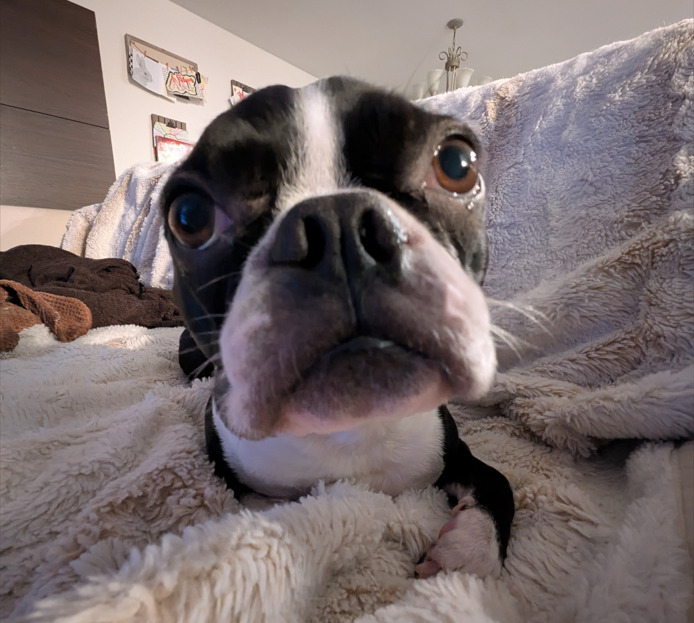
3 Likes
I would be interested to understand what “image separation” is required by the OP
I’d prefer being able to atleast have the image separation afforded to me by an f1.8 lens on full-frame @ 50mm at all times, but it seems I will be going M4/3 most likely so I suppose I can give that up
1 Like
Well, there is a 25mm f/1.2 from Olympus, but it’s large, heavy, and expensive. If you select a small body camera it might be awkward to use this lens.
And it’s still not the same as your reference lens.
https://www.thephoblographer.com/2016/12/12/review-olympus-25mm-f1-2-pro-micro-four-thirds/
I suppose you could use a longer lens and step back a bit, but that may not be what you want.
I would check any lenses of interest for weather sealing.
Cheers.
If you don’t mind shooting manual, there are some F0.95 lenses available for M4/3, including the Voigtlander 25mm, which is very close to 50mm F1.8 on FF.
There are also some cheaper fast lenses from the likes of Mitakon and 7artisans, but I can’t vouch for their quality on M4/3. I have shot 7artisans and TTartisans on my Fuji, and of the 3 lenses I have, they are all quite soft wide open, so I tend to stop them down anyway. But for the price, they are really fun and have great build quality. No weather sealing though.
unfortunately as you said those aren’t weather sealed… I could live without AF otherwise
Well, you have those 1:0.95, (and even a 1:0.8 one), m43 lenses from Voigtländer:
https://www.voigtlaender.de/lenses/mft/?lang=en
1 Like
I thought to bring this all the way back around, the Ingress Protection Rating is the weather test bench mark. The problem is that it seems OM Systems is one of the only ones that uses it.
If the IP rating is really the #1 criteria (and the #2 is size), then it seems very clear cut that OM Systems is the best choice.
2 Likes