This is the running changelog of the G’MIC software, until version 4.1 is released. It lists all new features and changes done since latest major version 4.0.
New features
G’MIC-Qt plug-in:
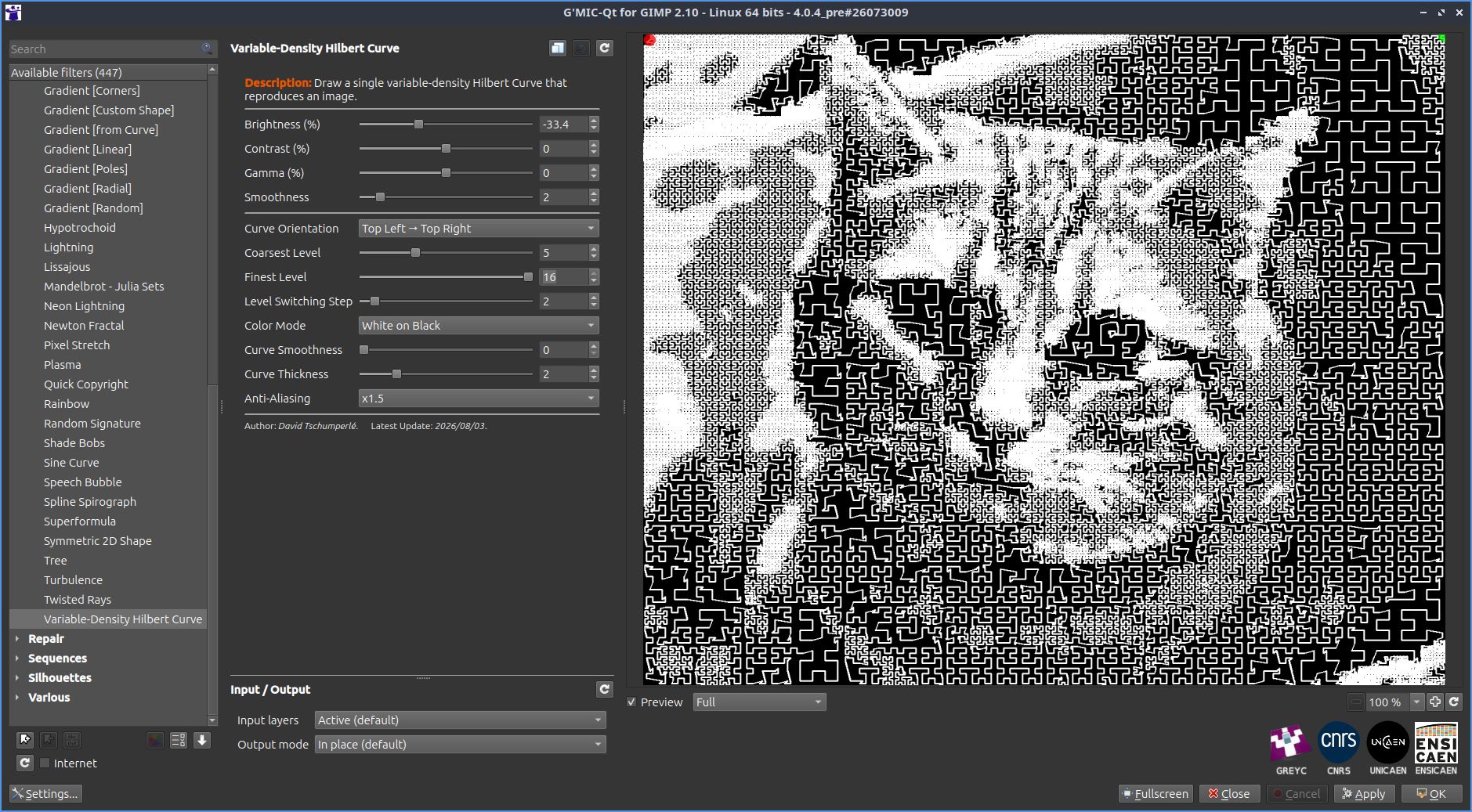
- [gmic-qt-404] New filter Rendering / Variable-Density Hilbert Curve draws a single variable-density Hilbert Curve that reproduces an input image.
- [gmic-qt-404] Filter Arrays & Tiles / Montage has been recoded to use the newest
arrangecommand, with a few additionnal improvements (support a larger number of input layers, better memory management, etc.).
G’MIC Standard Library:
-
[stdlib-404] New command
arrangearranges selected images according to a specified layout, described as a string (see post: https://discuss.pixls.us/t/new-command-arrange-a-better-version-of-montage/). -
[stdlib-404] New command
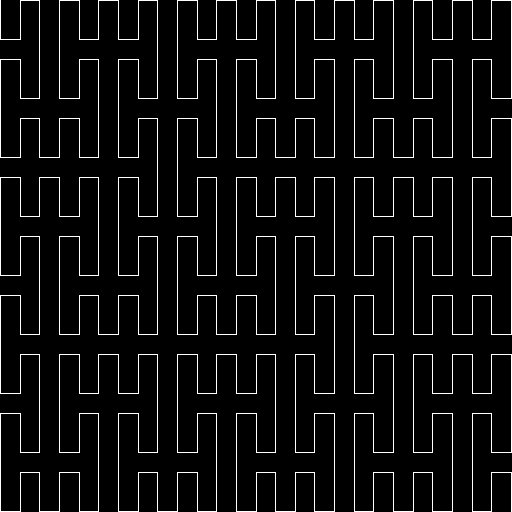
shape_peanocreates a 2D image of the Peano curve.
Improvements / Modifications
Core functionalities:
-
[core-404] Interpreter now pre-counts number of arguments given to a native command, to speed up argument parsing.
-
[core-404] When interpreter parses a string that is expected to be a single double value, it now uses
std::strtod()rather thanstd::sscanf(), which is 5 to 10 times faster (it does not make a huge difference on execution time of G’MIC scripts though).
Bug fix
- [stdlib-404] Commands
display,printandplot: Fix error occurring when one of the selected images has an empty name.