Well that is handy, good find!
1 Like
Yes, but not having to set up anything is so neat. Eg consider someone else transferring a picture they took to your desktop. If I don’t have to ask them to install anything, that’s much better.
I have installed Linux about 8 times last year (family, friends, and two computational servers), 5 of those were laptops. There was one issue with an unsupported wifi card (Mediatek I think? I replaced it with an Intel card anyway), but other than that, nothing.
Compared to the heroic 1990s, Linux installation turned rather… boring. OK, I get it, no need to recompile kernels since about 2000s, but even after that, I had to search furiously for error messages on the web, etc. No drama, if something doesn’t work it is usually unsupported harware. But it is quite rare these days.
Now I just set up a desktop with a modern filesystem (BTRFS), web browsers (Firefox, standard privacy/adblock plugins), office (Libreoffice), e-mail (Evolution or Thunderbird), games for those who want them (Steam, and then their app store works fabulously), in about 20–50 minutes, depending.
It’s not that I miss the drama of the old days, but there was a sense of achievement after a successful Linux install that is completely gone.
2 Likes
I’m planning on upgrading my PC after the holidays* and will be switching back to Linux on my desktop for the first time in like 20 years (I have Fedora on my laptop but I don’t use it much). I’m not quite sure what I’ll go with yet but I have a few contenders.
Fedora
Pros: Tried and true, no fuss no muss, good enough for Linus.
Cons: Boring
CachyOS
Pros: Current darling of the Linux world, fast, Arch-based
Cons: Arch-based, afraid of spontaneous combustion of my system
NixOS
Pros: Declarative and stable
Cons: I don’t want to get a PhD in an OS
Of course I have some questions about Wayland and darktable and all that…
*I had decided earlier this year that I’d be upgrading my PC to AM5 toward the end of the year. Didn’t expect my planned upgrades to nearly double in price. I was going to splurge on 64GB of RAM and I need a new case and a cooler so I was going to get some nicer stuff. Now I’ve been scaling down and making way more concessions than I wanted just to get my budget back into reality. Earlier this week I spent $250 on a 32GB kit of DDR5 at Microcenter, knowing I was taking a gamble that RAM prices might drop soon. Well, with Micron bowing out of the consumer market I guess I gambled correctly.
2 Likes
I’ve been running NixOS for 8 or so years and I don’t have a PhD, for sure.
If you don’t want complexity (which the nix community loves) then its pretty straight forward.
If you decide to go that route, I’m happy to help out as best I can.
Just install gentoo  It’s great how far the linux desktop has progressed
1 Like
I just use a usb cable and my desktop file manager. Have never installed anything more at the phone end.
1 Like
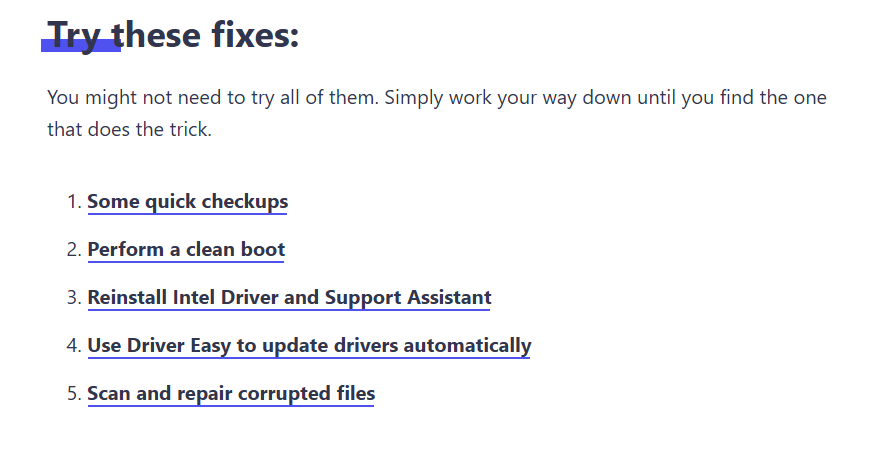
Here’s something from my everyday life on Windows. The app that takes care of updating my Intel hardware just stopped working and this is one of few relevant articles from the Google search results:
- 1, 2, 3, 5: useless things that almost never work
- 4: use our paid proprietary app to do what Windows is supposed to do but can’t.
1 Like
My experience on Linux has been rather miserable, mostly in a sense that I never knew when is something going to break and when it did, I often had a very hard time fixing it. I have not yet tried the RPM based distros or used a proper desktop, etc. , so it might change.
Most of my experience is on Ubuntu (or based systems) and I spent majority of my time on the base versions (20.04 and 22.04). My most common problems were stuff like window animations breaking, program not possible to install (dependency hell or just nowhere to be found), impossible to sleep/wake from sleep, some web apps being ultra laggy, and so on, I forgot at this point to be honest.
I might have better luck next time…
1 Like
Here’s my random find of the day:

Found on Wikipedia. I’m still trying to work out how it’s useful in any way, considering you can’t see the smell…
5 Likes
I have been using Arch for well more than a decade. I have destroyed my system exactly three times, and each time was entirely my fault, not due to running Arch.
2 Likes
I ran Xubuntu for quite a while until about four years ago. I like the Xfce desktop and Ubuntu underneath was easy enough to manage (much better than CentOS, Fedora, Slackware, etc. at the time I switched).
I’ve been on Windows at home since then and I’ve kinda lost track of the state of Ubuntu. Has it become excessively snap-py? It appeared to be heading that way four years ago and I was always glad when I could avoid snaps, appimages, flatpaks, etc. But as I recall snaps were the worse.
1 Like
My Ubuntu is snap-free.
2 Likes
Yes. They will even re-install snap and snap software after major updates, very windowsy behavior. The go-to corporate distro these days seems to be fedora. The only difference is that they release every 6 months instead of whatever Ubuntu does(besides Ubuntu LTS).
This is not the case anymore  I will even say that arch is the most stable(non LTS) distro at the moment. As long as you install stuff with
 -Syu or with your GUI tool, and don’t start breaking your system on purpose, it will not break.
Sure, you need to read one of their emails every 3 months or so, to see if you are afflicted by a package issue, but that’s it. I only needed to do an intervention once in years.

2 Likes
NixOS tells you its broken before applying the update to your system, soooo…
3 Likes
If only they didn’t have so much internal drama all the time… It looks like a great distro and way to manage packages, need to get into it one day…
Pacman itself shows a warning when you are updating an afflicted package, it just doesn’t ask your confirmation about it. I agree that they should make the user confirm that they read the disclosure etc. It would be pretty simple to add too.
Edit: reworded
1 Like
There ware weeeeiiiird corners in wikimedias image archives. When I was going to medschool I stumbled upon a photo of a dude who had pumped up his scrotum with a saline infusion, presenting his work to the camera. Some digging showed that photo was apparently linked to no article. Seemed to be exhibitionism in a strange way.
Maybe there is smelly socks exhibitionism as well? Or maybe you stumbled upon a secret intelligence operation ;-)?
2 Likes
You can keep it entirely snap-free. I have no problems with Flatpak, I am running Darktable from Flatpak. It complements the deb repos in a nice way.
I am now running Ubuntu on all my machines. The distro updates every 6 months suit my workflow just fine, nothing has broken in the last few years but just in case I schedule them at times when I can cope with downtime for fixing.
2 Likes
Yes, that is perhaps one of the Windows-like experiences of Linux. But I think I have only experienced it if installing something not meant for my-version/my-distro, or when working from source. I am not a developer/programmer and I don’t go far down that libblahhlah missing path before binning the whole idea of that program.
But to even have set foot on that path demonstrates a certain level of linux literacy and/or sense of adventure. Once we go there, then everything that just works after make and make install is a bonus!
I’ll have to say though: Network Volume Mappings in Linux SUCK compared to Windows. Automounting is fiddely, you’ll have to go through the terminal to mount folders if the network stack came up too late. Flatpaks get bricked when network volumes aren’t available. Windows has that one down much better.
1 Like