I have not watched this, not sure if I can or will. Just be a little cautious when sharing images from copyrighted materials. Often linking to images is the better approach.
1 Like
Screencaps like these would usually be considered fair use (or your local equivalent).
3 Likes
That might be true for the US and pixls.us as an US based website. For posters from outside the US it could still be problematic because “fair use” is not always recognized.
Was reading a bit of ‘The Cruel Radiance, Photography and Political Violence’ by journalist and NYU professor Susie Linfield. (Yes, I’m a geek). It’s a persuasive counter to postmodern critics who reject photography’s claim to reality.
This excerpt seemed sort of relevant to the topic of why photography or video is different to painting or similar visual media and why obvious manipulation might be problematic:
‘Yet the Abu Graib photos prove just the opposite; as Gourevitch admits, "Without the photographs there would have been no scandal!’ And this is because people know-—even after forty years of postmodern theory and two decades of Photoshop — that photographs record something that happened. The Abu Ghraib images shocked the public, and scared the government, precisely because they were photographs; they could not be spun, denied, or explained away, and though they could be interpreted in various ways, they could not be made to mean anything at all. The images evoked intuitive, visceral disgust in millions of people throughout the world; this was not an entirely informed reaction, but it wasn’t a wrong one, either. The Abu Ghraib images —digital images, taken by amateurs-have strengthened, not undermined, the status of photographs as documents of the real. No written account of the tortures could have made such an impact.
Pace Gourevitch and Morris, “ocular proof” is still something we expect a photograph to provide.
This is why Josef Koudelka, the Czech photographer who documented the 1968 Soviet invasion of Prague, takes his photographs to Russia: they are his argument against the deniers of history.
As Koudelka recently told Aperture magazine,
These photographs are proof of what happened. When I go to Russia, sometimes I meet ex-soldiers… They say: “We came to liberate you…” I say: “Listen, I think it was quite different. I saw people being killed.” They say: “No. We never … no shooting, No. No.” So I can show them my Prague 1968 photographs and say: “Listen, these are my pictures. I was there.” And they have to believe me.’
6 Likes
Yes, this is true. But photography is a tool. It can be used for various purposes. One is to document reality (e.g., journalism) another is to produce aesthetic works (e.g., decorations, art). These areas often overlap. The aesthetics of a photo in a journalistic context can be used to “enhance” reality and load it with emotions. The same is frequently done in the advertising industry. But while the connection to reality is crucial in some cases (journalism, product photography), it is dispensable in other fields.
2 Likes
I agree that photography has different uses and good journalism uses various checks to prevent manipulation that ground it as evidence. Still, I think (perhaps outside of advertising where incentives are obvious), that photography carries an expectation that it is a recording of reality in some way. That seems definitional.
That’s the reason advertising as a matter of good practice should always be flagged as such.
I agree. But the restriction “in some way” is important here. To come back to the starting point of the thread , this picture, was all about “style” (and fun) but the essential thing is, that it was derived from a photograph (if I had painted it myself, the feedback would have been much more positive  ).
).
Personally, I don’t like it, when I can’t tell that a photo has been heavily altered. As long as I can assess the extent of the manipulation, I think a pronounced style is okay for aesthetic reasons. I don’t necessarily have to like the picture or the style.
1 Like
There was a relatively short period from 1960 to 2000 or so, where color photographs were exceedingly hard to alter, and therefore became synonymous with authenticity and truth.
I think we’re still feeling the aftereffects of that sentiment, in this our post-truth world. Perhaps tools like the Adobe’s new Content Authenticity technology can regain some of that lost trust.
But I’d bet that it won’t. It’s too geeky, too hard to verify. The battle for authenticity is lost, and nothing but common sense and manual fact checking can save us.
Perhaps the normies will soon ask Alexa if she thinks a certain news story is trustworthy, LOL, cry, sob.
3 Likes
For sure, ‘in some way’ is doing some work. But the fact that there aren’t absolutes in such matters is just the nature of things and allows space for good faith debate and judgement.
Like you say, it’s fine to use a heavy hand in processing photography as the hand is also visible. It’s up to the viewer to decide whether they’d rather see the hand or what it painted over.
Aside: Anti-liberals (in the ‘European’ sense) seem to think that if there’s any kind of grey area or nuance, typically something that has been known and written about since at least the Enlightenment or the liberal era, then you have to throw the baby out with the bath water. For me, such fuzziness is a feature, not a bug. As Linfield implies, just because something can be discussed, doesn’t mean it can be “made to mean anything at all”
2 Likes
I can see the possibility, after decades of internet-based “democratisation” in info production, of a revival in source authentication and gatekeeping. Perhaps that’s naive
1 Like
What I find interesting about the pictures of Ogawa ist that they look great in the video of the book but have that cheap over-Lomo-tized look when presented on his site on a black background.
And by testing this on the site, two changes in the developer tools in the css and unsurprisingly the pics look great and the site less like a design abomination from the 00’ies. Been there myself, not proud.
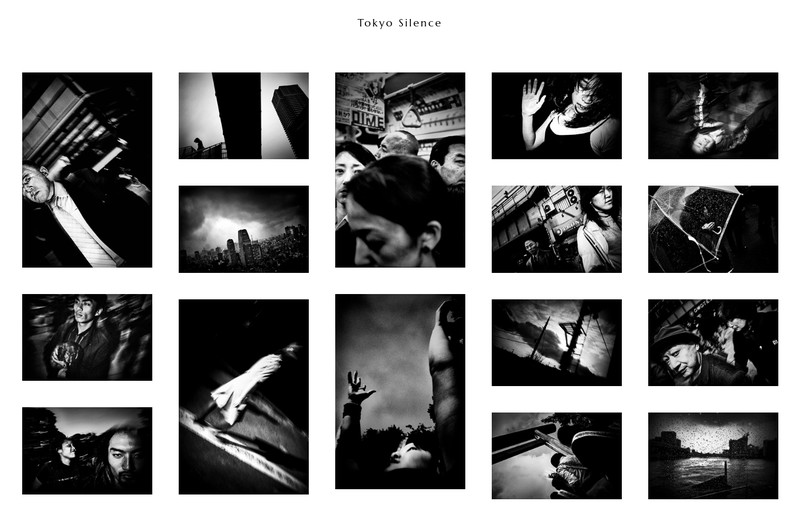
2 Likes
LOL. Indeed!
Interesting. I put the designs side by side and it’s impressive what a little white can do  .
.
2 Likes
And the pictures of Teresa Freitas are just lovely. Her style is very bold in being so fluffy and light while cranking the saturation to the max. I think she really matches the style and the content very well.
If her style is something for you but you prefer street photography driven content I recommend having a look at the works of Ci Demi.
2 Likes
Particularly love that pic of the minarets ready for takeoff
2 Likes