suggestions for macro on the cheap

I would like to understand my options for cheap macro photography.

Background: I have been using a “4K USB microscope” with my daughter to explore tiny objects. Think: grains of salt and similar minerals, surfaces of plants, texture on a coffee bean, what textiles look like up close, etc. But the image quality is simply execrable, not something I would want to save/record (the lens is very bad, and it is impossible to get more than a tiny area into focus). I would like to get slightly better results using a camera, without buying a macro lens.

Gear I have: All MFT, Panasonic G9X body, 25mm f/1.7, 14mm f/2.5, 45mm f/1.8 primes. All have magnification 0.11, unsuitable for macro.

My options: I thought if buying extension rings, eg a 10mm/16mm set. Many options exist, a lot of them have electrical contacts so I can get AF and focus stacking (I hope). What I still don’t understand is how my focal range is affected, as both minimum and infinity come closer, so what’s the actual range? I could only find formulas for how the magnification changes. I also would want to know how DOF works out.

If someone has experience about these things, please tell me where to look these equations up and how to things about them. Concrete extension tube recommendations for MFT are also welcome (I am in the EU).

The other option I considered is a lens reverser, but all my lenses are focus by wire so I think I would need to get a new one (eg a vintage lens), because that’s an all manual option.

What I would use it for: basically “armchair macro” as described above, a kind of like a microscope for non-translucent, stationary objects. Long exposure times are possible, using a tripod, and I can rig light. This is a science/learning project showing the tiny world around us, not my entry to winning macro photography awards.
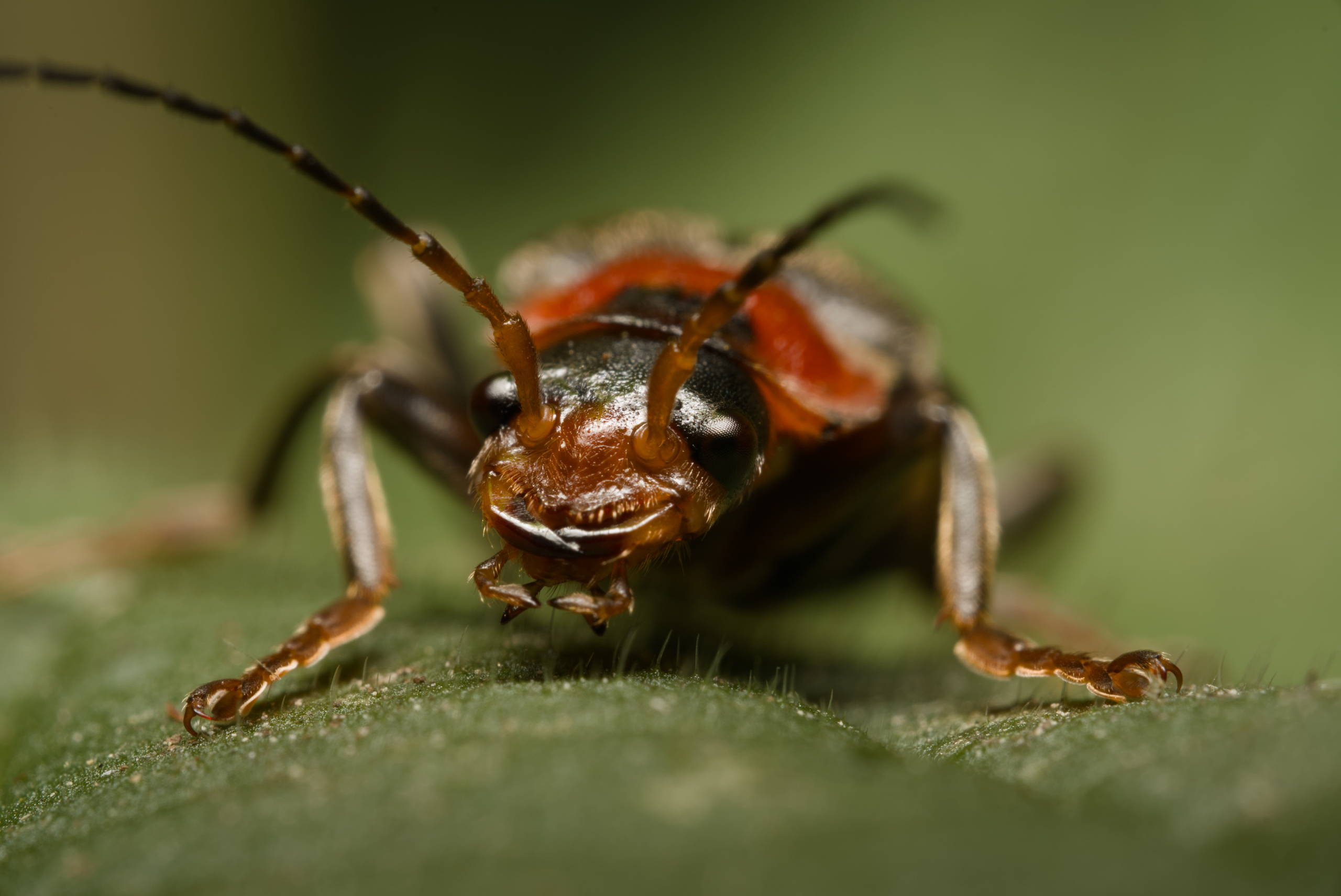
Sounds like a fun project. I do a bit of macro, but I don’t have any experience with extension tubes or reversing rings so I can’t be much help there. Check out the YouTube videos from Micael Widell, he has excellent advice on how to get started.

In terms of DoF, all I can say is that it’s going to be very narrow, especially if you get well beyond 1X. Autofocus becomes very unreliable at such close ranges so you really are better off in manual mode. Most of the people I know who do stacking at microscopic levels use focusing rails, which probably takes you out of your price range. You could try to manually focus on the tripod and then stack the images. I do something like this and it works ok after some practice.

I’d be interested to see your results once you get started. Good luck!

4 Likes

extension rings work well and are cheap. Close up filters that screw on the front may reduce image quality but would still be better than nothing.

4 Likes

One idea for inexpensive Macro is to look for a lens from an older DSLR (or even an SLR) and use an adapter. Dedicated Macro lenses have always been pricey, but perhaps you could find a kit lens with close focusing capability.

I have a kit lens from by 2010 Canon Rebel XS: EFS 18-55 mm f/3.5-5.6. It is capable of focusing down to a distance of 0.25m. I also have an inexpensive adapter that does not pass electronic data, so the aperture is always wide open. A true manual lens would be preferred.

Test shots show the expected very-shallow depth of field that is characteristic of Macro. Without the ability to adjust aperture, I think I would need to focus stack to take e.g. flower close-ups.

I think you can find ideas for home-make reflectors online to get more even illumination.

Edit:
Example - Reddit post

First of all, I fully agree with the recommendation to check out Micael Widell. He has all the information you need.

Extension tubes are pretty much all the same. But try to find some with flocked/matte interiors, so light doesn’t bounce around, and the contacts are needed so you can set the aperture. There’s also the Raynox (or whatever it’s called) that you put at the front of the lens. AF is useless for macro unless you have something like the latest OM-1 and focus stacking may require a macro rail.

You get essentially no DoF. You will need to shoot at f16 or more, using flash to provide light. That also means some kind of diffuser, if you don’t want it to look horrible.

5 Likes

As others say, the DoF is approximately zero. For focusing, you need a method to smoothly move the camera towards or away from the subject. I once made a macro stand from wood and parts of a broken toaster. Focusing rails are available from about £20 (UK pounds). For a really cheap method, put the object on a table, with the camera in front of it, simply resting on the table.

Bellows, extension rings and reversing rings all work fine for me, but that is with manual lenses that have aperture rings. If you can only use a lens at maximum aperture, the quality may be awful.

A supplementary lens won’t get close to 1:1. Suppose your main lens is 45mm. This is 1000/45 = 22.22 dioptre. Suppose you attach a +3 dioptre supplementary. (This has focal length 1000/3 = 333mm, about 1 foot.) The combined lens is dioptre 22.22 + 3 = 25.22, so that has hardly changed. 25.22 dioptre is 39.65 mm, and that is the focal length of the combined lens. You can use this in the usual simple-lens formulae 1/f=1/u+1/v etc.

When your main lens is focused at infinity, then when the supplementary lens is attached, the object distance will be at the focal length of the supplementary lens, ie 333mm.

You can get a greater magnification by using an ordinary magnifying glass in front of the main lens. For example, this might be dioptre 10, so f=1000/10=100mm. The quality won’t be wonderful (eg chromatic aberration) but cheap and easy, and fun.

2 Likes

I love the idea of macro, but don’t really have the discipline for anything other than the simplest. Thus, there is a set of extension rings on my shelf, seldom touched. But I absolutely want them there, because they cost so little, even if it once in a blue moon that i get the urge, I can always pick them up and play. So just buy them! With electronic contacts for your aperture control and exif info. The last time I did play with them, I was getting into the dust inside the thread of a bolt. Sounds like a decent next step from where you and your daughter are with salt grains and stuff. They re cheap, and I really feel that, even if you buy a macro lens later, you may still find reasons to use them. A small good investment!

I have the Raynox DCR-250, good because it fits a range of filter sizes.

2 Likes

Will also recommend Micael Widell, he has several videos for budget or starter options.

I haven’t used any extension tubes or the Raynox attachments, but I know some folks have used the Raynox attachments with great results on some super nice macro lenses that don’t go beyond 1:1 or 1:1.5 magnification.

With the primes you have, the 45mm is probably the best option, though that is still a little wide for macro. You’ll probably have a much shorter focus distance compared to the 60mm or 90mm macro lenses.

I have the Raynox DCR 150 and it’ll take my 100mm macro lens from 1:1 to about 1.75:1. I don’t mind that I have to get closer to my subject, but it won’t allow me to focus to infinity so it imposes an focus range that I have to work within.

Also, I understand that the Raynox doesn’t work as well with shorter focal length lenses, but it does seem like a convenient way to get more magnification.

1 Like

I have a tutorial for insect macro with a discussion about gear in German here: Tutorial zum Thema Makrofotografie | Marc Fouquet (might be worth machine translating).

My method is basically Micael Widell’s, who was already mentioned here. I can recommend his videos, especially the older tutorials.

Extension tubes are fine. I also never found a formula for their effect, but I just tried them with different lenses and took a photo of a ruler to measure the magnification. APS-C lenses width “normal” focal lengths ended up having between 1:1.5 and 1:1.1 magnification.

A Raynox has the advantage of sitting at the front of the lens, so when you are outside you can clip it on and off, which is easier than adding and removing extension tubes. The image quality of the Raynox was also fine for me. You can combine the Raynox with extension tubes or even a macro lens for even more magnification.

Main point: Knowledge is king. People buy expensive lenses, go out and naively take photos. Back at home they are terribly disappointed with the blurry results.

Use F11 and either do a long exposure on a tripod (immovable subject) or use a flash. Set the focus to a fixed distance/magnification and move the camera forward and back while having focus peeking turned on.

When you get more serious about macrophotography, Laowa lenses with 2x magnification are strongly recommended.

Depth of field is of course an issue. But with practice even 2x shots can look good. I am too lazy for focus stacking.

6 Likes

That’s what I’d recommend, too. He took a bit of a hiatus from macro for the last year or so, but the old content is still there, and highly recommend.

His book on macro photography is pretty good, too.

1 Like

According to the specifications, your camera has a function “Focus stacking”.

Yes, it’s called “Post Focus/ Focus Stacking.” Advanced manual p. 130. It creates a jpeg.

Post Focus Video

1 Like

… and it only works with AF. No manual focus possible.

EDIT for the curious, this is how it works for Panasonic cameras: the camera takes a video, moving the focus around a bit in a range it considers interesting (no way to influence that, typically the foreground object is covered). The resolution of this is 3328x2496 (around 8 Mp), which Panasonic charmingly calls 4K for some reason only they can fathom. The bit depth is 8. [Newer cameras have a 6K version, which is 4992x3744 pixels.]

This technology is called “post focus” as the user can select either a single image, stack them all, or stack a selected range. The result is always a 8-bit OOC JPEG at the above resolution.

This has little nothing to do with OM Systems in-camera focus stacking, which is much more advanced, but it is a quick and fun way to experiment.

I have ordered Meike extension rings, will experiment when they arrive and get back here.

4 Likes

Did you get the rings @Tamas_Papp ? How is your project going?
I hope soon to be in possession of a macro lens for my OM-5, and I’m eager to try it out.

The only thing I’m not sure about is what subjects I’m most interested in. I’m not sure I’m into bugs enough to be taking lots of pictures of insect heads. I’m thinking I’ll just enjoy getting out into the woods, finding fungi and interesting bark shapes. I can imagine there are lots of opportunities for abstract photographs.

1 Like

I think some people here already suggested it: look for and old FF macro lens like an OM Zuiko or a Nikkor.

Thanks for asking! I tried all my lenses and the 45mm f/1.8 makes the most sense with two extension rings (26mm), for the 25mm the subject is nearly at the lens at maximum magnification.

AF is unworkable. I think that the DFD algorithm overshoots because it expects certain characteristics of the lens, so it quietly goes crazy and keeps hunting. But MF works fine, even with focus bracketing! So I can focus at the closest point, and then have the camera shoot away.

What I am currently figuring out are the units Panasonic uses for focus bracketing. I think that 1 is the smallest the motor can move the lens, and 4–5 is the smallest perceptible step that makes sense for my purposes. I am currently in the process of calibrating it by taking photos of a ruler :wink:

I am still unsure if I need flash and a diffuser. Yes, for bugs etc it would make sense, but for inanimate objects, especially if it is sunny outside, I think I get away without it.

That’s it at the moment. I need to explore the software side a bit, ideally a program that can align and stack automatically would be nice.

2 Likes

Just a side note: I tried extension rings some time ago basically to improve the close focusing capabilities of a lens. It worked but at the same time it limits the ability to focus at infinity and moderate distances. This was such a heavy burden for my use case that I returned the rings.

I may have mentioned this before, but most of my serious macro friends shoot in manual focus. Autofocus is just too unstable at those close distances and narrow DoF.

1 Like