Last year I was chatting with a pro photographer (in the sense of someone who makes a living from photography) at a camera store while we were eyeing the TTartisan lenses. He told me that for him full frame does not make sense, he uses APS-C Fuji bodies for weddings and similar, and Fuji GFX for fashion shows that need large prints, but he said he could probably wing the latter with the APS-C bodies and no one would notice from the images. Except that the clients had learned to expect gear that looks bulky.
Also, I need to learn not to rely on blurring too much to separate the subject. There are so many ways to do it, and some just need a bit of thinking and improvisation, not gear.
How do you even focus an f/1 manually? Leicaphiles frequently prefer smaller apertures because a rangefinder isn’t really precise enough for even an f/2.
I’ve grown to prefer bokeh up to as much as you can experience with your own eyes. Too much more than that feels artificial to me.
Most (maybe all?) micro 4/3 cameras have the option to magnify an area and show the edges with a false color. It is not a fast process (manual focus rarely is), but usually pretty reliable.
Recently I have been wondering if I am relying too much on AF, and whether MF would force me to spend more time thinking about an image before I press the shutter. I only have one MF lens at this point, a Meike fisheye, which I find interesting but never forced myself to spend a week walking around with so I don’t compose well with it yet.
I’d be interested in your experiences if you go this way. I’ve thought about something like this but wondered how hard it would be using a milc to manual focus. An alternative would be a focal reducer with a FF autofocus lens, though this would lose the compactness and cost advantage.
Frankly, I think that native lenses beat that option (for 17mm on MFT, at least). You can get a used Olympus 17mm f/1.8 for around 250 euros, which is optically great and has AF. Or, for the price of a speed booster + ff lens, the Olympus 17mm f/1.2.
Because of the crop factor, I think that non-native lenses make little sense on MFT, and possibly even APS-C cameras, for “normal” focal lengths.
I will sleep a bit on the idea of getting the Mitakon before spending that much. There is a cheaper alternative, the TTartisan 17mm f/1.4 (I link the Fuji mount review, but it is the same lens), going for about $100.
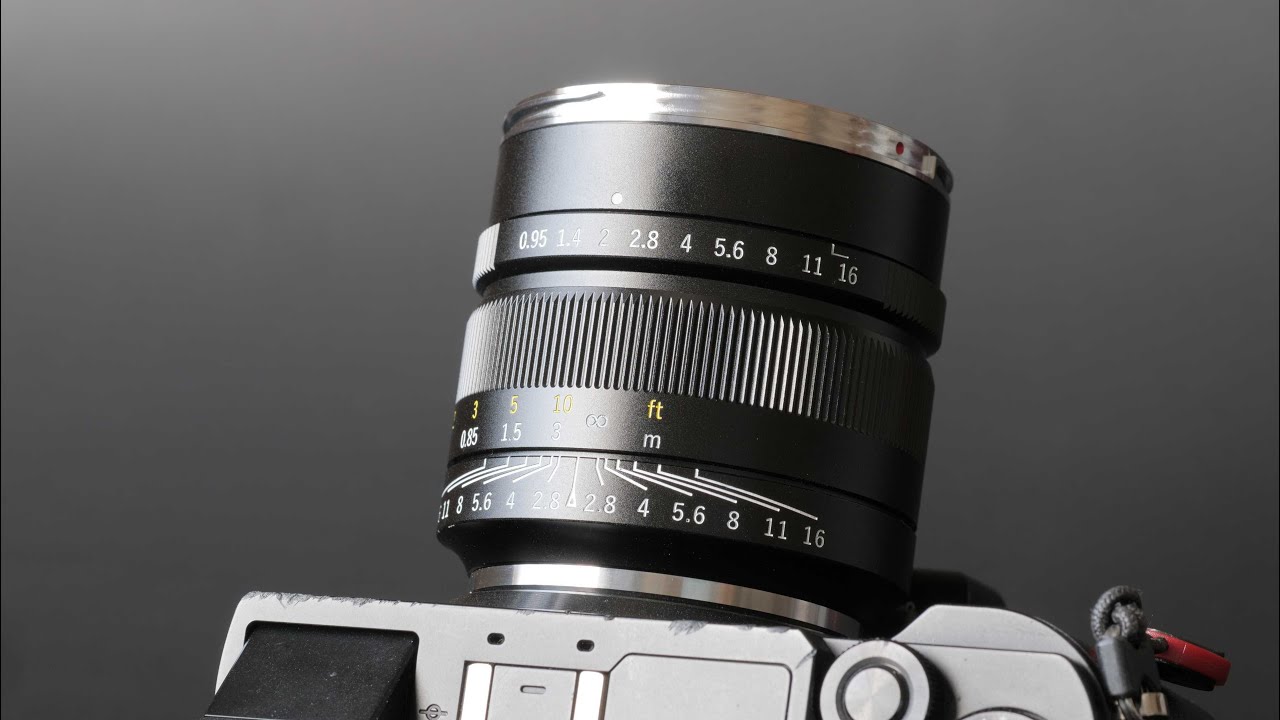
I have a TT Artisans sub 100€ 0.95 and it’s pretty difficult to focus, especially since the lens is very soft. On 1.4 it’s okay but still hard The best bet for moving targets is 11fps mechanical shutter and many prayers.
I felt the difference moving from apsc to ff was considerable but not always visible. (Same is often true with cheap vs expensive lenses) If you buy new high spec apsc glass such as the most recent fujis the difference to ff will be minimal.
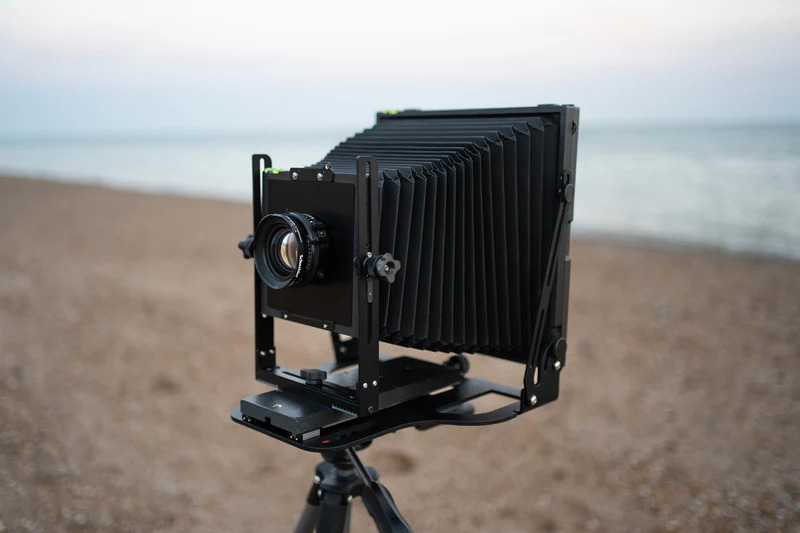
Basically it seems larger formats can use simpler lower spec lenses and still achieve good results. Smaller formats tend to “crunchy” results and larger tend to smoother looking images and im not referring to dof here.
I’d say its “perceived sharpness” or “lens acuity”.
A few years ago I shot my vacation on a YI M1, a micro four thirds camera, with a Panasonic 17mm f1.8. This setup gave me a nice focal length and was pretty compact. The resulting images, at least for my workflow, needed way less sharpening in darktable than images from my APSC fuji or FF nikon camera (and way way way less than the 45mpx Z7ii). I thought the Panasonic lens was pretty nice and it was pretty cheap. When I looked up reviews, it turns out that at least compared to a lot of other lenses, its pretty terrible. I still like it and have it (though I now don’t have a MFT body to use it on).
Interesting. That’s what the foveon fans claim from that sensor, though cynics say it’s just internal sharpening. Photons to photos guy Bill Claff has a method of determining whether RAWs have been sharpened.
Crunch is the scientific opposite to smooth when it comes to images
Larger formats can have lots of detail but still look smooth. Somehow have less overall contrast but still look rich. I’ve been wondering what it is exactly, lens aberration-wise. My best guess is that it’s lens tolerances and magnification that somehow relaxes things for larger formats. It seems it may be overcome with expensive manufacturing and materials. Not many examples yet though.
Larger format wide angle photography in particular looks more airy and relaxed, like a standard lens does on FF. It’s not stressed.

 The best bet for moving targets is 11fps mechanical shutter and many prayers.
