I’m currently reading ‘Churchill’s ministry of ungentlemanly warfare’ by Giles Milton.
Perhaps somewhat Britian centric, but a good introduction to the Special Operations Executive, SOE, in WW2. I’m led to believe that my great uncle was involved in SOE somehow, but he died before I was old enough to ask pertinent questions… Oh to travel back in time to be able to ask him.
Or LotR, for that matter. I did, at some point, force myself through it, but it never really clicked for me and was much too verbose for my taste (or lack thereof). I mean, I get it, world building, character building, yes, of course, but it dragged on a bit.
As for what I’m reading: I’m re-reading The Long Mars, by Terry Pratchett and Stephen Baxter. I read the series years ago and decided to refresh it (something I tend to do with all things Pratchett had a hand in, I much have read Good Omens five times, by now).
I’m reading a 40th anniversary edition of Silent Spring that my wife thrifted for me. Given that the 40th anniversary was over 20 years ago and I’m old enough and interested enough in this type of thing, none of it is too surprising to me, though it is still an interesting read for the specifics.
The book is about how humans continually shoot themselves in the foot, realize their foot is bleeding, and somehow come to the conclusion that the best path forward is more foot shooting.
Reading it, I feel like Captain James T. Lunatic from the Upright Citizens Brigade “Bucket of Truth” episode. Captain Lunatic is an unhinged cop on the warpath for justice. The “bucket of truth” is a plastic bucket in a suburban middle-class home and anyone who looks into the bucket shall know unmitigated, unadulterated, immutable truth. For most, the revelations drive them insane. For Captain Lunatic, after chasing the Unabomber and the girl scout child of the home’s family into the house, he peers into the bucket, stares up at God, and yells “You think I don’t know that!”
Which is to say, it’s a depressing read and sad how little things have changed over the years.
Lichtenstein by Wilhelm Hauff.
A historic novel written 200 years ago and set 500 years ago. It’s much easier to read than I expected, given its age. I genuinely enjoy the fact that it’s set in the very region where I life, so I know many of the places that are mentioned.
It has been on my reading list for a long time, as I grew up very close to the Lichtenstein Castle, which (in its today form) was actually built based on the book.
I just finished George Orwell’s Animal Farm, a book I’ve known about for my entire thinking life, but somehow never got around to reading it.
Of course its tropes have so deeply seeped into all contemporary media that I knew its plot and characters entirely, without having read a single word of it. More pointedly, I now realize that several entire books I’ve read could easily be summarized as “Animal Farm in space” (or similar).
However, because of that, the book itself was a bit boring. But at just over 100 small pages, it was still a good read, if more as a culture-historical artifact, than as an enjoyable piece of literature in its own right.
Older books, ones that stand the test of time, tend to be slower and complex. They become easier for modern audiences after being post-processed by editors and historians and perhaps truncated or abridged, though such actions tend to contribute to other issues.
I am glad you are all reading. I stopped doing much of it after I reached adulthood. Strange, because in childhood I would read all the time, especially the adult-oriented tomes, the richer and more challenging the better. Garbage literature may have caused the decline of this passion of mine.
I have a copy of 1984 that I picked up recently sitting on my desk, which I’ve never read (same with Animal Farm). Kinda the same boat as Silent Spring, I didn’t exactly live my life in a vacuum, I feel like I could summarize it without reading at this point. But soon I’ll get to it.
But re: Animal Farm, it did inspire one of the best albums of all time…
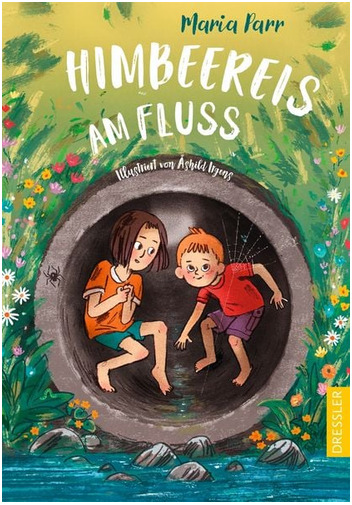
Just read through this one from Maria Parr: Oskar og eg (original norwegian title). We got it from the library to read to my son. He lost interest after the first two chapters but I kept reading. A beautifully told tale of the seven year old Ida who lives with her parents and her 5 year old brother Oskar. Their little stories are told so tenderly, the childrens perspective on life so well put. There wasn’t a chapter where I didn’t shed a tear.
I think it is available in at least spanish, french and dutch, maybe also english.
If you have children - or if you don’t: Highly recommended for some cozy reading !
Still going through The Long Utopia, a co-op between Baxter and Pratchett. Turns out there’s also a fourth installment in the series that I somehow missed, so we’ll need to fix that. Might also have to look into the Children of Time series, people keep raving about that…
It was good, but I had enough after the first book. Shards of Earth, though, also by Tchaikovsky, was the start of a trilogy of just about the best science fiction I’ve ever read. If you want to read a Tchaikovsky, I’d recommend starting with that.
How did I not know about this topic? So much shared interest, and many great recommendations for new books. Thanks everyone!
I recently read the Odyssey. Not because of the movie, but because I was reading a lot of books on Jungian psychology, including Carl Kerényi, who in one of his books argues that Hermes plays an important role in the Odyssey. I read the Odyssey in secondary school but didn’t remember it like that, so reread it, the classic Hungarian translation with hexameters. For me the key god(ess) in the book is still Athena.
Recently I also read The day of the mutant cat by Pasi Ilmari Jääskeläinen which I enjoyed very much, it is a novel about identity and memory, in a sci-fi framing (which is irrelevant for the plot). AFAIK it is not available in English yet, but several of his other books are.
I just read Strangers: A Memoir of Marriage by Belle Burden. It is unremarkable, but at least gives us a glimpse into the lifestyle of the US wealthy upper class.
What I found striking is how much junk food is eaten by the family. They are extremely affluent (think: house on Martha’s Vineyard, country clubs, multiple trust funds, etc), yet they give the kids frozen stuff like Pepperidge Farm raspberry turnovers.
Typically 500–1000 pages / week, on average. Reading is my recreation and way to regain mental balance in stressful times. [But both of the books I mentioned above are really short. My edition of The Odyssey is <400 pages with annotations, while Strangers is less than 250.]
Incidentally, can anyone recommend an author like Lois McMaster Bujold (the “space opera about the human condition” subgenre, not fantasy)?
 !
!