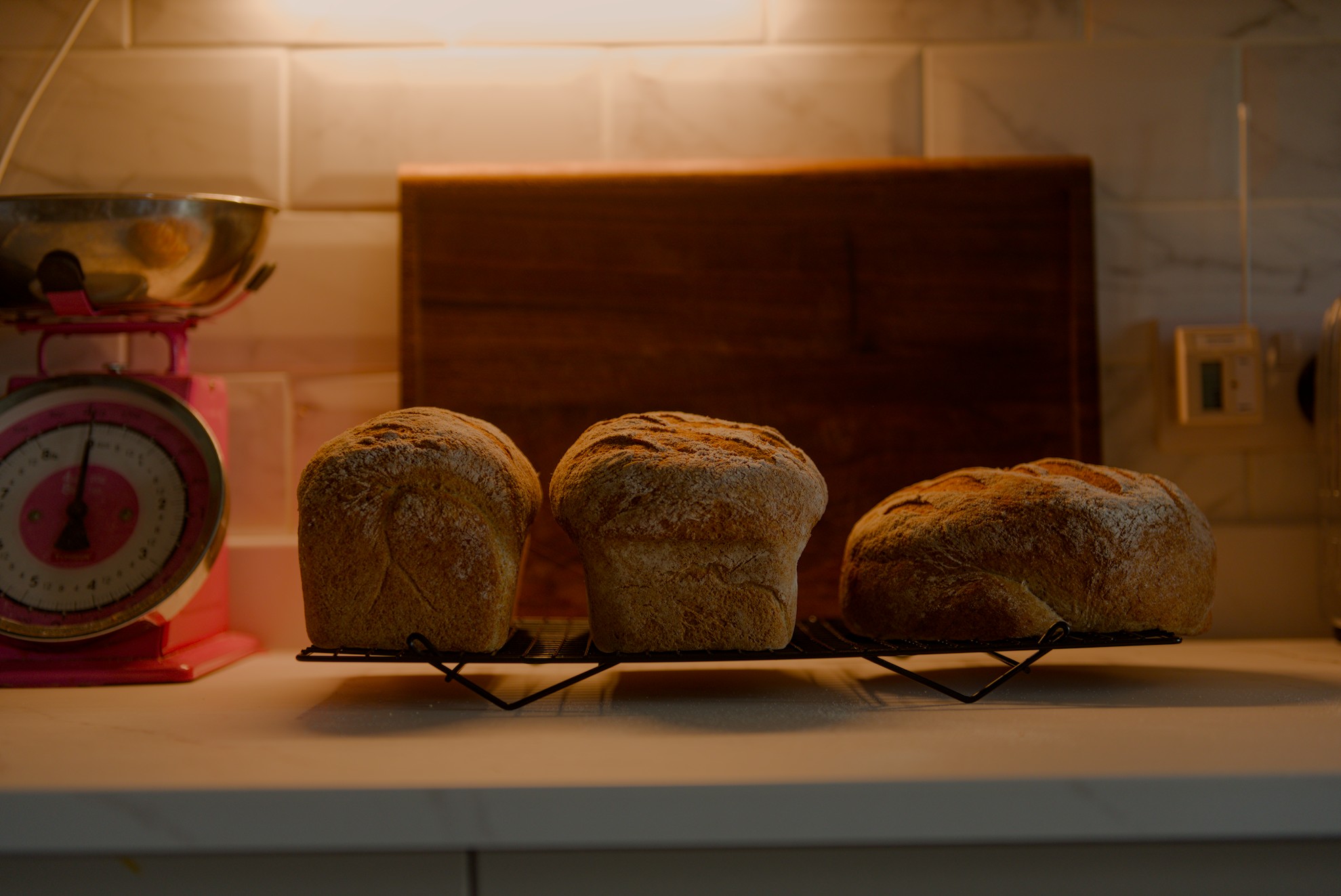
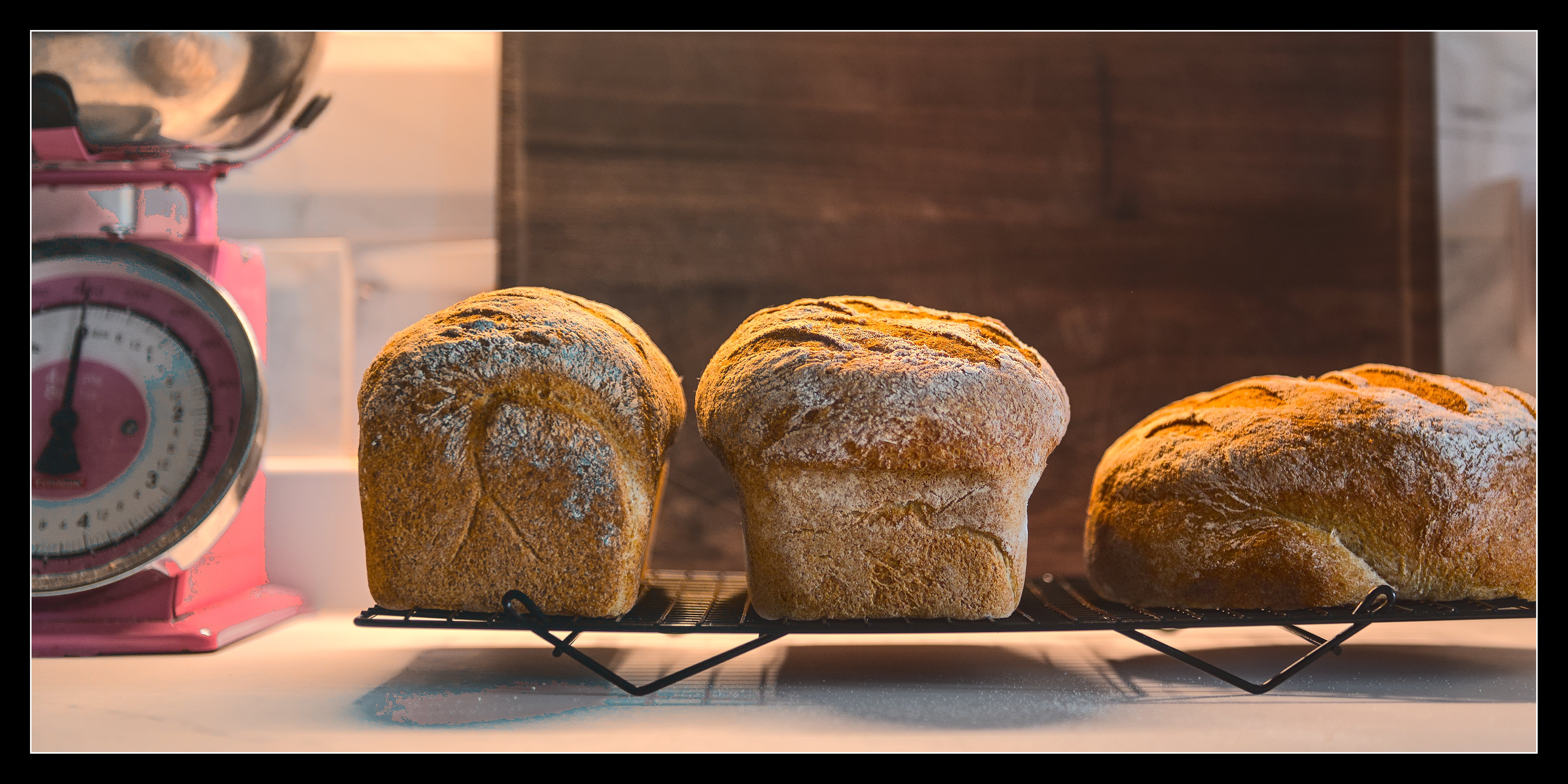
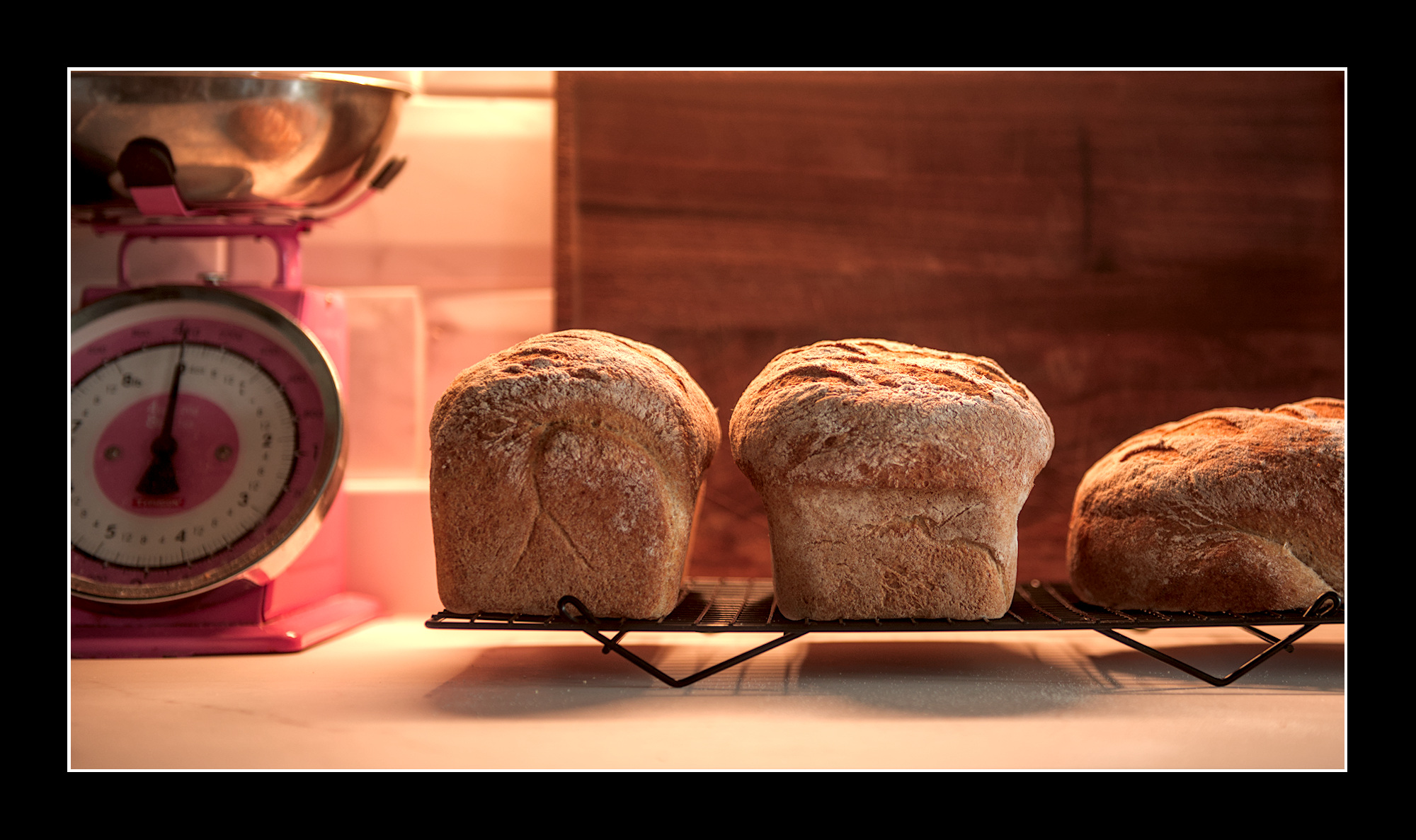
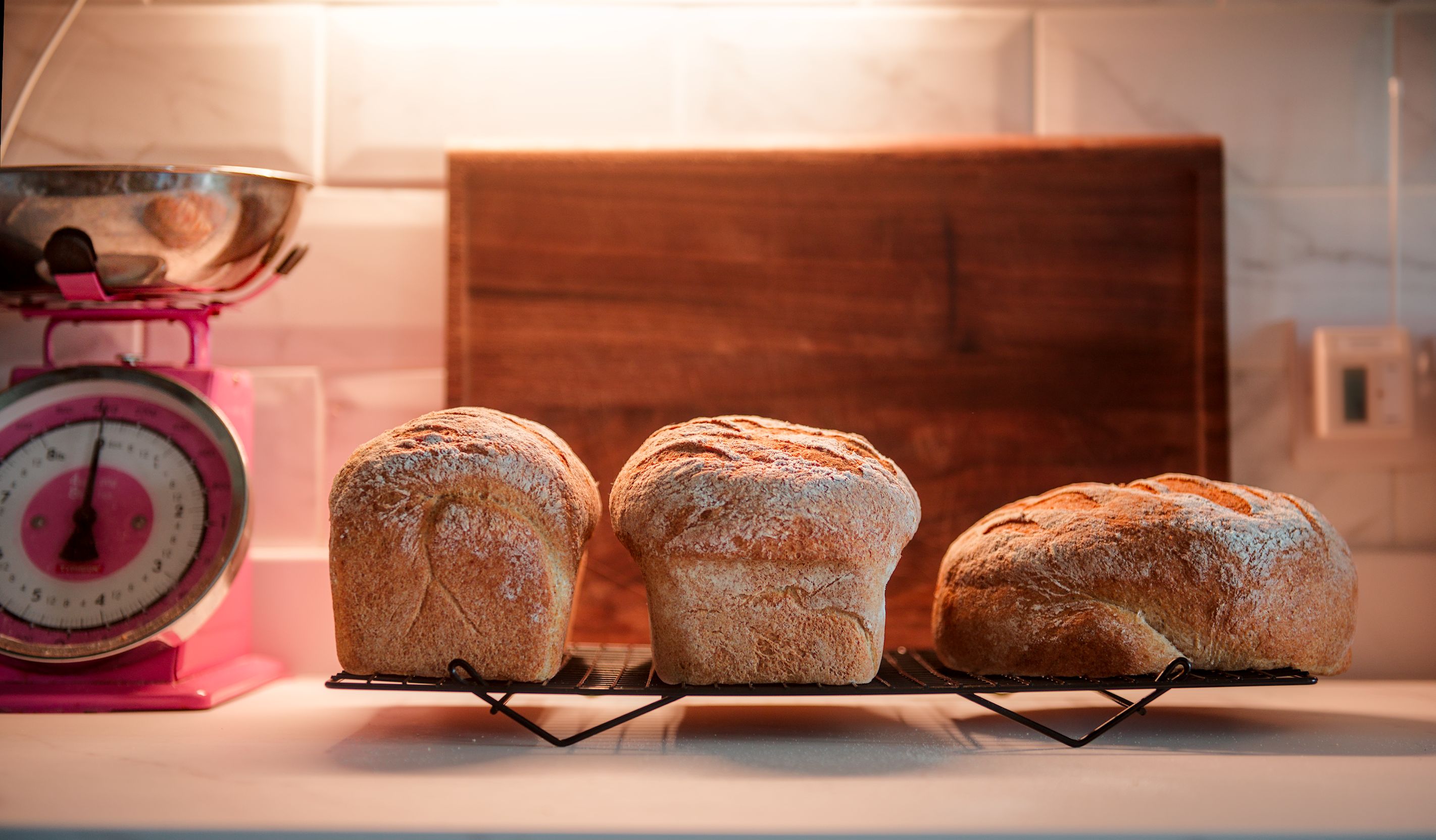
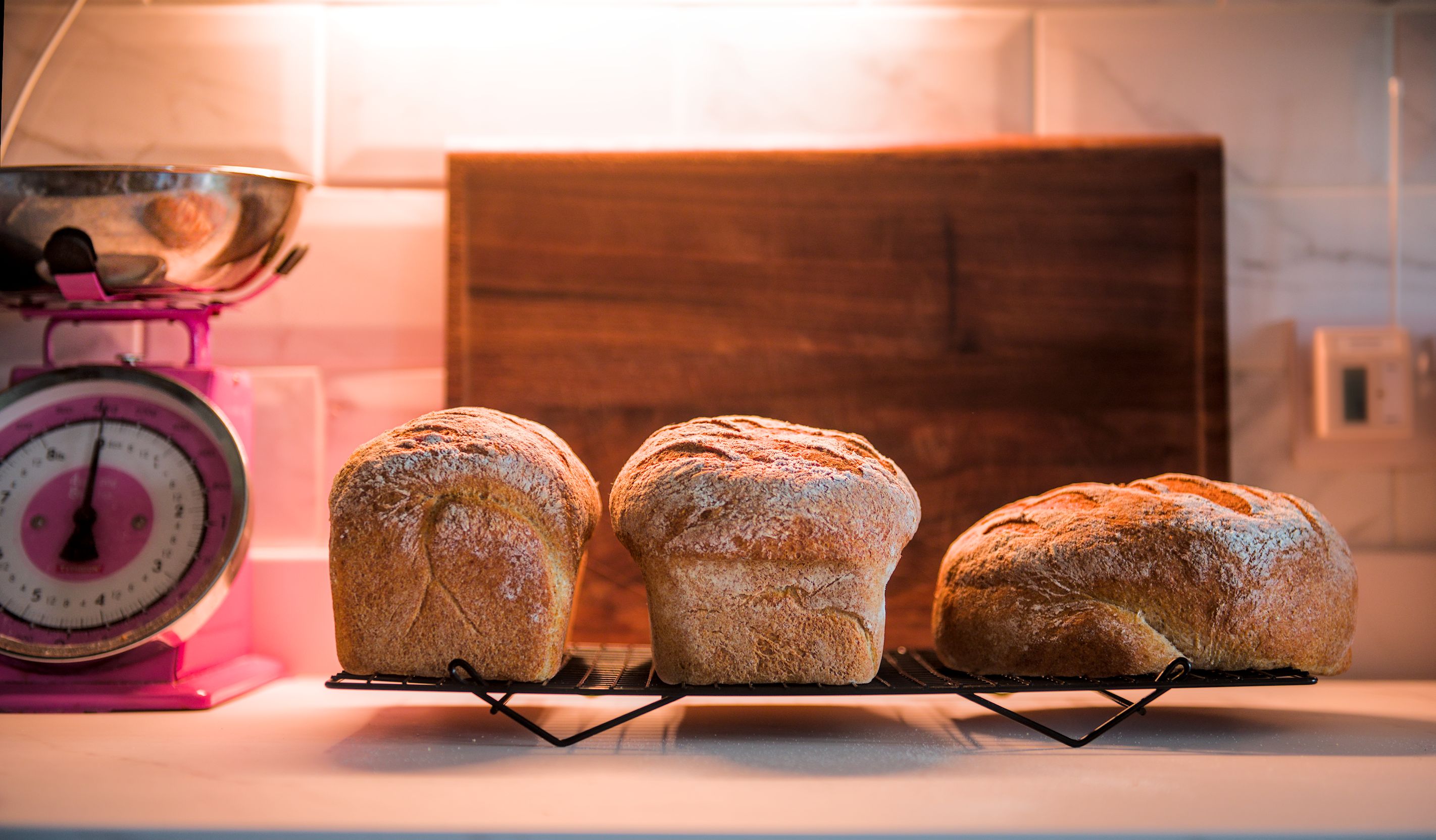
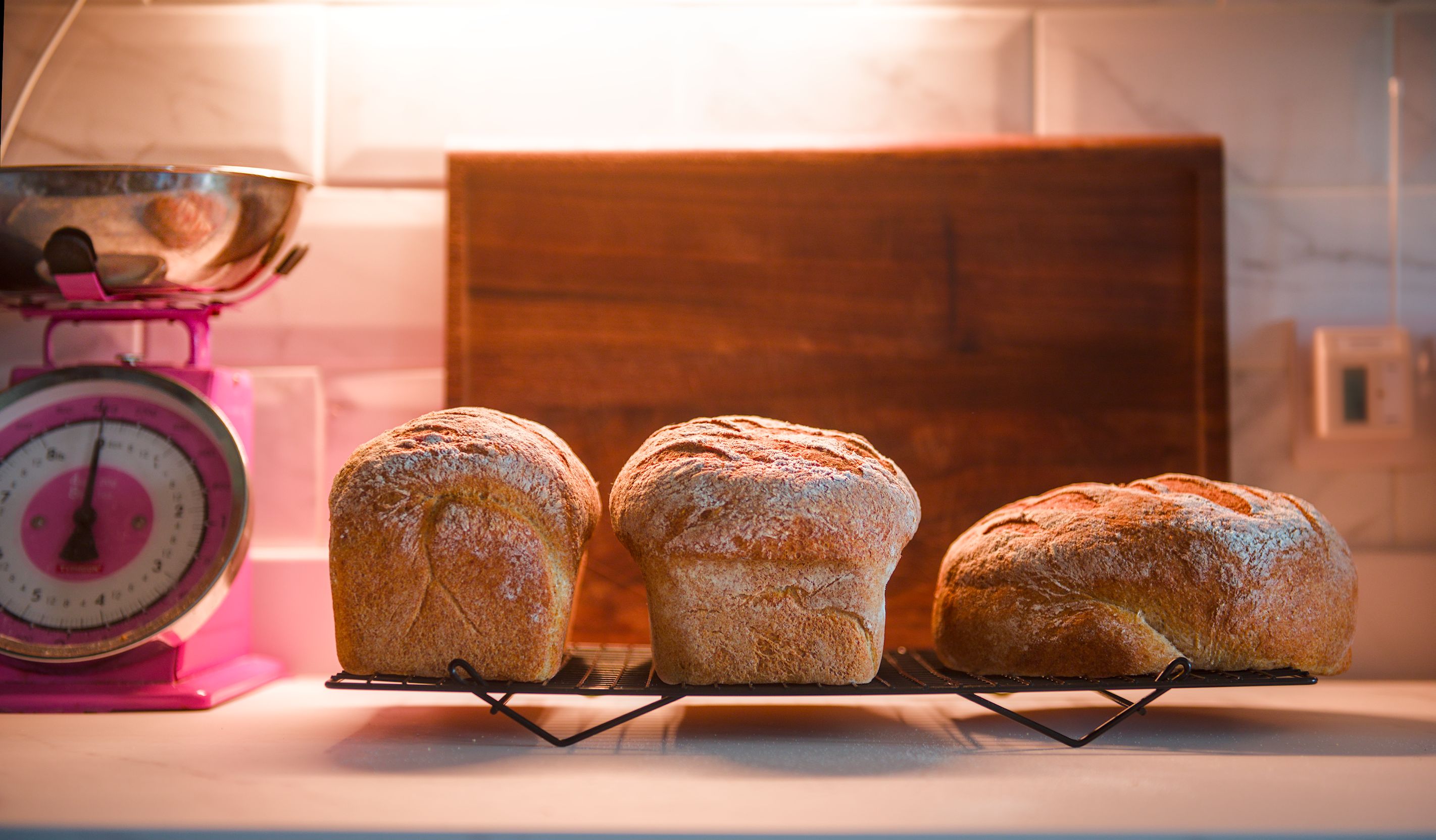
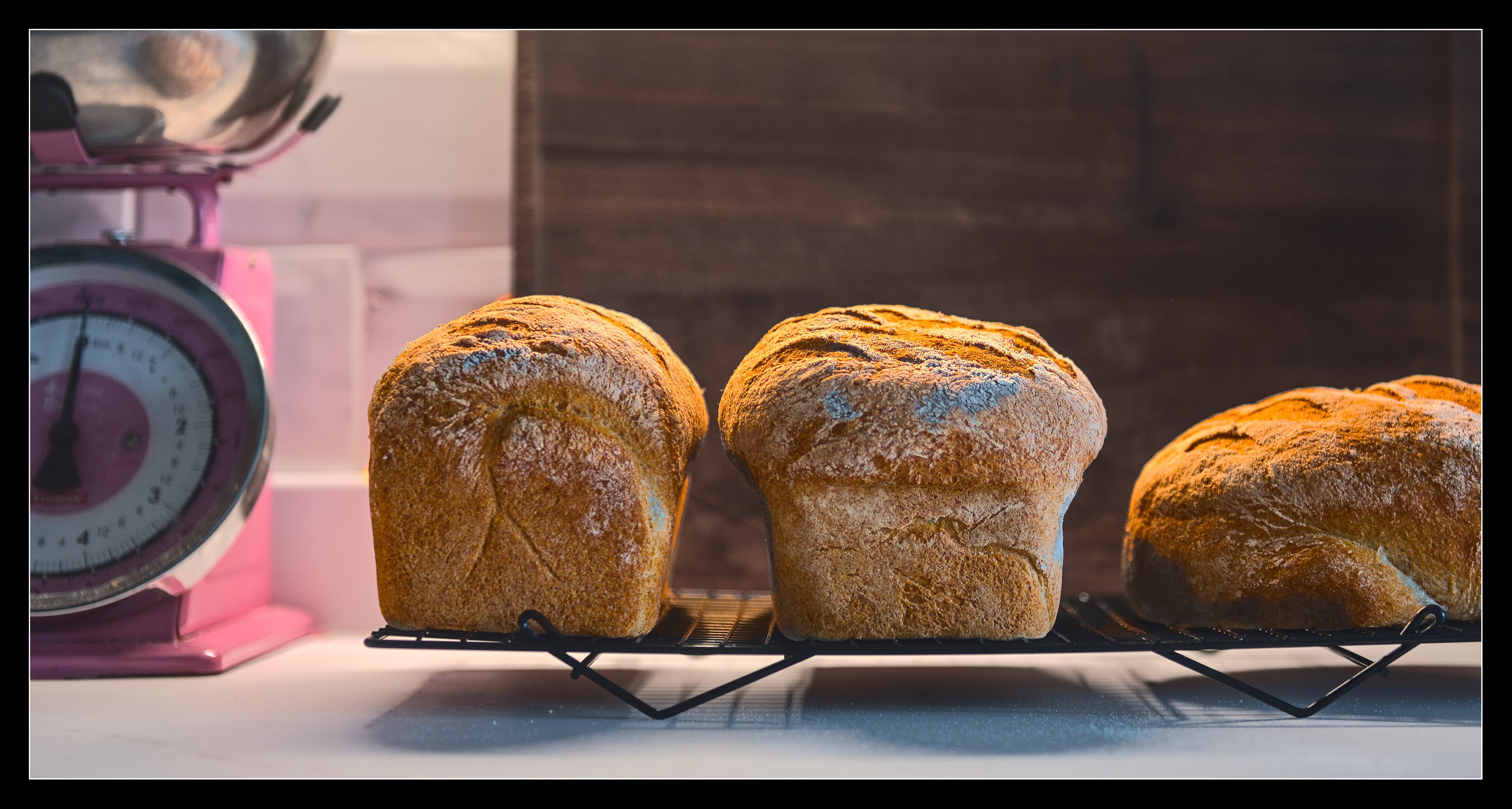
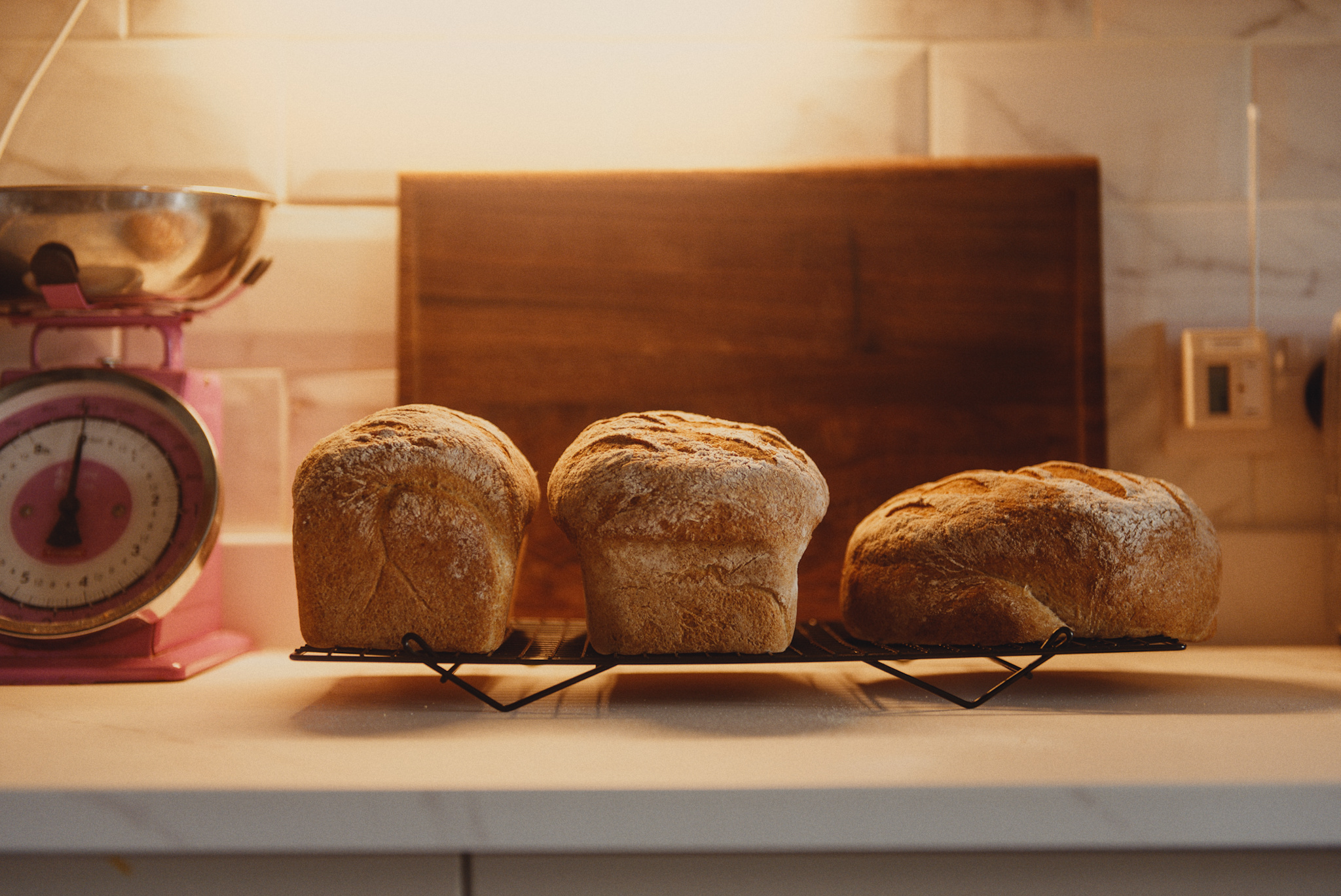
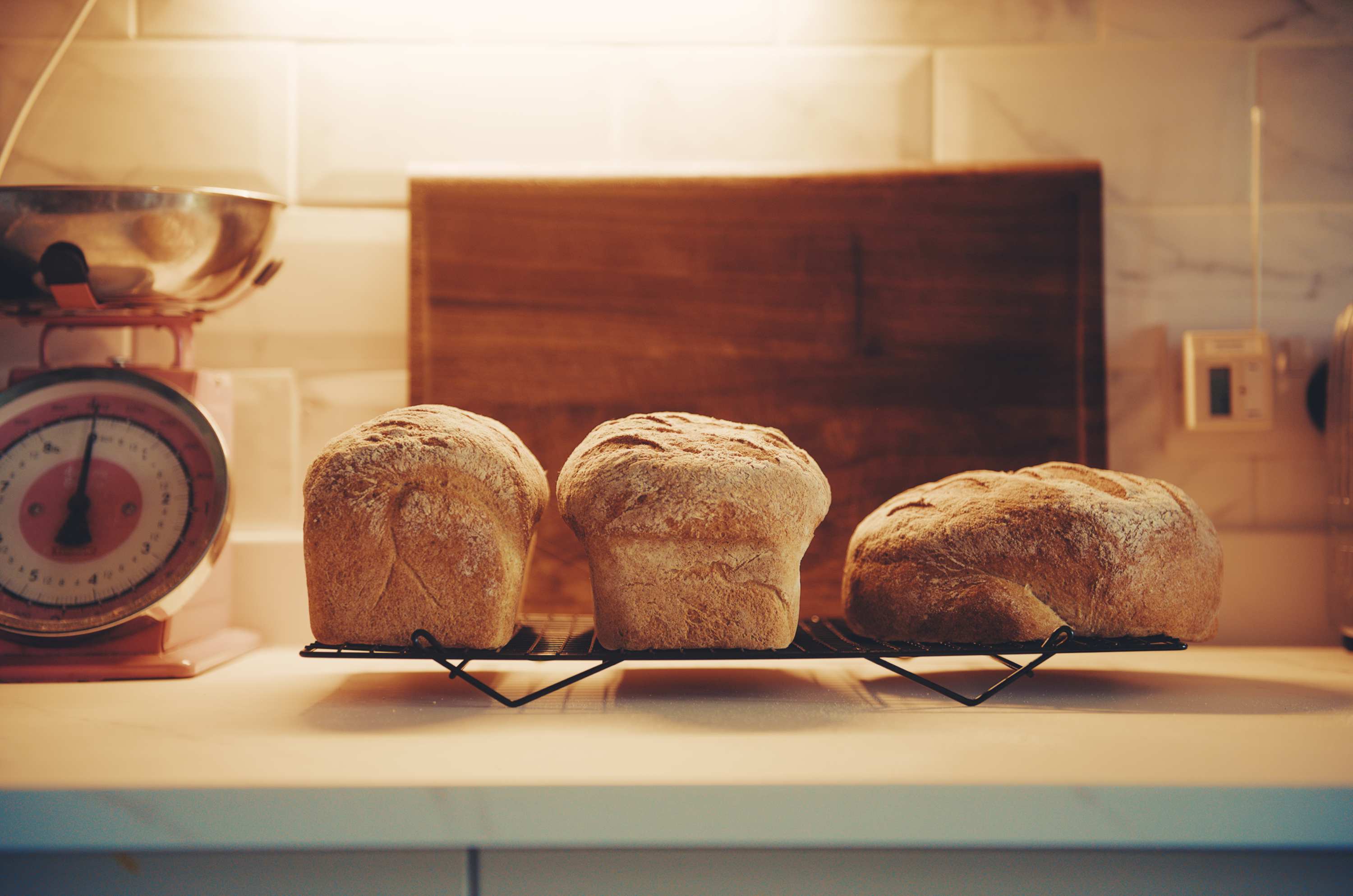
I think this image, while only a snapshot, could allow for quite a few possible ways of editing - dig in!
And it’s tasty!
3 loaves of gluten free bread, straight from our oven.
I’ve baked bread on and off for much of my adult life, albeit often without taking a massive interest in the process. My lovely wife is gluten intolerant (coeliac) and after we married I spent quite a while in the kitchen trialing different recipes and approaches, eventually hitting on the current version which while still ‘different’ has a good taste, lovely texture and decent protein content.
I enjoy it too!
A sourdough version is on my ’ one day ’ to-do list.
We have a friend who is gluten intolerant, whenever we visit I make a rye loaf for her.
I have this book, it is nice, but not very well proofread. In it, she argues that sourdough, using a retarded method (i.e. proving it in the fridge overnight) makes it more gut friendly. How true this is, and whether it would work for your wife, I wouldn’t care to say.
If you are going to try sourdough, then this is the season to do it, when the ambient temperature is high enough to keep the yeast happy.
It’s just because more gluten is consumed by the yeast/bacteria compared to traditional bread.
–
I make sourdough too, initially in search of something lighter on the gastro system but now because I prefer the taste. My starter is rye and then I use regular wheat flower for the bread itself. It’s also a relaxing process, and it’s not a lot of effort for the result it gives. A large loaf can take as little as 20 minutes of active effort to make over two days, it’s almost nothing compared to the saved money and improved taste
Day 1 (evening) - refresh the starter, about 5 minutes
Day 2 (bits of the say) - build the dough (autolyse, mix in leaven, knead, prove), about 20 minutes of effort overall.
Day 3 (late afternoon) bake
Which means that I need to fit in what I want to do around the bread making process.
People get fussed about making sourdough, but as you intimate, it isn’t a difficult process. The major problem is ensuring consistency.
Possibly, but if someone has celiac disease, there is still plenty of gluten remaining in there to cause issues. These tricks do not work for them. [I have celiac disease.]
That’s an interesting diagnosis, I thought it was a yes/no/we do more tests to decide thing.
In any case, I admire your dedication, and the photo is very nice!
Personally I gave up on the whole “let’s buy/make imitation bakery products” idea, and just found other dishes to enjoy.
However, what most people unaffected by gluten-related disorders do not realize is that gluten is pretty much a yes or no thing. If you have no problems, you can eat as much as you like. If you have any of the disorders, you go full gluten free. It’s not something you just reduce, though that’s a persistent myth circulated by “naturopaths” who invent imaginary, undiagnosable gluten-related diseases.
I didn’t really anticipate a bread discussion, but it’s great!
Interestingly, rye does actually contain gluten, so it’s a no-go for us.
Yes, although to my understanding, it’s not just gluten but other proteins/compounds that also get consumed or altered by the yeast/enzymes/whatever.
Thank you for giving solidarity!
I do not but quickly discovered how much of an issue it can be.
Sorry - I was trying to summarize a medical history I didn’t want to share in full. I should have just said coeliac and left it at that, as that is what it amounts to.
That is very fair - especially most supermarket GF bread/bakery products could easily qualify as ‘imitation’.
The great thing is that it is actually possible to bake decent bread and certain other goods without any nutritionally empty fillers or stabilizers, so one can enjoy sandwiches again. (my wife is happy!)
Yes, agreed. An interesting one is oats - oats are (apparently) free of gluten by default, however they are handled by the same machinery as wheat, so normal oats often have more than enough trace gluten to cause a reaction.
(confirmed by accidental experience).
We buy gluten free oats in bulk to save a little over the supermarket small packets.
That’s the important thing! Initially I found the diet restricting until I got used to it, so every bit of comfort helps.
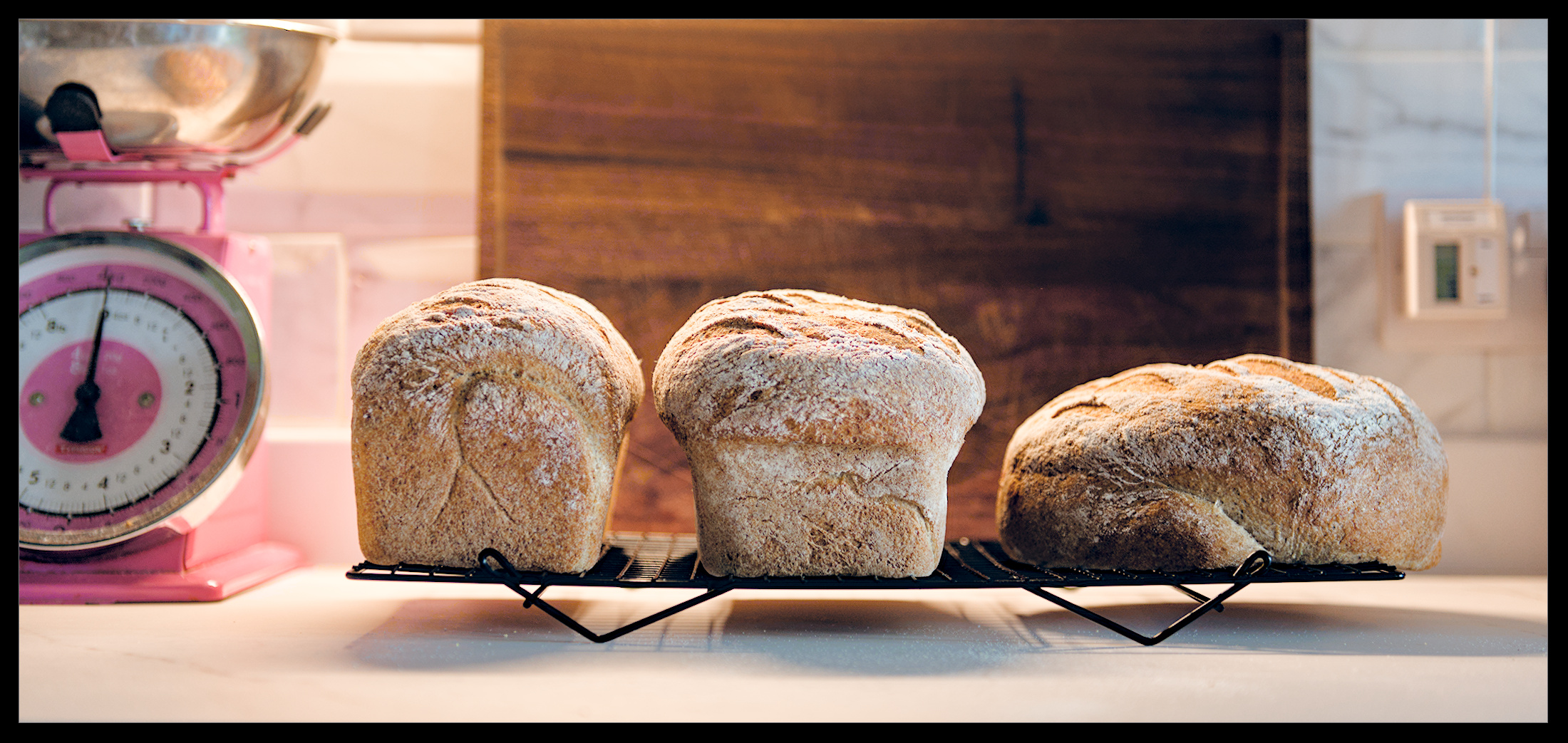
Getting back to the image: I tried developing it myself but could not improve on it, so I am not posting my own version. The color harmony is just spot on.
Dare I say that more then ordinary people, darktable users bake bread…?
Using @dqpcoxeas specialty module…
I used to bake bread too, stopped whilst using PS+LR… hint, hint
Possibly this play_fresh_raw_bread discussion will act as a starter for me…
edit: I completely missed there’s an enhanced colour matrix in input colour profile for this one! …Does it make a big difference? I haven’t really tried it.
When I’m feeling extra productive, I make Bolo do Caco (Madeiran sweet potato bread). Or naan (much easier with a stand mixer)
My go-to loaf at the supermarket (seedy, with no palm oil) is about £2. I think that’s more than the oven usage cost for a loaf.
For the picture, I’ve been experimenting recently. Not with sigmoid, but I tried anyway. Three loaves, three tonemappers.




 I should have just said coeliac and left it at that, as that is what it amounts to.